
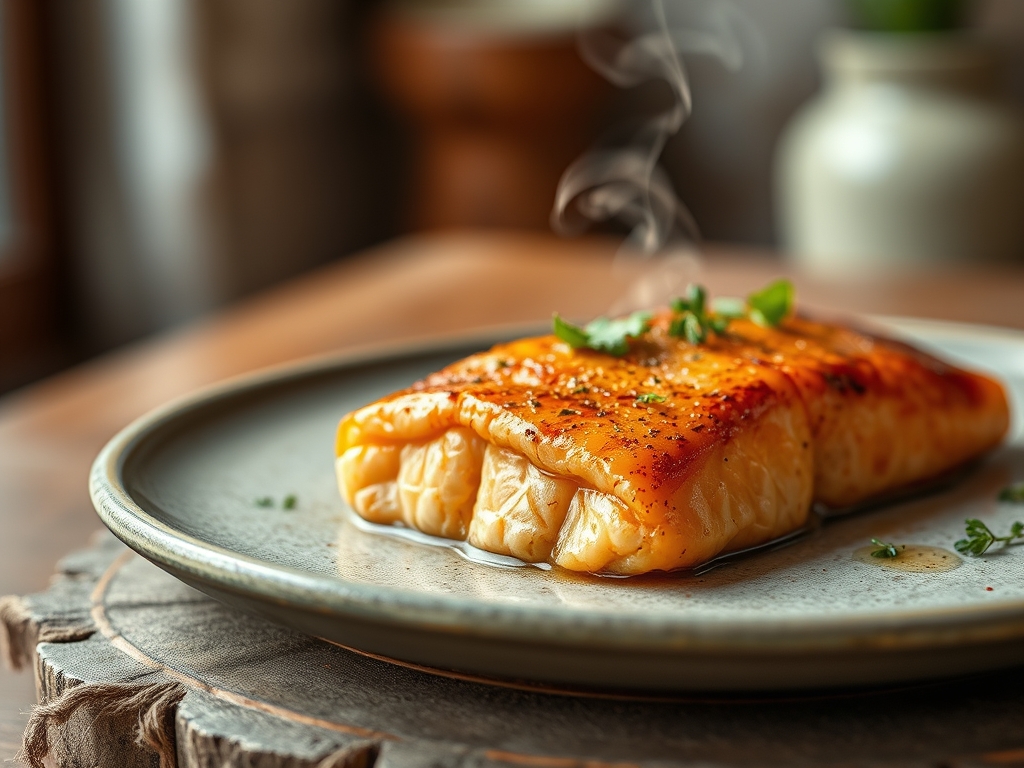
Imagine the sound of a heavy bottomed skillet meeting the flame; it is the opening note of a culinary symphony. As the cold, marbled flesh of the fish hits the shimmering oil, the air instantly fills with the scent of caramelizing sugars and bright, citrus oils. We are not just making dinner; we are mastering the art of salmon recipes orange enthusiasts adore. The goal is a delicate balance of fatty richness and acidic brightness. We want that shatter-crisp skin and a center that flakes at the mere suggestion of a fork. By the time we finish, your kitchen will smell like a high end bistro, and you will understand exactly how molecular chemistry turns a simple fillet into a masterpiece of texture and taste. Whether you are hosting a frantic weeknight dinner or a slow, intentional Sunday feast, these techniques ensure your glaze is always viscous and your protein is perfectly translucent.

The Gathers:
To achieve the perfect orange glaze, your mise en place must be precise. Start with high quality salmon fillets, ideally center cut for uniform thickness. You will need fresh navel oranges; the zest contains the essential oils responsible for that piquant aroma, while the juice provides the fructose for caramelization. Use a microplane to harvest the zest without hitting the bitter white pith. For the glaze base, gather soy sauce for umami, honey or maple syrup for viscosity, and grated ginger to provide a sharp, aromatic counterpoint.
Smart Substitutions: If you are looking for a deeper profile, swap the navel orange for a blood orange; its anthocyanins provide a stunning ruby hue and a berry like undertone. If you lack honey, agave nectar works beautifully due to its high solubility. For those watching sodium, coconut aminos offer a lower salt alternative to soy sauce while maintaining that dark, savory depth. Always keep a digital scale nearby to ensure your glaze ratios are consistent; precision is the difference between a sauce that runs and a glaze that clings.
The Clock
Efficiency in the kitchen is about the Chef's Flow, a sequence of actions that minimizes downtime. Total active preparation should take no more than 15 minutes. This includes zesting, juicing, and patting the fish dry. The cooking phase is a swift 10 to 12 minutes depending on the thickness of the cut.
The flow begins with the glaze reduction. While the sauce simmers in a saucier, you prep the fish. This overlap ensures that by the time your pan is hot, your glaze is already reaching a syrupy consistency. Remember to account for 5 minutes of resting time. This is non negotiable; it allows the muscle fibers to relax and reabsorb juices, ensuring every bite is succulent rather than dry.
The Masterclass
1. The Surface Preparation
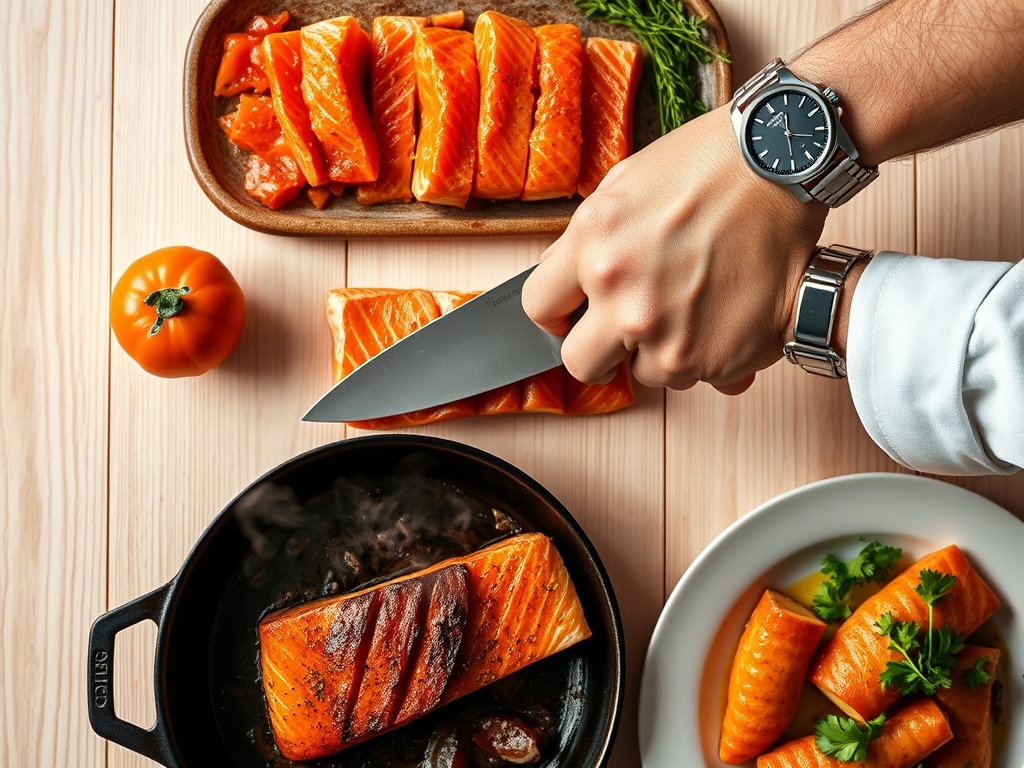
Use a paper towel to remove every trace of moisture from the skin and flesh. Moisture is the enemy of the Maillard reaction. If the surface is damp, the fish will steam rather than sear. Use a bench scraper to move the fillets gently without tearing the delicate proteins.
Pro Tip: This is known as surface dehydration. Removing water allows the surface temperature to rise rapidly above 285 degrees Fahrenheit, which is the threshold for browning and flavor development.
2. The Sear and Render
Place the salmon skin side down in a preheated heavy bottomed skillet with a high smoke point oil like avocado oil. Press down firmly with a flexible spatula for the first 30 seconds to prevent the skin from curling.
Pro Tip: This technique ensures maximum contact with the heat source, facilitating the rendering of the subcutaneous fat layer. This creates a natural barrier that keeps the flesh moist while the skin becomes "glass" crisp.
3. The Glaze Reduction
While the fish cooks, combine your orange juice, zest, and aromatics in a small pan. Whisk constantly as the water evaporates and the sugars concentrate. You are looking for a "nappe" consistency, where the sauce coats the back of a spoon.
Pro Tip: This is a process of concentration through evaporation. As the volume decreases, the viscosity increases, creating a glaze that will adhere to the salmon rather than sliding off into the pan.
4. The Deglaze and Infuse
Once the salmon is 75 percent cooked, flip it carefully using tongs. Pour the orange reduction directly into the pan. The liquid will bubble violently; use this moment to scrape up any browned bits (fond) from the bottom of the pan.
Pro Tip: This is deglazing. The alcohol or acid in the juice dissolves the caramelized proteins stuck to the pan, incorporating those deep, savory flavors back into your orange glaze.
5. The Thermal Finish
Baste the salmon with the bubbling glaze for the final 60 seconds of cooking. Remove the pan from the heat while the fish is still slightly translucent in the very center.
Pro Tip: This accounts for thermal carryover. The internal temperature will continue to rise by 5 to 10 degrees after the fish is removed from the heat. Pulling it early prevents the proteins from over coagulating and becoming rubbery.
The Deep Dive
From a macro perspective, this dish is a nutritional powerhouse. A standard 6 ounce serving provides roughly 34 grams of high quality protein and is rich in Omega 3 fatty acids. The orange glaze adds vitamin C and antioxidants, though the sugar content varies based on your choice of sweetener.
For dietary swaps, Keto followers can replace honey with a monk fruit syrup and use xantham gum to thicken the glaze. For a vegan "salmon" alternative, use thick slabs of roasted cauliflower or firm tofu; the citrus glaze performs beautifully on any porous surface. If you are gluten free, simply ensure your soy sauce is replaced with tamari.
The Fix It: If your glaze is too thin, whisk in a tiny slurry of cornstarch and water. If the skin sticks to the pan, do not force it; it usually releases naturally once the proteins have fully seared. If the glaze tastes too sweet, a splash of rice vinegar or a squeeze of fresh lime will provide the necessary acid to balance the palate.
Meal Prep: To reheat without losing quality, avoid the microwave. Use a low temperature oven (275 degrees) with a splash of water covered in foil. This creates a gentle steam environment that prevents the fats from oxidizing and turning "fishy."
The Wrap Up
Mastering salmon recipes orange style is about more than just following a list of ingredients; it is about controlling heat and moisture to coax the best possible version of the fish onto your plate. You now have the technical knowledge to sear like a pro and glaze like a chemist. Go forth, grab your citrus, and turn your kitchen into a sanctuary of zesty, caramelized perfection.
The Kitchen Table
How do I get the skin extra crispy?
Ensure the skin is bone dry before it hits the pan. Use a high smoke point oil and do not move the fish for the first three minutes. This allows the fat to render completely, creating a golden, cracker like texture.
Can I use bottled orange juice?
Fresh is always superior because bottled juice is pasteurized, which dulls the volatile aromatic compounds. Fresh juice provides the bright acidity and essential oils from the zest that define the dish's character.
What is the best internal temperature for salmon?
For a moist, flaky texture, aim for an internal temperature of 125 to 130 degrees Fahrenheit. This is considered medium rare to medium. Anything over 145 degrees will result in a dry, chalky consistency.
How do I prevent the white stuff from appearing?
That white substance is albumin, a protein that pushes out when salmon is cooked too fast or too long. To minimize it, cook the fish gently and avoid overcooking, which squeezes the moisture and protein out of the muscle.