
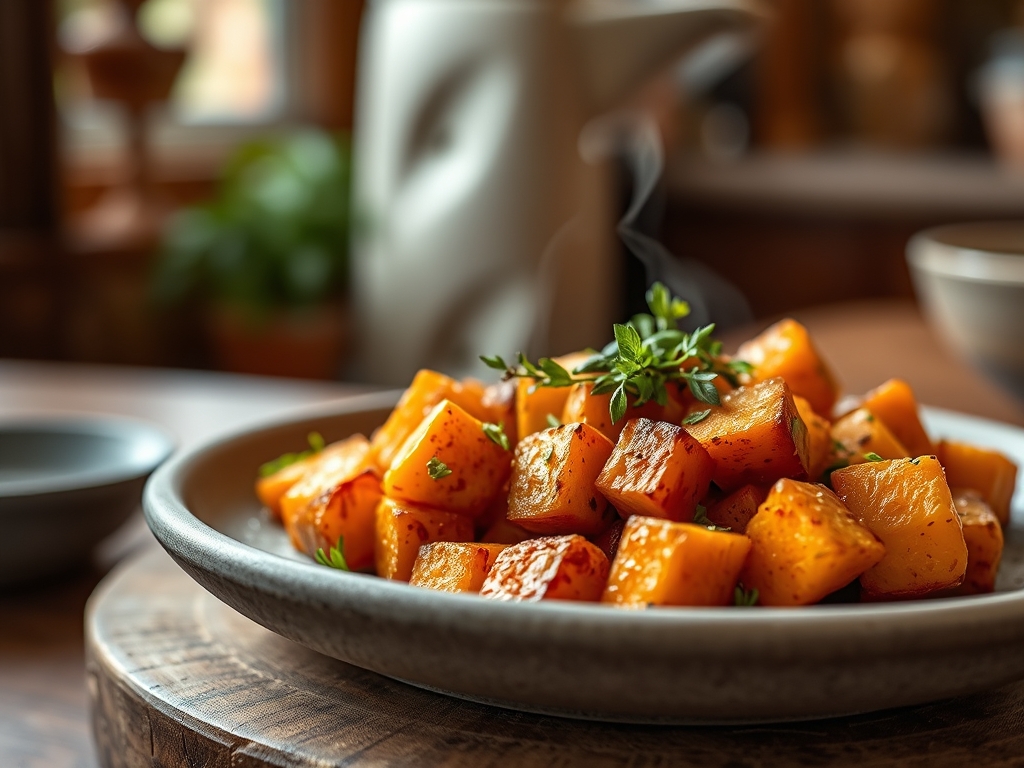
Close your eyes and imagine the scent of caramelized sugars hitting a hot surface; it is that distinct, nutty aroma that bridges the gap between savory comfort and dessert-like indulgence. When you master sweet potato recipes cubed, you are not just making a side dish; you are engineering the perfect ratio of crispy, Maillard-browned exterior to a creamy, custardy center. The secret lies in the geometry of the cube. By increasing the surface area through precise knife work, you invite more heat to interact with the natural starches, transforming a humble root vegetable into a gold-standard culinary component in under twenty minutes. We are moving past the mushy, oversized chunks of the past. Today, we focus on the science of the 1/2-inch dice, a measurement that ensures even heat distribution and rapid sugar caramelization. Whether you are tossing them into a vibrant breakfast hash or using them as a structural base for a grain bowl, these cubes are the versatile workhorse of a high-performance kitchen. Let us get into the physics of the crunch and the chemistry of the sweetness.
The Gathers:
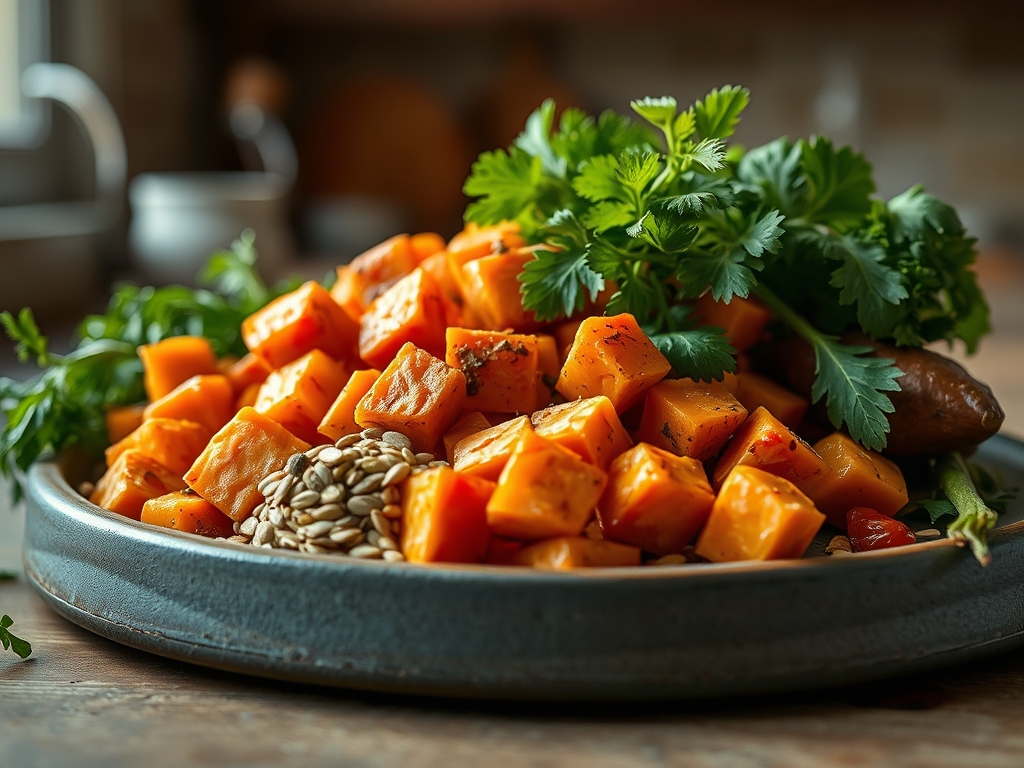
To execute these sweet potato recipes cubed with professional precision, your mise-en-place must be organized and chemically balanced. Start with two large Beauregard or Jewel sweet potatoes; these varieties possess a high moisture content that facilitates a creamy interior. You will need a high-smoke-point lipid, such as avocado oil or clarified butter (ghee), to withstand the 425-degree Fahrenheit environment without oxidizing. For seasoning, we utilize a blend of kosher salt for abrasive texture and smoked paprika for a piquant depth.
Smart Substitutions: If you are aiming for a lower glycemic index, swap one potato for a firm purple yam; its anthocyanins provide a stunning visual contrast. If you lack avocado oil, refined coconut oil offers a viscous coating that aerates beautifully under high heat. To elevate the aromatic profile, use a microplane to zest fresh ginger directly over the cubes before roasting; the gingerol compounds provide a sharp counterpoint to the earthy sweetness of the tubers.
The Clock
The "Chef's Flow" is all about overlapping tasks to maximize efficiency. Your total active prep time is exactly 8 minutes, while the thermal transformation takes 20 to 22 minutes. Begin by preheating your heavy-bottomed skillet or baking sheet immediately. A cold start is the enemy of a crisp cube. While the oven stabilizes, your knife work should be rhythmic and deliberate. Use a bench scraper to transfer your diced harvest to a mixing bowl in one swift motion. This prevents the loss of moisture and keeps your station clean. By the time your oven chime sounds, your potatoes should already be tossed in their lipid coating, ready for the thermal shock that creates that coveted crust.
The Masterclass
1. The Precision Dice
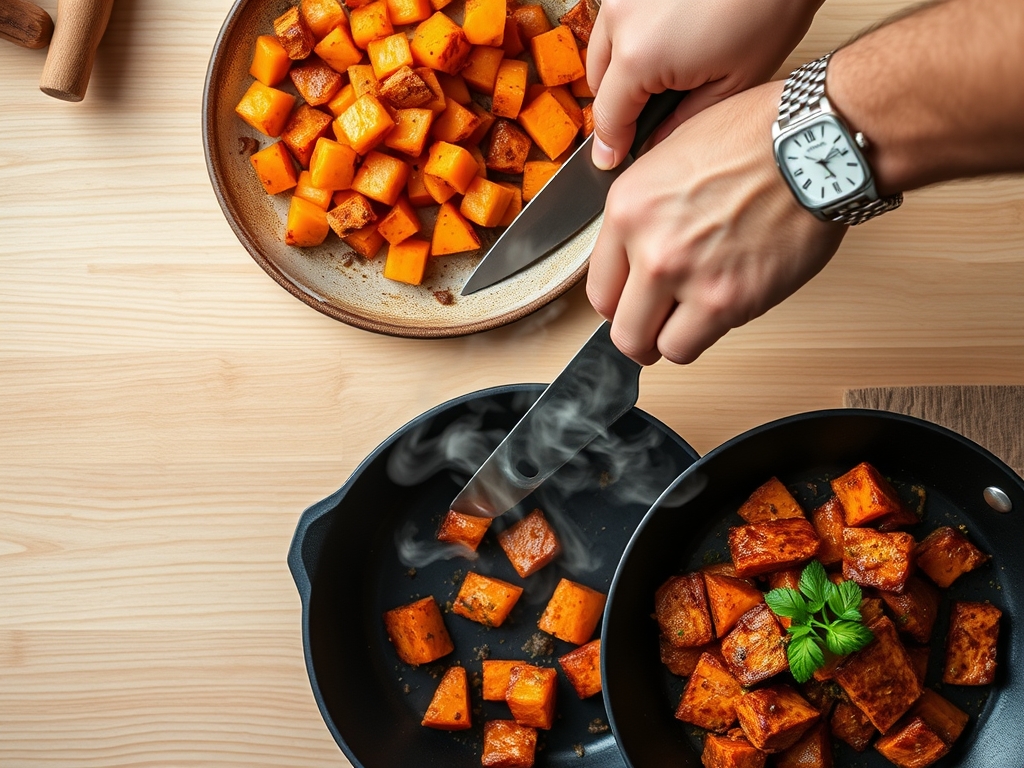
Using a sharpened chef knife, slice the potato into uniform planks, then batons, and finally 1/2-inch cubes. Uniformity is not just for aesthetics; it ensures that every piece reaches the same internal temperature simultaneously. Use a digital scale if you want to be truly pedantic about portioning.
Pro Tip: This step prevents enzymatic browning. Sweet potatoes contain polyphenol oxidase which reacts with oxygen. By dicing quickly and moving to the oil-coating phase, you create a lipid barrier that preserves the vibrant orange hue.
2. The Lipid Infusion
Place the cubes in a large stainless steel bowl and drizzle with your chosen oil. Use your hands or tongs to ensure every millimeter of surface area is coated. You want a glistening sheen, not a puddle.
Pro Tip: This is about surface tension. The oil acts as a heat conductor, transferring the oven's energy into the potato more efficiently than air alone. This process facilitates the Maillard reaction, the chemical dance between amino acids and reducing sugars.
3. The Thermal Shock
Spread the cubes onto a preheated heavy-bottomed baking sheet. You should hear an immediate sizzle. Ensure they are in a single layer with at least a half-inch of space between them.
Pro Tip: Overcrowding the pan leads to steaming rather than roasting. When potatoes are too close, the moisture they release creates a humid microclimate, preventing the exterior from dehydrating and crisping.
4. The Mid-Point Agitation
At the twelve-minute mark, use a metal spatula or bench scraper to flip the cubes. This ensures that the side previously in contact with the pan does not over-caramelize while the top remains pale.
Pro Tip: This manages thermal carryover. By rotating the cubes, you redistribute the internal steam, allowing the starch granules to gelatinize evenly throughout the center.
5. The Aromatic Finish
In the final two minutes, toss in hardy herbs like rosemary or thyme. The high heat will render the essential oils from the herbs, infusing the potatoes with a woodsy aroma without burning the delicate leaves.
Pro Tip: Adding herbs too early causes them to carbonize and turn bitter. Adding them late allows the residual heat to volatilize the oils for maximum sensory impact.
6. The Rest and Season
Once removed from the heat, let the cubes sit on the hot pan for three minutes. This allows the exterior to "set" and become even crunchier as the surface moisture continues to evaporate.
Pro Tip: Salt should be added now if you used a fine grain. The residual heat helps the salt crystals adhere to the cooling oil, ensuring a perfectly seasoned bite every time.
7. The Deglaze Trick
If you are cooking these in a skillet, deglaze the pan with a splash of apple cider vinegar or balsamic once the potatoes are removed. Use a saucier to whisk the pan drippings into a quick glaze.
Pro Tip: The acidity of the vinegar cuts through the density of the starch, brightening the entire flavor profile and balancing the natural sugars.
The Deep Dive
Macro Nutrition: Sweet potatoes are a complex carbohydrate powerhouse, loaded with Beta-carotene and Vitamin A. A one-cup serving of cubed potatoes provides roughly 4 grams of fiber, which slows glucose absorption and keeps your energy levels stable.
Dietary Swaps: For a Keto-friendly version, substitute half the sweet potato with cubed daikon radish; it mimics the texture but with a fraction of the carbs. For a vegan finish, swap honey for maple syrup or an agave nectar infusion.
The Fix-It:
- Soggy Cubes: Your oven temperature was likely too low or the pan was overcrowded. Fix: Turn the broiler on for the last 2 minutes to flash-dry the surface.
- Burnt Edges/Raw Middle: The cubes were cut too large. Fix: Cover the pan with foil for 5 minutes to trap steam and cook the centers, then finish uncovered.
- Bland Flavor: You undersalted before the starch set. Fix: Toss the finished cubes in a squeeze of lime juice and a pinch of flaky sea salt to "pop" the flavors.
Meal Prep Science: To maintain "day-one" quality, store cubes in an airtight glass container. When reheating, avoid the microwave; it agitates water molecules and makes the starch gummy. Instead, use an air fryer or a dry skillet to re-crisp the exterior lipids.
The Wrap-Up
Mastering sweet potato recipes cubed is your ticket to being the most efficient and impressive cook in your circle. By understanding the interplay of surface area, lipid conduction, and thermal shock, you have moved beyond "following a recipe" into the realm of culinary engineering. These golden, crispy nuggets are proof that science is the most delicious ingredient in your kitchen. Now, grab your chef knife and get dicing; your perfect harvest bowl is only twenty minutes away.
The Kitchen Table
How do I keep cubed sweet potatoes from sticking?
Ensure your baking sheet is preheated before adding the potatoes. The immediate sear creates a structural crust that releases easily from the metal surface; always use a high-smoke-point oil like avocado oil for the best non-stick results.
Can I cut sweet potatoes ahead of time?
Yes, you can dice them up to 24 hours in advance. To prevent oxidation and starch degradation, submerge the cubes in cold water and store them in the refrigerator; pat them completely dry before roasting to ensure a crisp finish.
Why are my sweet potato cubes not getting crispy?
The most common culprit is moisture. If the potatoes are crowded on the pan, they steam instead of roast. Space them out so air can circulate, and ensure your oven is at least 425 degrees Fahrenheit for optimal caramelization.
Is it better to peel sweet potatoes for cubing?
Peeling is a matter of texture preference. The skin contains extra fiber and becomes pleasantly chewy when roasted; however, for a more refined, "melt-in-your-mouth" consistency in hashes or salads, removing the skin is recommended for uniform heat penetration.