
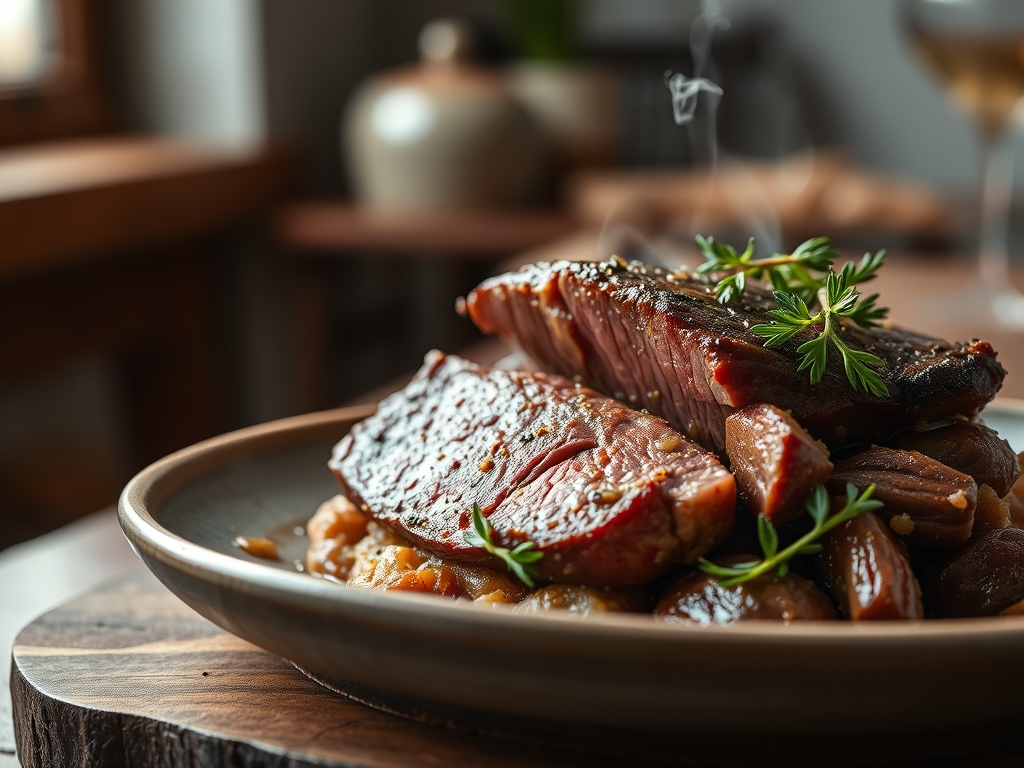
Imagine the scent of slow-simmered rosemary and savory beef tallow wafting through your kitchen at 4:00 PM while you have barely lifted a finger. That is the magic of the slow cooker. While many home cooks struggle with the lean, muscular nature of the leg, mastering top round roast beef recipes crock pot style turns a budget-friendly cut into a velvet-textured masterpiece. The top round is notoriously lean because the cow uses those muscles for movement; this means it lacks the fatty marbling of a ribeye but compensates with deep, concentrated beef flavor. When we subject these dense muscle fibers to low, steady heat, we are not just cooking meat; we are performing a delicate thermal transformation. We are breaking down tough collagen into silky gelatin. This guide is your backstage pass to the chemistry of the crock pot, ensuring your roast is never "pot-roast dry" but always "fork-tender succulent." We are going to use every trick in the culinary playbook, from enzymatic tenderization to Maillard-driven flavor development, to elevate your weeknight dinner into a five-star experience.
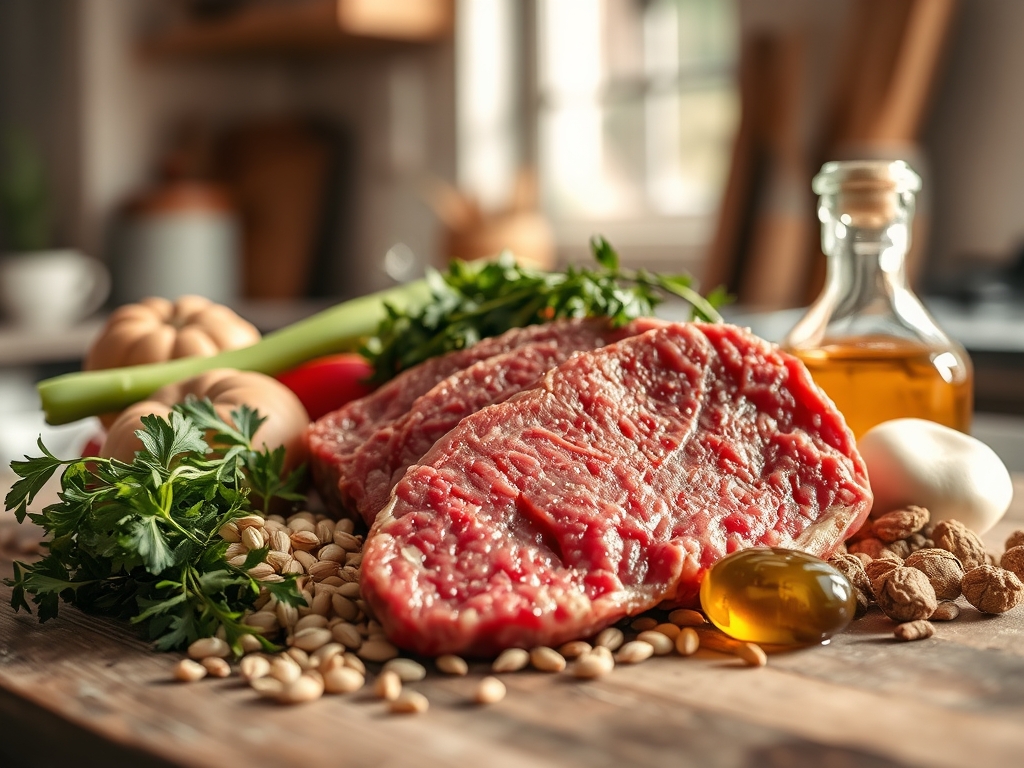
The Gathers:
Before we engage the heating element, we must curate our mise-en-place with precision. You will need a three to four pound top round roast, brought to room temperature to avoid thermal shock. For the aromatic base, gather three large carrots, two stalks of celery, and one yellow onion. These are the "holy trinity" of French mirepoix, providing a foundational sweetness once their sugars caramelize. You will also need four cloves of garlic, fresh thyme, and two bay leaves to infuse the braising liquid with earthy volatile oils.
For the liquid gold, use two cups of high-quality beef bone broth. Look for a broth that is viscous at room temperature; this indicates a high gelatin content which provides a superior mouthfeel. You will also need Worcestershire sauce for a piquant umami kick and a tablespoon of tomato paste to deepen the color.
Smart Substitutions: If you are out of fresh garlic, do not reach for the jarred stuff. Instead, use a microplane to grate a teaspoon of garlic powder into a paste with a drop of water. If you want to skip the wine, a tablespoon of balsamic vinegar provides the necessary acidity to brighten the heavy fats. Always use a digital scale to measure your salt; three grams of kosher salt per pound of meat is the golden ratio for deep seasoning.
The Clock
Efficiency in the kitchen is about "Chef's Flow," which is the art of overlapping tasks to minimize downtime.
Prep Time: 20 minutes. This includes the crucial step of searing the meat in a heavy-bottomed skillet. Do not skip this; the crock pot cannot reach the 300 degrees Fahrenheit required for the Maillard reaction.
Cook Time: 8 to 10 hours on Low, or 4 to 5 hours on High. I am a firm advocate for the "Low and Slow" method. Collagen breakdown is a function of time and temperature; rushing the process on High can result in protein fibers tightening and squeezing out moisture before the connective tissue has a chance to liquefy.
Resting Time: 15 minutes. This is non-negotiable. If you slice the beef immediately, the internal pressure will force all the juice onto the cutting board.
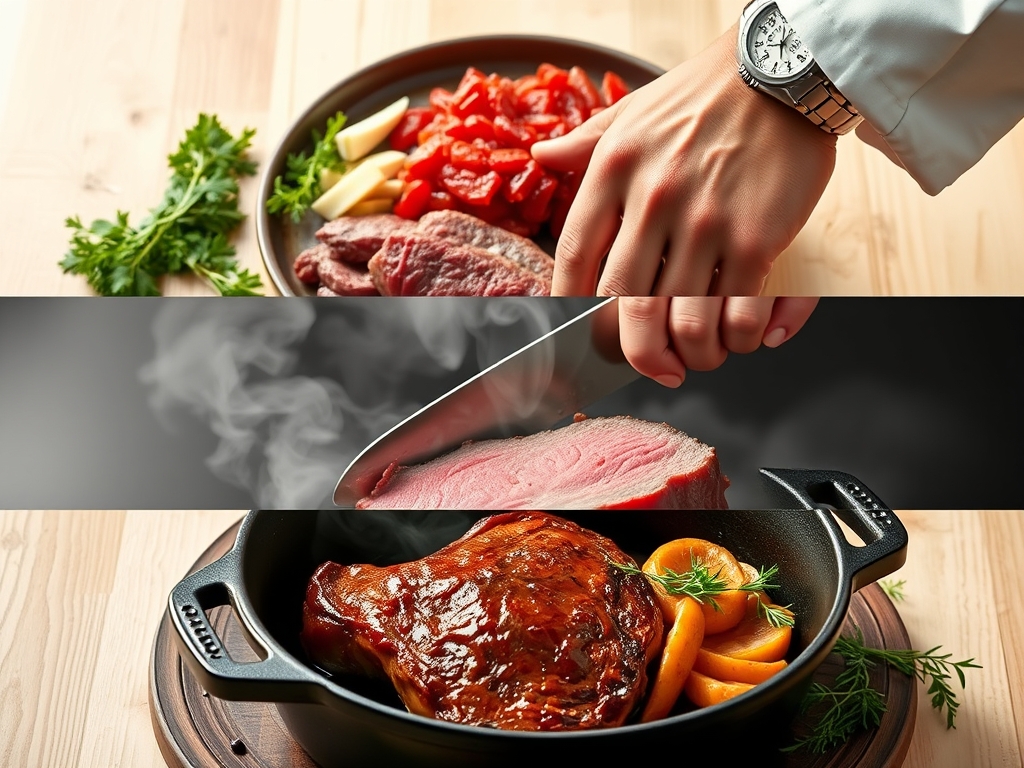
The Masterclass
1. The Strategic Sear
Pat the beef dry with paper towels until the surface is bone-dry. Season aggressively with kosher salt and cracked black pepper. Heat a heavy-bottomed skillet with high-smoke-point oil until it shimmers. Use tongs to sear every side of the roast until a deep, mahogany crust forms.
Pro Tip: This is the Maillard reaction in action. By creating this crust, you are developing hundreds of new flavor compounds that a slow cooker alone cannot produce. The crust also provides structural integrity during the long braise.
2. Deglaze and Capture
Once the meat is out, the pan will be covered in "fond," those delicious brown bits stuck to the bottom. Pour half a cup of broth or red wine into the hot pan and use a wooden spoon to scrape it up.
Pro Tip: This process is called deglazing. You are reclaiming concentrated proteins and sugars that would otherwise be lost. This liquid becomes the "soul" of your gravy.
3. Build the Aromatic Bed
Place your chopped carrots, celery, and onions at the bottom of the crock pot. This creates a natural rack that prevents the meat from sitting directly on the heat source, which can cause overcooking on the bottom surface.
Pro Tip: This creates a flavor gradient. The vegetables act as a heat buffer while they render their moisture, essentially steaming the bottom of the roast with aromatic vapors.
4. The Low and Slow Bath
Place the roast atop the vegetables and pour over the deglazed liquid and remaining broth. Add the herbs and garlic. Ensure the liquid comes about halfway up the side of the roast.
Pro Tip: This is a partial braise, not a boil. Submerging the meat entirely would wash away the crust you worked so hard to build. The steam trapped under the lid will cook the top half gently.
5. The Acid Balance
Halfway through the cooking time, add a splash of apple cider vinegar or a squeeze of lemon.
Pro Tip: Acids break down long-chain proteins. Introducing a piquant acid mid-way through the cook helps tenderize the lean top round without making the exterior mushy.
6. The Cornstarch Slurry
Thirty minutes before serving, remove a cup of the hot liquid. In a small bowl, whisk it with two tablespoons of cornstarch until smooth, then stir it back into the pot.
Pro Tip: This creates a stable emulsion. The starch granules swell and trap water molecules, turning a thin broth into a viscous, glossy sauce that clings to the meat.
7. The Carryover Rest
Remove the roast using a bench scraper or large forks and place it on a warm platter. Tent it loosely with foil for 15 minutes.
Pro Tip: This accounts for thermal carryover. The internal temperature will rise about 5 degrees after removal. Resting allows the muscle fibers to relax and reabsorb the juices, ensuring every bite is moist.
The Deep Dive
Macro Nutrition: A 6-ounce serving of top round roast is a protein powerhouse, offering roughly 48 grams of protein and only 10 grams of fat. It is rich in Vitamin B12 and Zinc, making it an ideal choice for muscle recovery and immune health.
Dietary Swaps: For a Keto version, swap the carrots for radishes; they lose their peppery bite and mimic potatoes when slow-cooked. For a Vegan alternative, use this same slow-cooker method with large "steaks" of cauliflower or lion's mane mushrooms, substituting beef broth with a mushroom-based dashi.
The Fix-It:
- Tough Meat: If it is still chewy, it likely hasn't cooked long enough. Put the lid back on for another hour. Collagen needs time to melt.
- Salty Gravy: Drop in a peeled, halved potato for the last 30 minutes. The starch will absorb excess salt.
- Bland Sauce: Whisk in a teaspoon of fish sauce or soy sauce. It won't taste like seafood; it will simply amplify the meaty "umami" profile.
Meal Prep: To reheat, do not use the microwave. It vibrates water molecules too fast, toughening the protein. Instead, place slices in a saucier with a bit of leftover gravy and heat gently on the stovetop over low heat. This maintains the "day-one" silkiness.
The Wrap-Up
Mastering top round roast beef recipes crock pot style is the ultimate kitchen "flex." It proves that you don't need expensive cuts of wagyu to create a meal that feels like a warm hug. By understanding the science of the sear, the chemistry of the braise, and the patience of the rest, you have transformed a humble muscle into a culinary triumph. Now, grab your favorite serving platter, pour that glossy gravy over the top, and get ready for the standing ovation you deserve.
The Kitchen Table
Can I cook a frozen top round roast in the crock pot?
No, it is unsafe. The meat stays in the "danger zone" (40-140°F) for too long, allowing bacteria to multiply. Always thaw your beef completely in the refrigerator before placing it in the slow cooker for even heat distribution.
How do I prevent the vegetables from getting mushy?
Cut your root vegetables into larger, two-inch chunks. Smaller pieces will disintegrate during an eight-hour cook. Placing them at the bottom protects them from the direct heat of the ceramic walls, keeping them tender but intact.
Why is my roast beef dry even though it was in liquid?
High heat is the culprit. If the crock pot is too hot, the muscle fibers contract violently and squeeze out their internal moisture. Always use the "Low" setting for lean cuts like top round to ensure gentle collagen breakdown.
What is the best way to slice top round roast?
Always slice against the grain. Look for the direction the muscle fibers are running and cut perpendicular to them. This shortens the fibers, making the meat feel significantly more tender and easier to chew.