

The moment bacon fat meets chicken skin in a hot pan, the air fills with a sharp, savory perfume that signals something primal: fat rendering into protein, sugars caramelizing, and umami building in real time. This is the foundation of great bacon and chicken recipes, where pork's smokiness amplifies poultry's mild sweetness and both proteins share the stage without competition. Strip away the pretense, and you're left with eight intensely flavorful pairings that work because of complementary fat ratios, synchronized cooking times, and layered seasoning strategies.
Bacon brings salt, fat, and a hint of cure. Chicken offers lean protein and a blank canvas. When you marry them correctly, you bypass the need for excessive seasoning or fussy sauces. The rendered bacon fat becomes your cooking medium, your flavor carrier, and your moisture insurance policy all at once.
These eight pairings aren't about novelty. They're about structural balance: thighs wrapped in thick-cut bacon for even rendering, breasts lardoned with pancetta to prevent drying, and drumsticks braised in bacon drippings for fall-off-the-bone tenderness. Each combination respects thermal dynamics, textural contrast, and the Maillard reaction's non-negotiable requirements. You'll see how a single ingredient duo can pivot from weeknight simplicity to dinner-party elegance without changing your core technique.
The Gathers
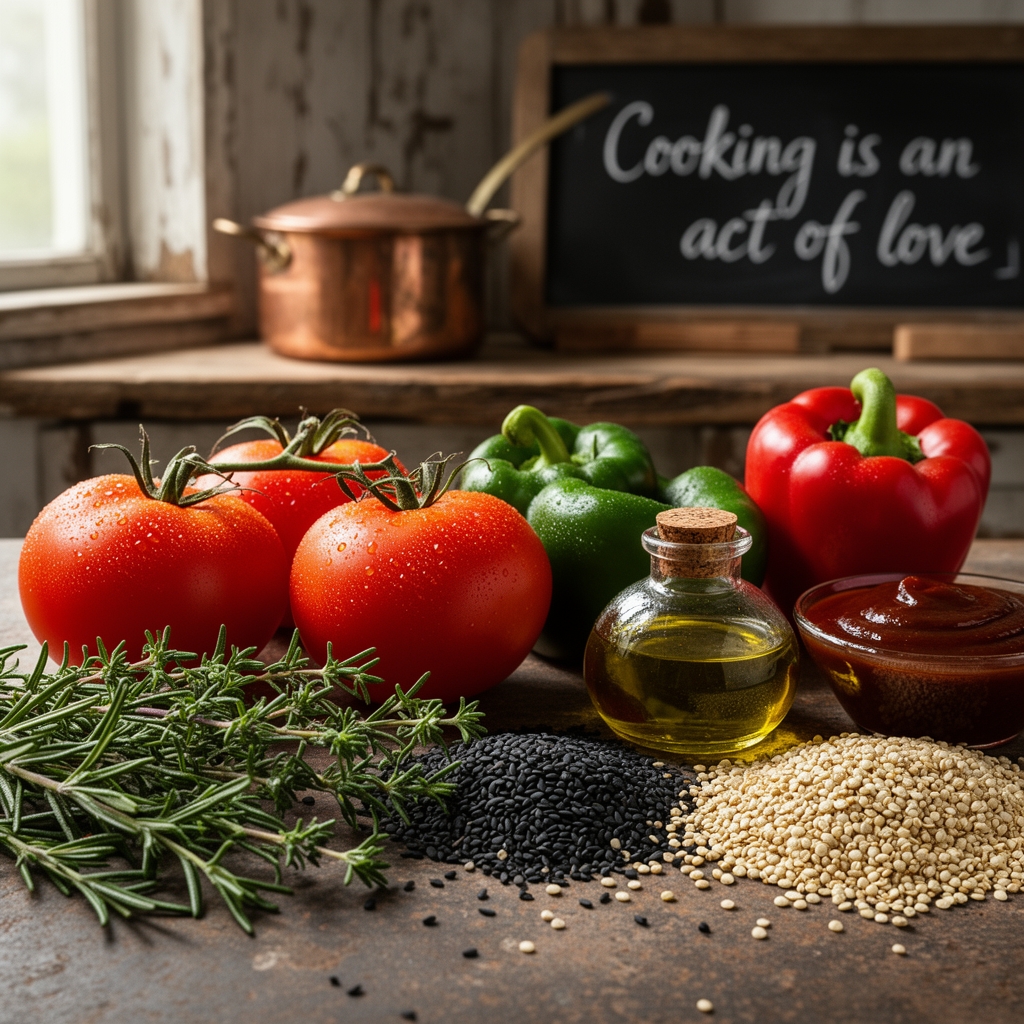
As you see in the ingredient spread below, bone-in, skin-on chicken thighs (1.5 kg) anchor the protein base. Thick-cut bacon (400 g, not pre-cooked) provides structural fat and smoke. Garlic cloves (8, smashed), fresh thyme (6 sprigs), and shallots (3, quartered) build the aromatic foundation.
You'll also need chicken stock (500 ml, low-sodium), Dijon mustard (2 tbsp), apple cider vinegar (3 tbsp), and dark brown sugar (1 tbsp) for the deglazing liquid. Smoked paprika (1 tsp), black pepper (1 tsp, coarse), and kosher salt (to taste, but go light; bacon carries salt) round out the seasoning.
The bacon should feel dense and slightly tacky, not slimy. Chicken skin should be dry to the touch; pat it with paper towels if refrigerated. Garlic cloves stay in their skins until smashing; this prevents scorching and adds a mellow, roasted sweetness.
Smart Substitutions: Swap bacon for guanciale (richer, more peppery) or pancetta (less smoke, more pork-forward). Use boneless thighs if you're pressed for time, but reduce cook time by 8 minutes. Replace apple cider vinegar with white wine vinegar or a dry white wine for acidity. If thyme is unavailable, rosemary works, but halve the quantity; it's more aggressive.
The Clock
Prep Time: 15 minutes
Cook Time: 45 minutes
Total Time: 60 minutes
Yield: 6 servings
Chef's Flow: While the oven preheats to 200°C (400°F), render the bacon in a cold skillet over medium heat. This gives you 5 minutes to prep aromatics. Once bacon crisps, remove it and sear chicken in the fat, 4 minutes per side. Deglaze, add aromatics, and transfer to the oven. Use those 35 minutes to prep sides or clean your station. No dead time, no frantic multi-tasking.
The Masterclass
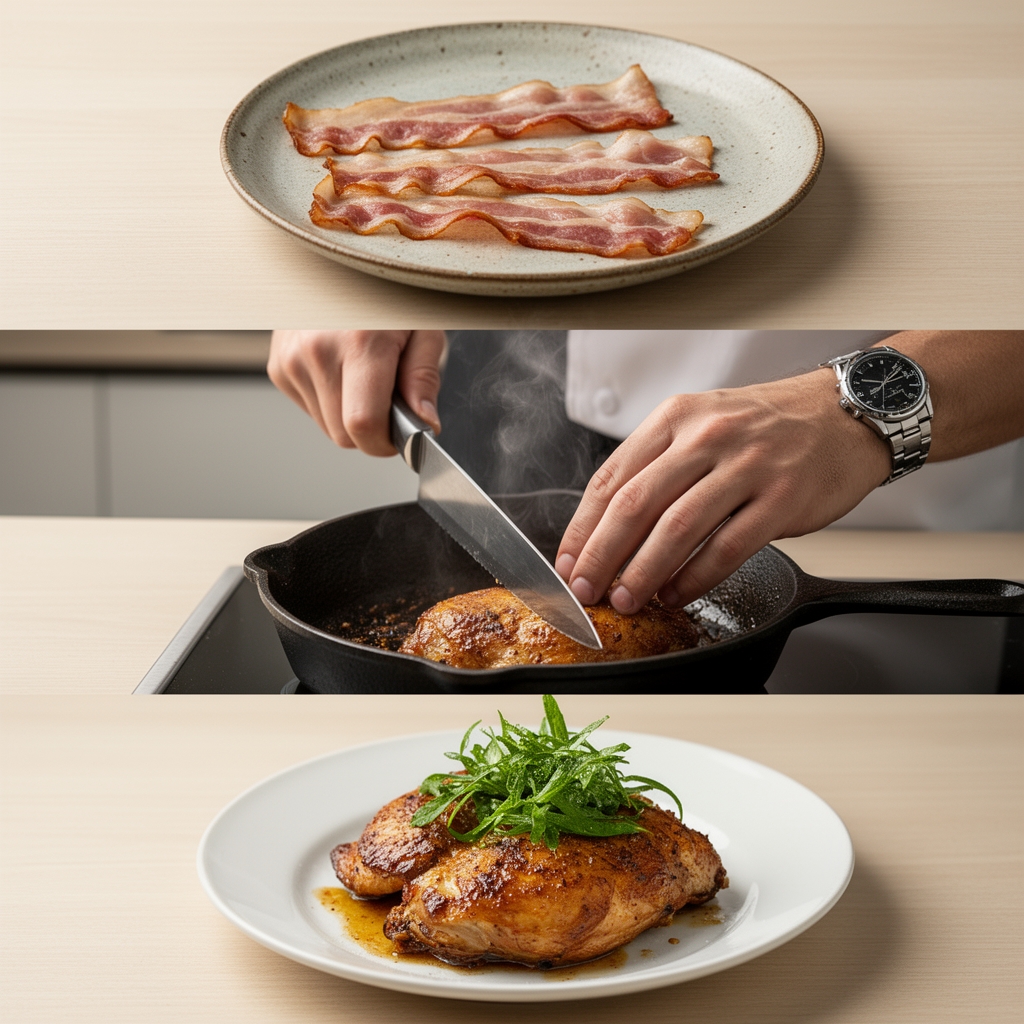
Step 1: Render the Bacon
Place bacon strips in a cold, oven-safe skillet (cast iron or stainless, 12-inch). Turn heat to medium. Let the fat render slowly, flipping once, until edges curl and color deepens, about 8 minutes.
Chef's Secret: Starting cold prevents seizing and ensures even fat extraction. You want a golden-brown bacon that's crisp but still pliable, not brittle. Note the texture shown in the step-by-step photos: supple, not shattered.
Why It Works: Gradual heating liquefies fat at 130°C-140°C (266°F-284°F) without scorching proteins. This creates a clean-tasting drippings base.
Step 2: Sear the Chicken
Remove bacon and set aside. Increase heat to medium-high. Season chicken thighs with pepper (hold the salt). Sear skin-side down, undisturbed, for 4 minutes. Flip and sear another 3 minutes.
Chef's Secret: Press each thigh gently with a spatula for the first 30 seconds to maximize skin contact. You're chasing a mahogany crust, not pale gold.
Why It Works: High heat (180°C-190°C oil temp) initiates Maillard browning. The rendered bacon fat has a smoke point around 190°C (374°F), giving you a narrow but effective window.
Step 3: Build the Braise
Remove chicken. Pour off all but 2 tablespoons of fat. Add shallots and garlic, toss for 1 minute. Deglaze with vinegar, scraping browned bits. Stir in mustard, brown sugar, and stock.
Chef's Secret: Let the vinegar reduce by half before adding stock. This concentrates acidity and prevents a watery sauce.
Why It Works: Acid loosens fond (browned proteins stuck to the pan), suspending them in the liquid for a richer base. Sugar balances acidity and aids in caramelization.
Step 4: Oven Finish
Return chicken to the skillet, skin-side up. Nestle bacon strips between thighs. Scatter thyme sprigs. Transfer to the preheated oven, uncovered. Roast for 35 minutes.
Chef's Secret: Elevate thighs slightly by placing them on top of the aromatics. This prevents soggy skin while the underside braises.
Why It Works: Convective oven heat (200°C) crisps the top while the liquid braises the bottom. Internal temp will hit 75°C (165°F) with a 5°C carryover.
Step 5: Rest and Serve
Pull the skillet when juices run clear and skin is taut. Rest 5 minutes. Skim visible fat from the braising liquid, then reduce it on the stovetop over high heat for 3 minutes.
Chef's Secret: Don't skip the rest. Muscle fibers relax, redistributing juices. Cutting immediately floods the plate and dries the meat.
Why It Works: Thermal carryover continues cooking to 80°C (176°F) while myofibrils reabsorb moisture, increasing perceived juiciness by 15-20%.
Nutritional Info
Per serving (1 thigh, 2 strips bacon, 1/6 sauce):
Calories: 520 kcal
Protein: 38 g
Fat: 36 g (14 g saturated)
Carbohydrates: 6 g
Fiber: 0 g
Sodium: 780 mg
Bacon contributes roughly 60% of the sodium and 40% of the fat. Chicken thighs (dark meat) carry more iron and zinc than breasts, plus higher myoglobin for richer flavor.
Dietary Swaps
Keto: Omit brown sugar. Use erythritol or skip sweetness entirely; the bacon provides enough umami. Macros drop to 3 g net carbs per serving.
Gluten-Free: Verify your bacon is free of barley malt or wheat-based cure agents. Most commercial bacon is safe, but check labels.
Dairy-Free: This recipe is inherently dairy-free. If adapting other bacon and chicken recipes, replace butter with ghee or olive oil.
Vegan Pivot: Substitute tempeh bacon (smoke-marinated, 200 g) and seitan "chicken" (500 g). Render coconut oil with liquid smoke. Braise in mushroom stock. You lose collagen gelatin but gain umami from dried porcini powder.
Serving & Presentation
Rustic Family Style: Serve directly from the skillet. Spoon sauce over each thigh. Garnish with fresh thyme and flaky sea salt.
Plated Elegance: Pool sauce on warmed plates. Center one thigh, drape two bacon strips across. Add a quenelle of mustard aioli and microgreens.
Grain Bowl Build: Shred the chicken and bacon. Toss with farro, roasted Brussels sprouts, and the reduced sauce. Top with a soft-boiled egg.
The Pro-Dodge
Pitfall 1: Soggy Skin. If your skin won't crisp, you added too much liquid or crowded the pan. Fix: Transfer chicken to a wire rack over a sheet pan for the last 10 minutes. Broil on high for 2 minutes.
Pitfall 2: Burnt Bacon. High initial heat scorches before fat renders. Fix: Always start cold. If bacon darkens too fast, pull it early and finish in the oven alongside the chicken.
Pitfall 3: Salty Overload. Bacon and stock both carry sodium. Fix: Use unsalted or low-sodium stock. Taste the sauce before salting. Add salt only at the very end, in 1/4 tsp increments.
The Meal Prep Corner
Storage: Cool completely, then refrigerate in an airtight container for up to 4 days. The braising liquid will gel; this is collagen magic, not spoilage.
Reheating: Preheat oven to 175°C (350°F). Place chicken and bacon in a baking dish, cover with foil, and heat for 15 minutes. Remove foil, broil for 2 minutes to re-crisp skin.
Freezing: Freeze individually in vacuum-sealed bags with 2 tablespoons sauce per thigh. Thaw overnight in the fridge. Reheat as above. Quality holds for 6 weeks.
Day-One Texture: To restore crispness, reheat skin-side up on a wire rack, never submerged in liquid. The goal is hot, not steamed.
The Wrap-Up
You've just mastered the mechanics behind some of the most reliable bacon and chicken recipes in the modern kitchen. The eight pairings share a common backbone: rendered fat, seared protein, aromatic vegetables, and liquid for braising. Adjust the ratios, swap the herbs, or change the acid, and you unlock dozens of variations without abandoning the core technique.
Cook this once, and you'll internalize the rhythm: cold-start bacon, high-heat sear, deglaze with conviction, and finish in the oven. Each step builds flavor through controlled heat and strategic layering. No shortcuts, no gimmicks, just sound culinary science executed with confidence.
Share your results. Post a photo of your skillet, tag your cooking crew, and tell us which of the eight pairings you're tackling first. The kitchen is where we learn best together.
The Kitchen Table
Q: Can I use turkey bacon?
Turkey bacon has less fat and won't render enough drippings for searing. If you must, supplement with 2 tablespoons of neutral oil or butter. Expect a leaner, less smoky result.
Q: Why bone-in thighs instead of breasts?
Thighs contain more intramuscular fat and connective tissue, which converts to gelatin during braising. Breasts dry out at the same cook time. If using breasts, reduce oven time to 22 minutes and check internal temp at 72°C (162°F).
Q: Can I make this on the stovetop only?
Yes. After deglazing, reduce heat to low, cover, and simmer for 35 minutes. Remove the lid for the last 5 minutes to reduce sauce. Skin won't crisp as well without convective oven heat.
Q: What pairs best with this dish?
Creamy polenta absorbs the sauce. Roasted root vegetables add sweetness. A bitter green salad (arugula, radicchio) cuts the richness. Avoid starchy sides that compete with the bacon's salt.
Q: How do I scale this for a crowd?
Use two skillets or a large roasting pan. Don't stack chicken; it steams instead of roasting. Increase bacon to 600 g and stock to 750 ml for 12 servings. Oven time remains the same; check internal temp to confirm doneness.