

The first sound that tells you dinner is under control is the sizzle of chicken thighs hitting a preheated pan, fat rendering into golden pools that will become the base of something extraordinary. One skillet, six ways to transform poultry into weeknight brilliance without generating a sink full of casualties. These chicken recipes one pan techniques rely on layering flavors directly in the vessel, building fond, capturing steam, and finishing with a deglazing liquid that ties everything into a cohesive, restaurant-quality plate. No separate pots for rice, no boiling vegetables in another burner, no baking sheet in the oven while you sauté on the stovetop. Every element cooks in sequence or simultaneously, each ingredient borrowing heat, fat, and flavor from its neighbors. The result is a self-contained system where the pan becomes both cooking surface and serving platter, and cleanup takes less time than the meal itself.
The Gathers
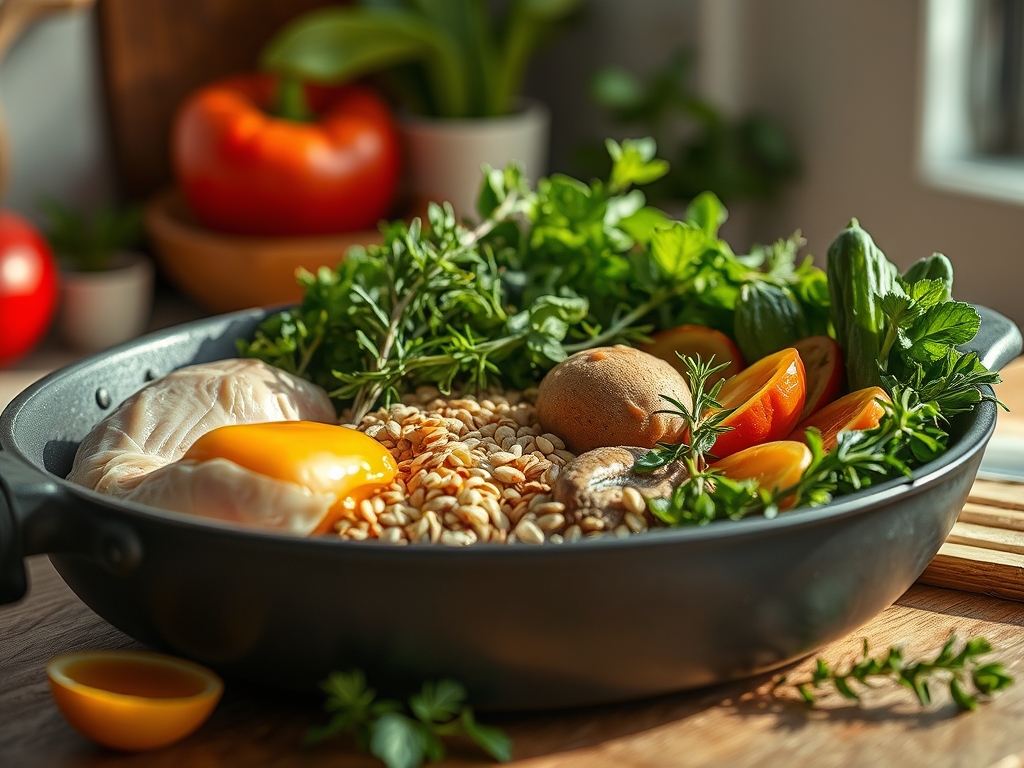
As you see in the ingredient spread below, the foundation starts with bone-in, skin-on chicken thighs (about 1.5 kg total), which deliver more collagen and moisture than breasts. Yellow onions (2 medium, sliced into half-moons) provide the Maillard-reactive sugars that caramelize into the pan's sweet undertone. Garlic cloves (8, smashed but not minced) release allicin slowly, perfuming the oil without scorching. Cherry tomatoes (400 g) burst under heat, releasing pectin-thickened juices that become the sauce. Baby potatoes (600 g, halved) nestle into the fat, their cut sides browning against the metal. Fresh thyme (6 sprigs) and smoked paprika (2 tsp) add aromatic complexity and a hint of smoke. Chicken stock (240 ml) deglazes and steams, while olive oil (3 Tbsp) and unsalted butter (30 g) create the emulsified fat base.
Smart Substitutions: Swap thighs for drumsticks if you prefer more gnawing satisfaction. Use shallots instead of onions for a milder, more refined sweetness. Replace cherry tomatoes with canned San Marzano (drained) during off-season months. Yukon golds can stand in for baby potatoes, cut into 2 cm cubes for even cooking.
The Clock
Prep Time: 12 minutes
Cook Time: 38 minutes
Total Time: 50 minutes
Serves: 4 generously
Chef's Flow: While the chicken rests after searing (critical for juice redistribution), prep your aromatics. Use the same cutting board without washing, the raw chicken residue will sterilize under heat. Halve potatoes while the onions soften, letting the pan do double duty. Multitask the final simmer by setting the table or pouring wine, the covered skillet requires no intervention.
The Masterclass
Step 1: Sear the Protein
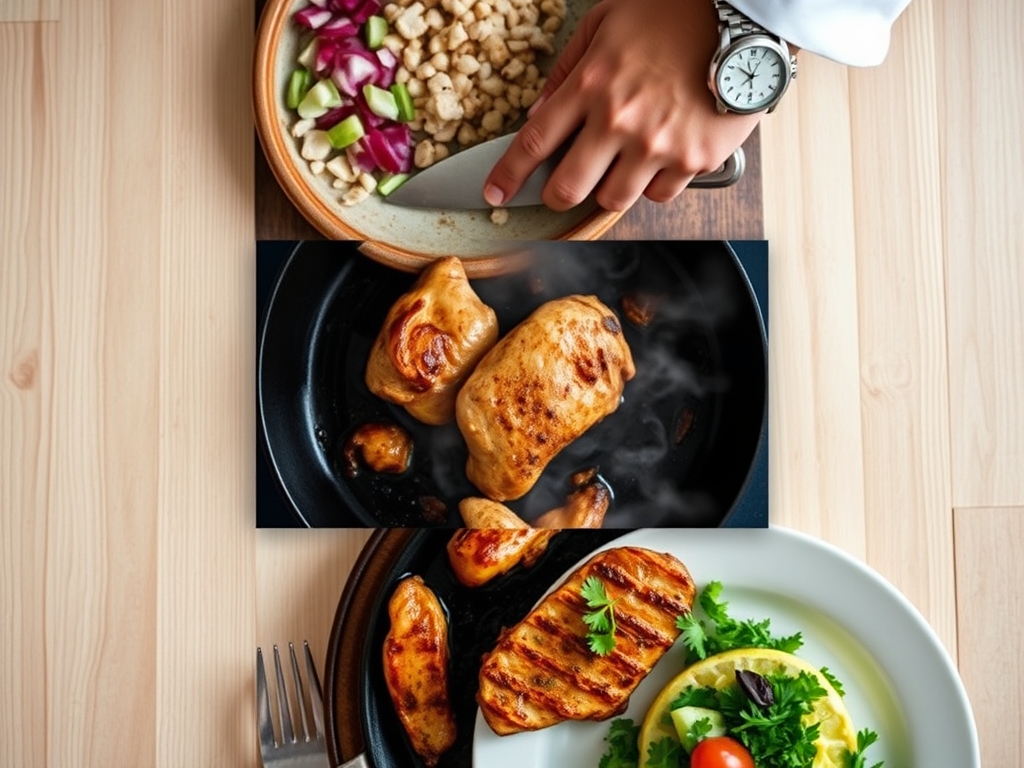
Pat chicken completely dry with paper towels, then season aggressively with kosher salt (1.5 tsp) and black pepper (0.5 tsp). Heat your largest oven-safe skillet over medium-high (around 205°C) until a water droplet skitters. Add olive oil, wait 10 seconds, then lay thighs skin-side down without moving them for 7 minutes. The skin should release naturally when a deep mahogany crust forms.
Chef's Secret: Moisture is the enemy of the Maillard reaction. Even 5% surface water will steam the protein instead of browning it. The dry surface also prevents dangerous oil spatter.
Step 2: Flip and Finish the First Side
Turn thighs with tongs, sear the underside for 4 minutes, then transfer to a plate. Note the texture shown in the step-by-step photos: the skin should look lacquered, almost shellacked. Pour off all but 2 Tbsp of rendered fat.
Why It Works: You're not cooking the chicken through yet. Internal temp should hover around 52°C. The second roast will bring it to safe 74°C while keeping the interior silky.
Step 3: Build the Aromatic Base
Lower heat to medium (165°C). Add onions and a pinch of salt, scraping the fond (those brown bits) with a wooden spoon. Cook 5 minutes until translucent, then add garlic and paprika. Stir for 30 seconds until fragrant but not darkened.
Chef's Secret: Paprika burns easily above 175°C, turning acrid. Adding it after the onions soften protects the delicate capsaicin compounds.
Step 4: Introduce Vegetables and Liquid
Tumble in halved potatoes, cut-side down, pressing them into contact with the pan. Scatter tomatoes and thyme over the top. Nestle chicken thighs skin-side up among the vegetables, then pour stock around (not over) the chicken to preserve crust integrity.
Why It Works: The stock creates a humid environment that steams the potatoes while the exposed chicken skin crisps further in the dry heat above the liquid line.
Step 5: Oven Finish
Transfer the entire skillet to a preheated 190°C (375°F) oven. Roast uncovered for 22 minutes. The chicken will reach 74°C internal, potatoes will be fork-tender, and tomatoes will collapse into a chunky sauce.
Chef's Secret: Thermal carryover will add another 3-4°C after you pull the pan. Remove at 72°C if you prefer juicier meat; the USDA safety threshold is met during the resting climb.
Step 6: Emulsify and Serve
Remove skillet (use a dry towel, the handle is scorching). Transfer chicken and vegetables to a platter. Place the skillet over medium heat, add butter, and swirl until it melts into the pan juices, creating a glossy, emulsified sauce. Spoon over everything.
Why It Works: Butter's milk proteins and lecithin act as emulsifiers, binding water and fat into a stable, velvety coating that clings to every surface.
Nutritional Info
Per serving (1 thigh, vegetables, and sauce):
Calories: 520 kcal
Protein: 38 g
Fat: 28 g (of which saturated: 8 g)
Carbohydrates: 32 g
Fiber: 4 g
Sodium: 680 mg
The macros skew protein-forward with moderate fat from the skin and olive oil. Potatoes provide resistant starch, which ferments in the colon to support gut health.
Dietary Swaps
Keto: Omit potatoes entirely, double the cherry tomatoes, and add 200 g of halved Brussels sprouts. Net carbs drop to 9 g per serving.
Gluten-Free: Already compliant. Verify stock is certified gluten-free if using commercial broth.
Vegan: Replace chicken with 600 g extra-firm tofu (pressed, cubed, tossed in cornstarch), sear identically, and use vegetable stock with nutritional yeast (2 Tbsp) for umami depth.
Serving & Presentation
Rustic Family Style: Bring the skillet to the table on a wooden trivet, letting guests serve themselves directly. Garnish with torn parsley and flaky sea salt.
High-End Plating: Arrange one thigh per plate, lean it against a mound of potatoes, spoon sauce in a crescent, and top with microgreens and a lemon wedge.
Grain Bowl Format: Shred the chicken, toss with the vegetables and sauce, and serve over farro or quinoa for a macro-balanced lunch prep.
The "Pro-Dodge"
Pitfall 1: Soggy skin. Fix: If you skip the initial sear or overcrowd the pan, moisture trapped under the chicken steams the skin. Always leave 2 cm between pieces.
Pitfall 2: Raw potatoes. Fix: Halve them smaller (under 3 cm diameter) or parboil for 4 minutes before adding to the pan.
Pitfall 3: Broken sauce. Fix: If the butter separates into greasy pools, pull the skillet off heat and whisk in 1 tsp of cold water to re-emulsify.
The Meal Prep Corner
Cool the skillet to room temp within 2 hours, then portion into glass containers. Refrigerate up to 4 days. Reheat in a 180°C oven for 12 minutes to re-crisp the skin; microwaving turns it rubbery. Freeze individual portions up to 3 months. Thaw overnight in the fridge, then reheat as above. The sauce may look separated when cold but will recombine under heat.
The Wrap-Up
Six variations of this formula, each swapping vegetables or spices, give you a month of dinners without repeating a flavor profile. These chicken recipes one pan methods prove that limitation breeds creativity: one skillet forces you to think in layers, timing each addition so everything finishes together. The pan becomes a flavor amplifier, every ingredient contributing to the collective sauce. Try this base recipe twice to internalize the rhythm, then improvise with fennel and olives, or Brussels sprouts and bacon, or bell peppers and chorizo. Share your best combo in the comments, we cook better when we cook together.
The Kitchen Table
Q: Can I use boneless, skinless chicken breasts?
A: Yes, but reduce oven time to 14 minutes and check for 65°C internal temp. Add 1 Tbsp extra butter at the end to compensate for lost fat. The dish will be leaner but less flavorful.
Q: What if I don't have an oven-safe skillet?
A: Sear and build the base in any skillet, then transfer everything to a 23×33 cm baking dish before the oven step. You'll lose some fond, so deglaze the original pan with a splash of stock and pour it over the chicken.
Q: Can I make this in advance?
A: Sear the chicken and prep the vegetables up to 24 hours ahead. Store separately in the fridge, then assemble and roast when ready. The skin won't be as crisp as fresh, but it's still excellent.
Q: How do I scale this for two people?
A: Halve everything and use a 25 cm skillet. Cook time remains identical because the oven temp and chicken thickness don't change.
Q: What's the best pan for this technique?
A: A 30 cm cast iron or stainless steel skillet with an oven-safe handle. Cast iron holds heat better for searing, stainless makes deglazing easier to see. Avoid nonstick above 200°C, the coating degrades.