
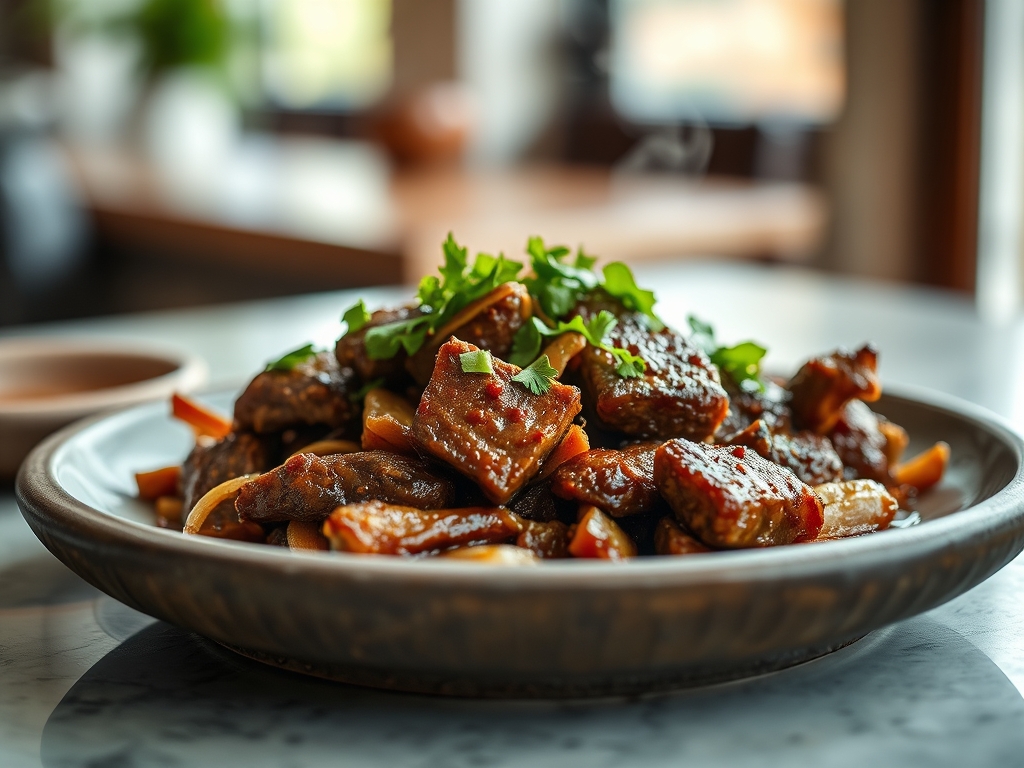
Imagine the sound of a heavy carbon steel wok hitting a high-output burner. The air fills with the scent of fermented soy and caramelized garlic. This is the sensory heart of vietnamese shaking beef recipes; a dish known locally as Bo Luc Lac. It is a masterclass in contrasts: the exterior is charred and smoky, while the interior remains buttery and rare. We are chasing that elusive balance of salt, acid, and heat that defines the best street food in Saigon.
The name itself is an instruction. Shaking refers to the constant rhythmic motion of the pan, which prevents the sugar-heavy marinade from burning while ensuring the beef sears evenly on all sides. It is not just a stir-fry; it is a high-heat dance of thermal energy and amino acids. If you have ever struggled with soggy, grey beef or a sauce that feels thin and uninspired, you are in the right place. We are going to break down the molecular magic of the Maillard reaction to ensure your home kitchen smells like a five-star bistro. Grab your favorite apron and a pair of heavy-duty tongs. We are about to elevate your weeknight rotation into a professional-grade culinary event.
The Gathers:
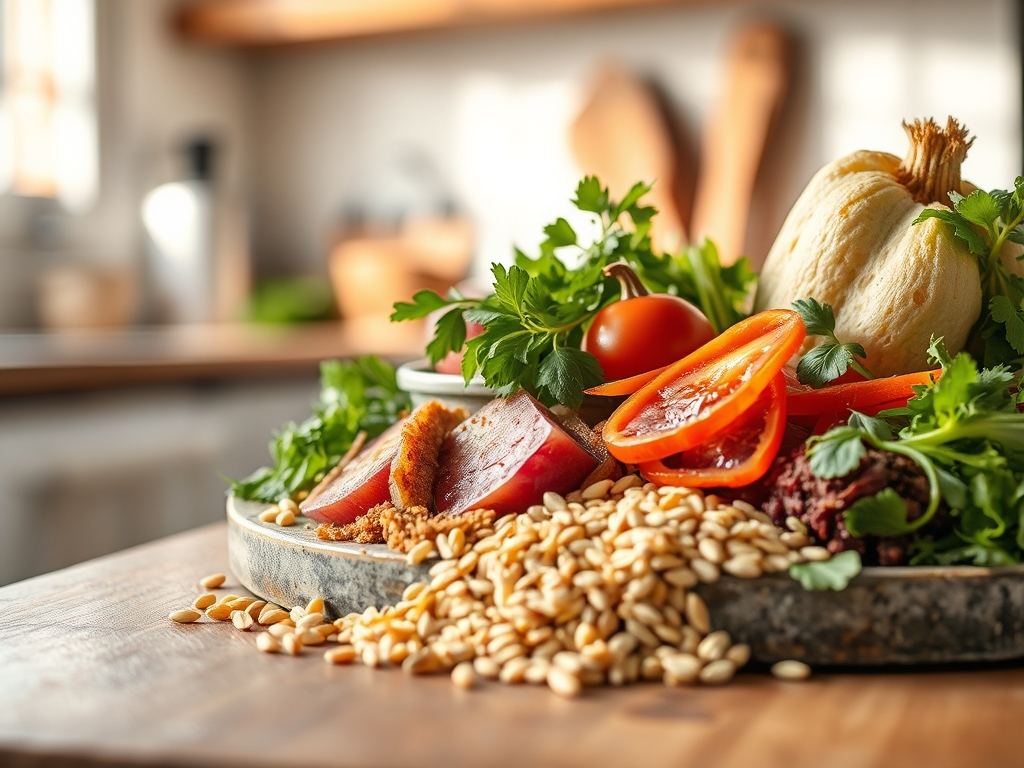
To achieve a restaurant-quality result, your mise-en-place must be flawless. Start with the protein. You need a cut with high intramuscular fat and low connective tissue. A center-cut filet mignon or a well-marbled ribeye is ideal. You will also need high-quality oyster sauce, which provides the viscous body for our glaze, and Maggi Seasoning, which offers a unique savory profile that standard soy sauce cannot replicate.
For the aromatics, gather fresh garlic, shallots, and the white parts of scallions. You will want a microplane to grate the garlic into a fine paste; this ensures it integrates into the marinade without leaving bitter, burnt chunks in the pan. Do not forget the acid. A traditional lime and black pepper dipping sauce (Muoi Tieu Chanh) is mandatory to cut through the richness of the rendered beef fat.
Smart Substitutions: If you cannot find Maggi Seasoning, use a 1:1 ratio of dark soy sauce and Worcestershire sauce to mimic that deep umami hit. For a soy-free version, coconut aminos work well, though you may need to reduce the added sugar since aminos are naturally sweeter. If ribeye is out of budget, a top sirloin works beautifully if you slice it against the grain to break up the muscle fibers.
The Clock
Efficiency in the kitchen is about the Chef's Flow. This is the art of overlapping tasks so that no time is wasted. For vietnamese shaking beef recipes, the total active time is roughly 40 minutes, but the passive time is where the flavor develops.
- Prep & Marinate (20 Minutes): Cubing the beef and letting it sit in the marinade allows the salt to penetrate the protein cells via osmosis.
- The Chill (Optional 10 Minutes): Putting the marinated beef in the fridge helps the surface dry out slightly, which is essential for a better sear.
- The Sear (5 Minutes): This is the high-heat phase. Because we are working in small batches to maintain pan temperature, this happens quickly.
- The Rest (3 Minutes): Crucial for moisture retention.
Total time from fridge to table is under an hour. By the time your rice cooker clicks over to the "warm" setting, your beef should be hitting the pan.
The Masterclass
1. The Precision Cut
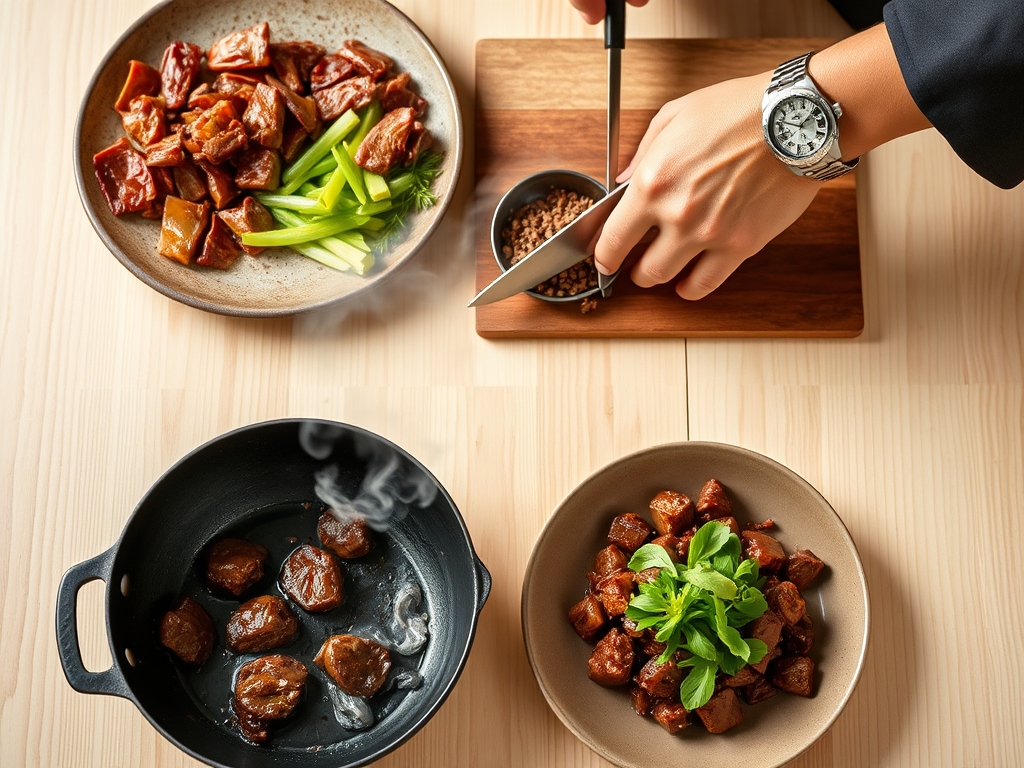
Using a sharp chef's knife or a bench scraper to organize your workspace, cube the beef into uniform 1-inch pieces. Consistency is key here; if the cubes vary in size, the small ones will overcook and turn leathery before the large ones develop a crust.
Pro Tip: This is about surface area-to-volume ratio. Smaller cubes increase the surface area available for the Maillard reaction, which is the chemical reaction between amino acids and reducing sugars that gives browned food its distinctive flavor.
2. The Umami Infusion
In a stainless steel saucier, whisk together oyster sauce, soy sauce, sugar, and a splash of fish sauce. Toss the beef cubes in this mixture along with your microplaned garlic. Let it sit at room temperature for at least 20 minutes.
Pro Tip: The salt in the soy sauce acts as a dry brine. It denatures the protein strands, allowing them to hold onto more moisture during the high-heat cooking process, preventing the meat from becoming "tight" or tough.
3. The Water-Whip Method
Just before cooking, add a teaspoon of cornstarch and a teaspoon of neutral oil to the beef. Mix vigorously. This creates a thin barrier that protects the meat from the direct, aggressive heat of the pan.
Pro Tip: This is a variation of velveting, a classic Chinese technique. The starch creates a slippery texture and helps the sauce emulsify instantly once it hits the hot metal.
4. The High-Heat Prep
Heat a heavy-bottomed skillet or cast iron pan until it is screaming hot. You should see wisps of smoke rising from the oil. Do not use non-stick pans here; they cannot handle the temperatures required to achieve a true char and can release toxic fumes at these levels.
Pro Tip: Using a pan with high thermal mass, like cast iron, prevents the temperature from dropping when the cold meat is added. A drop in temp leads to steaming rather than searing.
5. The Batch Sear
Place the beef in the pan in a single layer. Do not crowd them. If you hear a sizzle that sounds like a dull hum rather than a sharp crackle, you have added too much meat. Let them sit undisturbed for 60 seconds to develop a crust.
Pro Tip: This is conduction heating. By leaving the meat still, you allow the heat to transfer directly from the pan to the protein, creating a deep, mahogany crust before the interior reaches its target temperature.
6. The Shaking Dance
Now, use your tongs or a flick of the wrist to shake the pan. The beef should roll and tumble. Add a knob of butter and your sliced shallots. The butter will foam and brown, adding a nutty complexity to the glaze.
Pro Tip: Adding butter at the end is called mounting with butter (monter au beurre). It creates a glossy, piquant emulsion that clings to the meat rather than puddling at the bottom of the plate.
7. The Deglaze
Toss in a splash of rice wine or water to pick up the browned bits (fond) stuck to the bottom of the pan. This ensures every ounce of flavor is incorporated into the final sauce.
Pro Tip: Deglazing uses the power of steam to lift caramelized sugars and proteins off the pan surface. This creates a pan sauce that is chemically complex and deeply savory.
8. The Bed of Greens
Immediately plate the beef over a bed of watercress and sliced tomatoes. The residual heat from the beef will slightly wilt the greens, while the cool tomatoes provide a refreshing contrast.
Pro Tip: This utilizes thermal carryover. The internal temperature of the beef will continue to rise by about 5 degrees after it leaves the pan. Plating it on greens stops the cooking process by absorbing some of that excess heat.
The Deep Dive
Macro Nutrition: A standard serving of Bo Luc Lac is high in bioavailable protein and essential minerals like zinc and B12. To keep the glycemic index low, serve it over cauliflower rice or a large bed of greens instead of white rice.
Dietary Swaps:
- Vegan: Use extra-firm tofu pressed for 30 minutes, then seared using the same shaking method. Replace oyster sauce with a mushroom-based vegetarian stir-fry sauce.
- Keto: Replace the sugar in the marinade with a tiny amount of monk fruit sweetener and serve over a double portion of watercress.
- GF: Ensure your oyster sauce and soy sauce are certified gluten-free (Tamari is a great swap).
The Fix-It:
- The Meat is Gray: Your pan wasn't hot enough or you crowded it. Fix: Remove the meat, wipe the pan, reheat until smoking, and sear in smaller batches.
- The Garlic is Bitter: You added the garlic too early or it was chopped too large. Fix: Use a microplane to create a paste that melts into the sauce.
- The Sauce is Thin: It didn't emulsify with the fat. Fix: Add a tiny splash of water and a cold knob of butter at the very end while shaking the pan vigorously.
Meal Prep: If you are making this for the week, undercook the beef slightly (aim for rare). When you reheat it in the microwave or a small saucier, the secondary heat will bring it to a perfect medium-rare without turning it into rubber.
The Wrap-Up
You have officially mastered the art of the shake. Vietnamese shaking beef recipes are more than just a quick dinner; they are an exercise in heat management and flavor layering. By understanding the science of the Maillard reaction and the importance of a proper deglaze, you have moved beyond following a recipe to truly cooking with intuition. The contrast of the hot, savory beef against the cool, peppery watercress is a culinary high that never gets old. Now, go forth, get that pan smoking, and show your kitchen who is boss.
The Kitchen Table
What is the best cut of beef for Shaking Beef?
Filet mignon is the gold standard for tenderness; however, ribeye offers more flavor due to its fat content. Ensure you trim any large pieces of gristle to keep the texture consistent across the entire dish.
Why is my beef tough and chewy?
Toughness usually results from overcooking or using a lean cut like round steak. Always slice against the grain and aim for a high-heat sear that leaves the center a juicy medium-rare to maintain the protein structure.
Can I make this in a non-stick pan?
It is not recommended. Non-stick coatings degrade at the high temperatures required for a proper sear. Use a carbon steel wok or a cast iron skillet to safely achieve the necessary char and flavor profile.
How do I get the sauce to stick to the beef?
The secret is a combination of cornstarch in the marinade and "mounting" the sauce with a knob of cold butter at the end. This creates a glossy emulsion that coats the meat perfectly rather than running off.