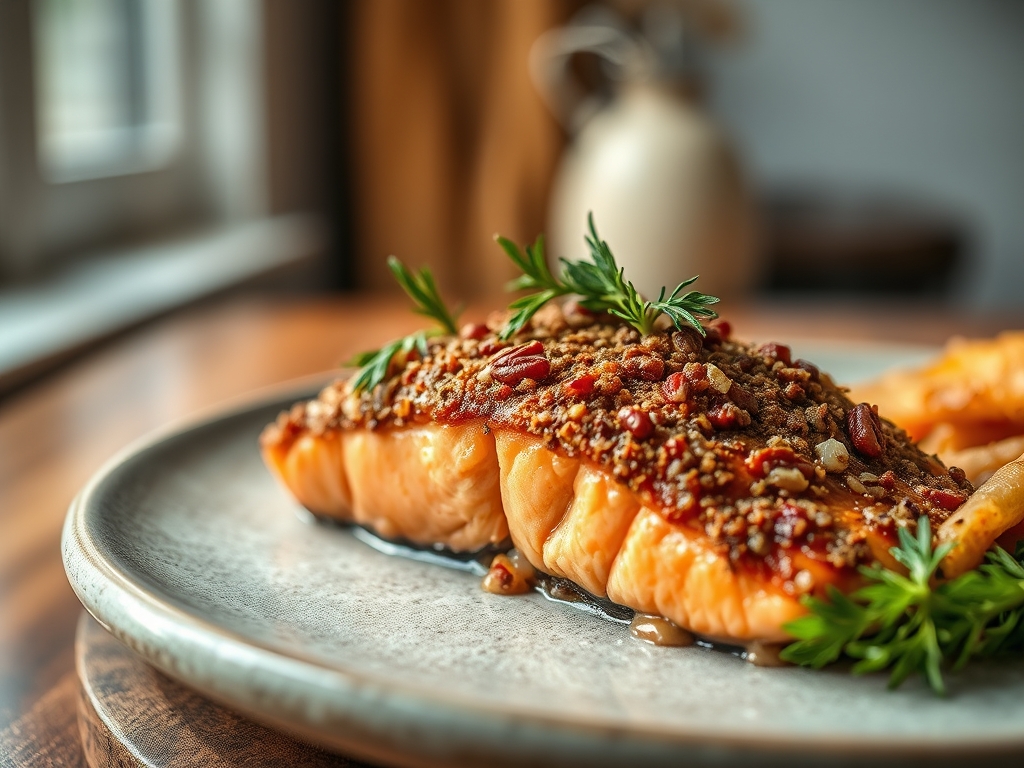
Picture the scene: a heavy-bottomed skillet sizzling on the range while the scent of toasted nuts and caramelized honey fills your kitchen. We are moving beyond basic pan-searing today. If you are scouring the internet for pecan crusted salmon recipes, you are likely looking for that elusive contrast between a shatteringly crisp topping and a succulent, translucent center. It is a dish that feels like a black-tie gala but comes together with the speed of a Tuesday night. We are going to master the structural integrity of the crust and the thermal regulation of the fish. This is not just dinner; it is an exercise in texture and temperature control. By the end of this guide, you will understand how to manipulate fats and proteins to create a restaurant-quality crust that never gets soggy. Grab your apron and your favorite microplane; we are about to turn a simple fillet into a masterpiece of culinary engineering.
The Gathers:
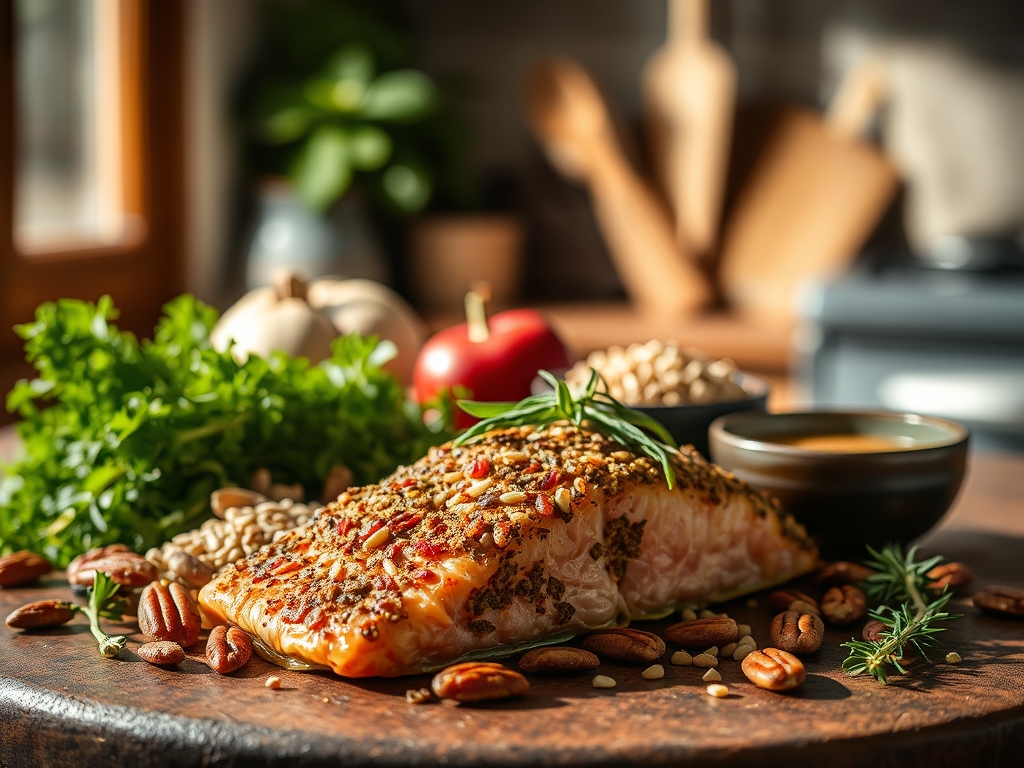
To achieve a superior crust, your mise-en-place must be precise. Start with high-quality salmon fillets, preferably center-cut for uniform thickness. You will need raw pecans; avoid pre-roasted ones as they will over-brown during the bake. For the adhesive, we use a viscous mixture of Dijon mustard and honey. This provides a piquant kick and serves as a biological glue. You will also need panko breadcrumbs for structural aeration, fresh parsley for a hit of chlorophyll, and lemon zest to cut through the fatty acids of the fish.
Smart Substitutions:
If you are avoiding gluten, swap the panko for crushed pork rinds or almond flour to maintain that crunch. For a vegan alternative, use a thick "flax egg" or a miso-maple glaze instead of honey-mustard to bind the nuts to a cauliflower steak or a firm piece of tofu. If pecans are unavailable, walnuts offer a similar fat content but a slightly more bitter tannin profile. Always use a digital scale to measure your nuts and crumbs; volume can be deceptive, but mass never lies.
The Clock
Efficiency in the kitchen is about "Chef's Flow." This refers to the synchronization of prep tasks so that no component sits idle for too long. Total active prep time is approximately 15 minutes, with a cook time of 12 to 14 minutes depending on the thickness of your fillets.
The Breakdown:
- Prep (0-10 mins): Finely chop the pecans using a sharp chef's knife or a food processor. Do not turn them into dust; you want distinct granules for texture.
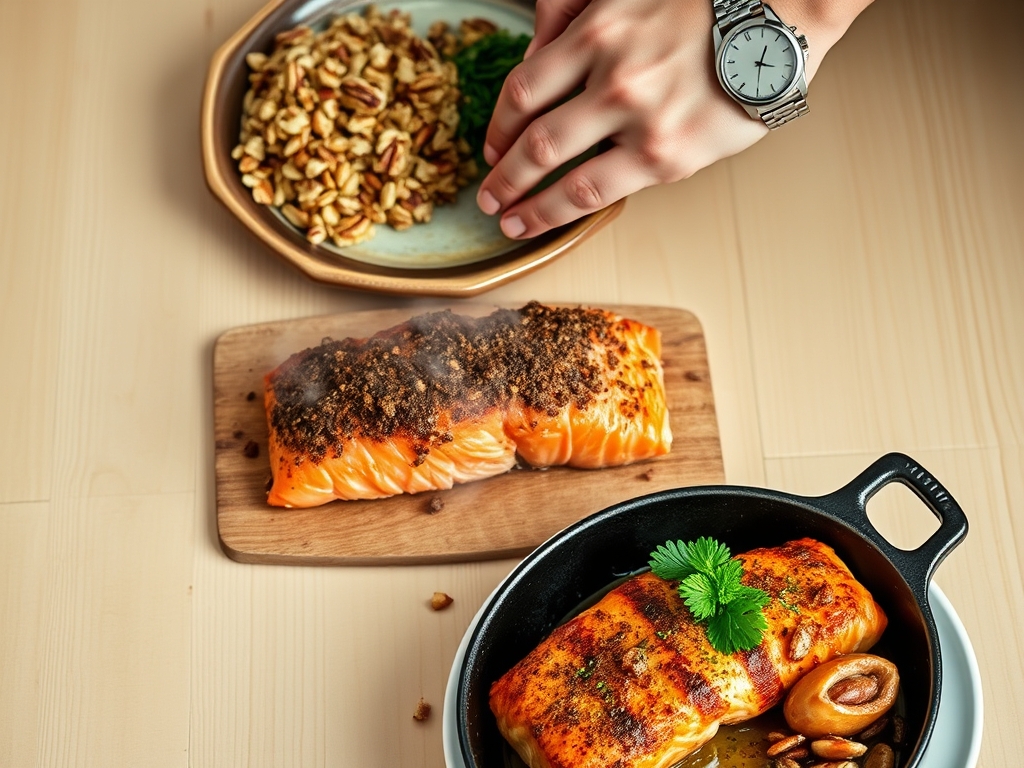
- Assembly (10-15 mins): Coat the salmon and apply the crust. Let it rest for two minutes to allow the moisture in the mustard to hydrate the breadcrumbs slightly.
- The Bake (15-28 mins): Use a preheated oven at 400 degrees Fahrenheit.
- The Rest (28-33 mins): Carryover cooking is your best friend. Pull the fish when the internal temperature hits 130 degrees Fahrenheit.
The Masterclass
1. The Moisture Purge
Pat your salmon fillets bone-dry with paper towels. Any surface moisture will create steam, which is the enemy of a crisp crust. Use a bench scraper to move the fillets onto a parchment-lined baking sheet.
Pro Tip: This process prevents the Leidenfrost effect where steam traps moisture between the fish and the crust, causing the topping to slide off during service.
2. The Viscous Adhesive
Whisk together your Dijon mustard, honey, and a splash of lemon juice in a small saucier or bowl. Use a silicone pastry brush to apply a thin, even layer across the top of the fish.
Pro Tip: Mustard contains mucilage, a natural thickener that acts as a stabilizer, ensuring your pecan mixture stays anchored during the thermal expansion of the fish.
3. The Pecan Aeration
Combine the chopped pecans, panko, and melted butter. The butter coats the dry particles, ensuring they toast evenly rather than burning in isolated spots. Press the mixture firmly onto the mustard layer.
Pro Tip: The panko creates interstitial air pockets within the crust. These pockets allow heat to circulate, resulting in a lighter, crunchier mouthfeel than nuts alone.
4. Precision Thermal Application
Place the tray in the center of the oven. If you have a convection setting, use it to encourage even browning through forced air circulation. Use a digital probe thermometer to monitor the internal temperature.
Pro Tip: Aim for Albumin management. If you see white liquid seeping out, the muscle fibers have contracted too tightly due to high heat, squeezing out the internal juices.
5. The Carryover Rest
Remove the fish from the oven when it is 5 degrees below your target temperature. Move the fillets to a cooling rack using wide tongs to prevent the bottom from steaming on the hot pan.
Pro Tip: Thermal carryover occurs because the exterior of the fish is hotter than the core. The heat continues to migrate inward even after the fish is removed from the heat source.
The Deep Dive
Macro Nutrition
Salmon is a powerhouse of Omega-3 fatty acids, specifically EPA and DHA, which support cardiovascular health. The pecans add a dose of manganese and healthy monounsaturated fats. A standard 6-ounce serving provides roughly 35g of protein, 22g of fat, and 8g of carbohydrates.
Dietary Swaps
- Keto: Replace honey with a keto-friendly maple syrup and use crushed macadamia nuts for an even higher fat-to-carb ratio.
- Paleo: Use coconut aminos instead of mustard and swap breadcrumbs for extra-fine almond meal.
- Nut-Free: If pecans are a no-go, toasted sunflower seeds or pumpkin seeds (pepitas) provide a similar crunch and earthy flavor profile.
The Fix-It: Pitfalls and Solutions
- Soggy Bottoms: This happens when the fish sits in its own rendered fat. Use a wire rack set inside a baking sheet to allow air to circulate under the fillet.
- Burnt Topping: If the pecans darken too quickly, tent the fish loosely with foil. This reflects radiant heat while allowing the ambient temperature to finish cooking the protein.
- Bland Crust: You likely forgot to season the nut mixture. Always add a pinch of kosher salt to your dry ingredients to enhance the natural sugars in the pecans.
Meal Prep: Reheating Science
To maintain "day-one" quality, never use a microwave. The electromagnetic waves agitate water molecules, turning your crisp crust into a mushy mess. Instead, reheat in a toaster oven or air fryer at 325 degrees Fahrenheit for 5 minutes. This restores the Maillard reaction in the crust while gently warming the center.
The Wrap-Up
You are now equipped with the technical knowledge to execute one of the most sophisticated pecan crusted salmon recipes in your repertoire. Remember that cooking is as much about physics as it is about flavor. By managing moisture, utilizing the right adhesives, and respecting the science of carryover heat, you ensure a perfect result every single time. Now, go forth and sear with confidence. Your kitchen is your laboratory, and tonight, the experiment is going to be delicious.
The Kitchen Table
Can I use frozen salmon for this recipe?
Yes, but ensure it is fully thawed and patted dry. Excess moisture from ice crystals can compromise the crust's adhesion. Thaw in the refrigerator overnight for the best texture and to prevent protein degradation.
How do I know when the salmon is done?
The most reliable method is using a digital thermometer to reach 135 degrees Fahrenheit. Alternatively, the fish should flake easily with a fork and appear opaque rather than translucent in the thickest part.
Why is my pecan crust falling off?
This usually occurs if the fish was too wet or the mustard layer was too thin. Ensure the salmon is bone-dry before applying the adhesive. Press the pecan mixture firmly into the glaze to create a solid bond.
What are the best side dishes for this?
Balance the rich, fatty profile of the salmon and pecans with something acidic or bright. A lemon-dressed arugula salad, roasted asparagus, or a light quinoa pilaf with dried cranberries works beautifully to complement the nutty flavors.