
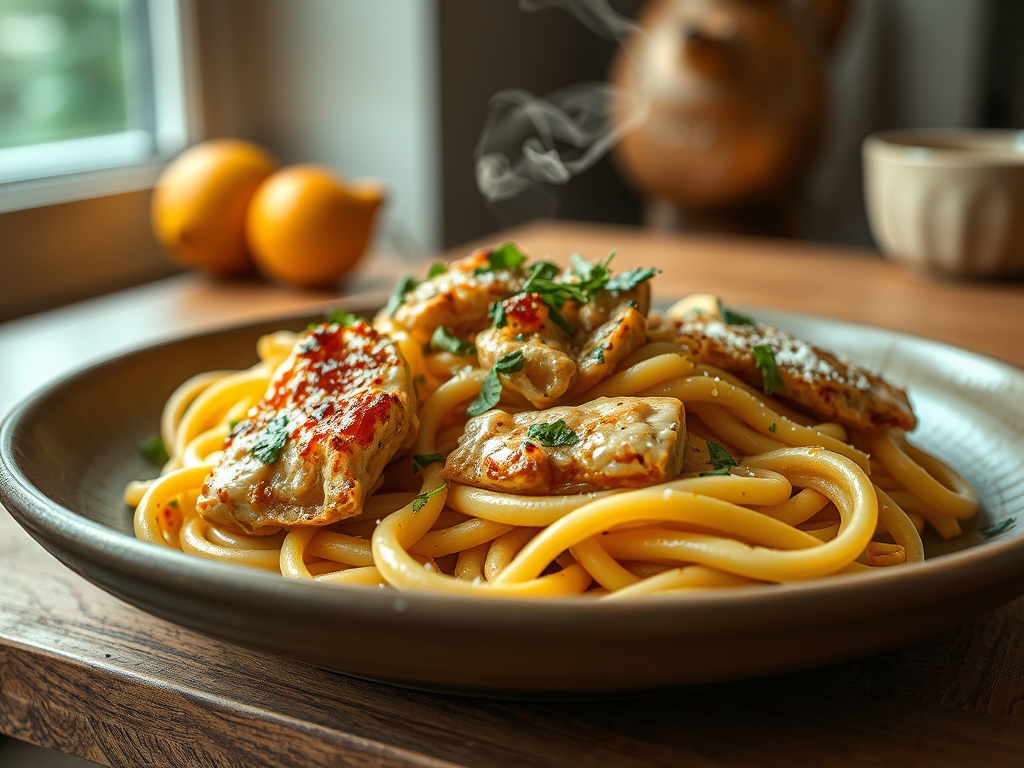
The sound of chicken breasts sizzling in a wide, heavy pan, edges turning golden while butter foams around them, is the prelude to comfort. That first forkful of tender pasta coated in a silky, garlic-spiked cream sauce clinging to every spiral or tube is what keeps creamy pasta chicken recipes on rotation in home kitcharies and restaurant kitchens alike. These dishes balance richness with restraint, protein with starch, and technique with speed. Whether you're working with thighs, breasts, or rotisserie shortcuts, the blueprint remains the same: proper searing for Maillard depth, a well-constructed emulsion, and pasta that finishes cooking in the sauce, absorbing every molecule of flavor. This collection delivers eight variations, each engineered for maximum impact with minimal fuss, proving that creamy, chicken-studded pasta is neither dated nor indulgent, but smart, satisfying cooking.
The Gathers
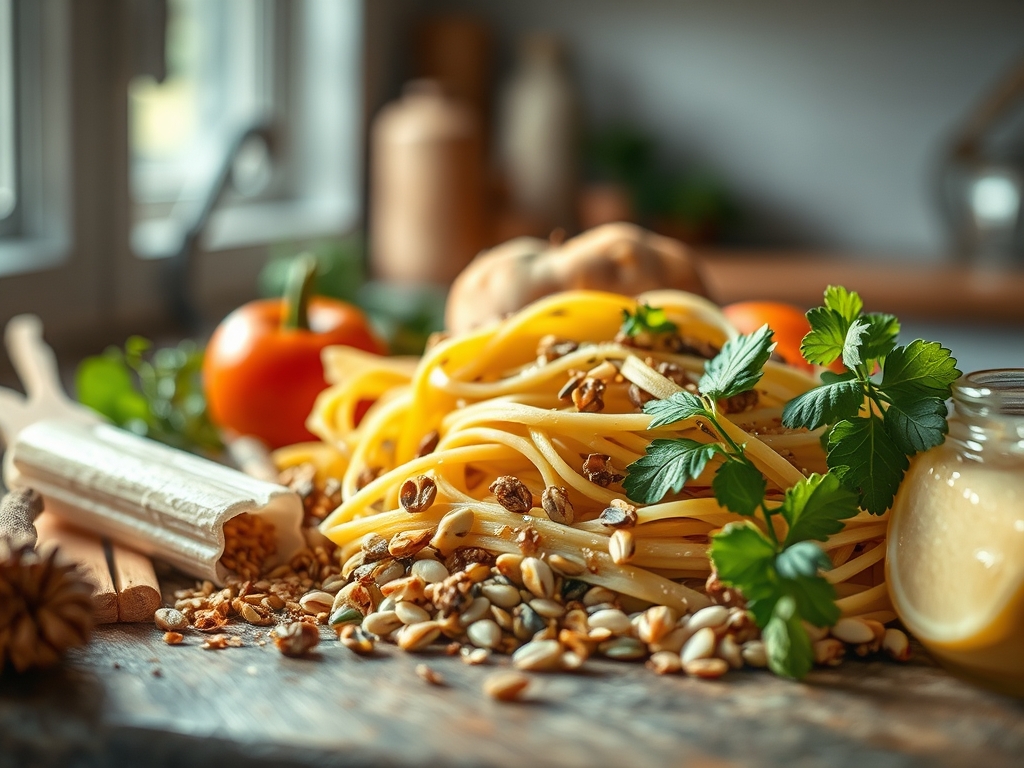
As you see in the ingredient spread below, the foundation starts with boneless, skinless chicken breasts or thighs (thighs offer more intramuscular fat and resist overcooking), short pasta shapes like penne, rigatoni, or fusilli (their ridges and hollows trap sauce), heavy cream (36-40% fat for stable emulsions), freshly grated Parmigiano-Reggiano (its glutamate content amplifies savory notes), garlic cloves (minced fine to distribute evenly without burning), unsalted butter (for controlled seasoning), low-sodium chicken stock (to adjust viscosity without salt creep), and fresh herbs like basil, thyme, or parsley. Neutral oil with a high smoke point, such as grapeseed or avocado, prevents butter from scorching during the sear.
Smart Substitutions: Swap heavy cream for half-and-half blended with a tablespoon of flour per cup to prevent splitting. Replace Parm with Pecorino Romano for sharper, saltier punch. Use Greek yogurt thinned with pasta water for tang and lower fat, or canned coconut cream for dairy-free richness. Rotisserie chicken shreds in during the final toss, cutting cook time by fifteen minutes.
The Clock
Prep Time: 15 minutes (includes pounding chicken to uniform 1/2-inch thickness, mincing garlic, measuring liquids, and grating cheese).
Cook Time: 25 minutes (searing chicken, building the sauce, boiling pasta, finishing together).
Total Time: 40 minutes from fridge to fork.
Chef's Flow: Start salted pasta water first; it takes 8-10 minutes to reach a rolling boil. While it heats, prep chicken and aromatics. Sear chicken, remove, then build the pan sauce in the same vessel to capture fond. Drop pasta when the sauce base simmers. Slice rested chicken while pasta cooks. Everything converges in the final 3 minutes, with pasta water as your emulsifying agent and texture adjuster.
The Masterclass
Step 1: Prep and Season the Chicken
Pat chicken completely dry with paper towels (surface moisture is steam's enemy). Season both sides with kosher salt and black pepper. Uniform thickness means uniform cooking; pound thicker portions gently with a meat mallet.
Chef's Secret: Dry surfaces = better crust. Water conducts heat poorly and creates a barrier to Maillard browning, which begins around 285°F (140°C). Salt draws out protein strands (myosin), forming a sticky layer that crisps beautifully.
Step 2: Sear the Chicken
Heat a 12-inch stainless or cast-iron skillet over medium-high until a flick of water evaporates instantly. Add 1 tablespoon oil, then chicken presentation-side down. Do not move for 4-5 minutes. Flip, cook 3-4 minutes more until internal temp hits 155°F (68°C). Remove, tent loosely with foil.
Why It Works: Carryover cooking will push the temp to 165°F (74°C) while resting. Moving chicken prematurely tears the crust and releases juices prematurely. The fond left behind is liquid gold.
Step 3: Build the Aromatics and Deglaze
Reduce heat to medium. Add 1 tablespoon butter and 4 cloves minced garlic. Stir constantly for 30 seconds until fragrant, not brown. Pour in 1/2 cup chicken stock, scraping up every caramelized bit with a wooden spoon.
Chef's Secret: Garlic's allicin compounds break down into sweet, complex sulfides at moderate heat. Burned garlic is bitter and irreversible. Stock deglazes and suspends those Maillard compounds into the liquid phase.
Step 4: Add Cream and Simmer
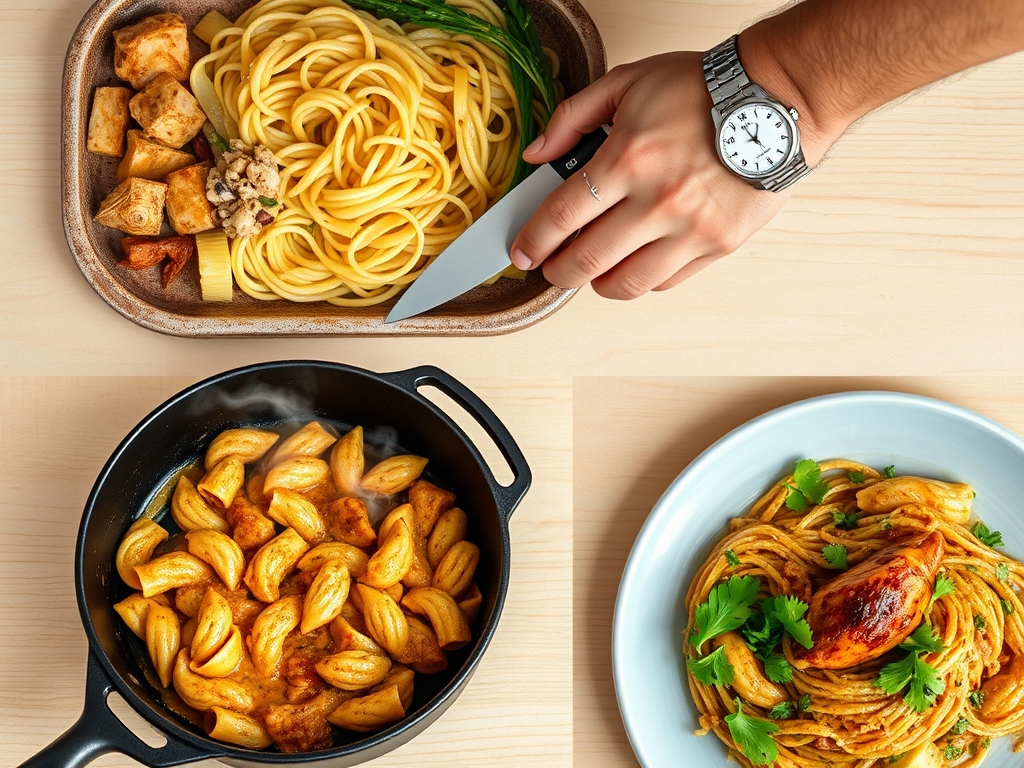
Pour in 1 1/2 cups heavy cream. Bring to a gentle simmer, stirring occasionally, until reduced by one-quarter (about 5 minutes). Note the texture shown in the step-by-step photos: it should coat the back of a spoon but still flow freely.
Why It Works: Simmering evaporates water, concentrating fat and milk solids. Butterfat globules stabilize when heat denatures casein proteins, forming a thickened, velvety matrix without additional starch.
Step 5: Integrate Pasta and Chicken
Drop pasta into boiling salted water, cook 2 minutes less than package instructions. Reserve 1 cup pasta water, then drain. Add pasta directly to the simmering sauce along with 1/2 cup Parm. Toss vigorously, adding pasta water in 2-tablespoon increments until glossy and clingy. Slice rested chicken, nestle into pasta.
Chef's Secret: Pasta water is liquid starch, an emulsifier that binds fat and water. Finishing pasta in the sauce allows it to absorb cream and seasoning from the inside. The mechanical action of tossing creates a stable, creamy suspension.
Nutritional Info
Per serving (based on 4 servings):
Calories: 680
Protein: 42g
Fat: 38g (Saturated: 21g)
Carbohydrates: 48g
Fiber: 2g
Sodium: 580mg (before additional salting)
Heavy cream and cheese drive calorie and fat density, but also provide satiety and fat-soluble vitamins A, D, and K2. Protein from chicken and Parm supports muscle synthesis. Moderate portion control keeps this dish balanced.
Dietary Swaps
Keto: Replace pasta with zucchini noodles or shirataki. Use full-fat cream and double the chicken. Carbs drop to under 10g per serving.
Gluten-Free: Swap regular pasta for brown rice, chickpea, or lentil varieties. Check stock and any seasoning blends for hidden gluten.
Vegan: Use firm tofu or tempeh in place of chicken, seared until crisp. Replace cream with blended soaked cashews (1 cup cashews to 3/4 cup water) and nutritional yeast for Parm. The emulsification science remains identical.
Serving & Presentation
- Rustic Bowl: Twirl pasta into a shallow ceramic bowl, lean sliced chicken against one side, scatter torn basil and a drizzle of high-quality olive oil. Cracked black pepper finishes the look.
- Plated Elegance: Center a neat pasta mound, fan chicken slices in a half-circle, spoon extra sauce around the perimeter, garnish with microgreens and a Parm crisp.
- Family Style: Toss everything in a large, warmed serving platter. Top with fresh herbs, lemon zest, and toasted pine nuts for textural contrast.
The Pro-Dodge
Pitfall 1: Chalky, Broken Sauce.
Fix: Cream split because heat was too high or acid (lemon, tomato) was added too early. Rescue by whisking in 2 tablespoons cold butter off-heat to re-emulsify.
Pitfall 2: Rubbery, Dry Chicken.
Fix: Overcooked past 165°F (74°C). Slice thin, return to warm (not simmering) sauce for 1 minute to rehydrate via capillary action.
Pitfall 3: Gluey, Clumped Pasta.
Fix: Insufficient pasta water or under-salted boil. Add hot pasta water and toss aggressively. Salt the water like the sea (1 tablespoon per 4 quarts).
The Meal Prep Corner
Store cooked pasta and chicken separately in airtight containers for up to 4 days. Cream sauces thicken in the fridge as fat solidifies; this is normal. Reheat gently in a skillet over medium-low, adding 1/4 cup pasta water or stock per serving, stirring constantly until smooth and steaming. Microwave reheating works but risks uneven hot spots; cover with a damp paper towel and use 50% power in 1-minute intervals. For day-one texture, undercook pasta by an additional minute before storing.
The Wrap-Up
These eight creamy pasta chicken recipes prove that comfort food can be fast, technique-driven, and endlessly adaptable. Master the sear, respect the emulsion, and finish your pasta in the sauce, and you'll produce restaurant-caliber results every time. The chemistry is simple: fat, protein, starch, heat, and a little pasta water magic. Now get in the kitchen, make some noise, and share your plating wins in the comments. Tag us with your favorite variation, and let's keep the conversation going.
The Kitchen Table
Q: Can I use milk instead of heavy cream?
A: Yes, but it will split more easily. Whisk 1 tablespoon of flour per cup of milk, heat gently, and avoid boiling. The result will be thinner and less luxurious.
Q: How do I prevent garlic from burning?
A: Add garlic after reducing heat and cook for no more than 30-60 seconds. If it starts to brown, immediately deglaze with stock to stop the cooking.
Q: What's the best pasta shape for creamy sauces?
A: Short, tubular, or ridged shapes (penne, rigatoni, fusilli) trap sauce inside and along grooves. Long noodles like fettuccine work but provide less surface area per bite.
Q: Can I make the sauce ahead?
A: Absolutely. Store sauce separately for up to 3 days. Reheat gently, adding stock or pasta water to restore consistency. Cook pasta fresh and combine just before serving.
Q: Why is my sauce too thin?
A: Cream wasn't reduced enough, or too much pasta water was added. Return sauce to a simmer and reduce uncovered until it coats the back of a spoon. Stir in extra grated cheese to thicken via protein coagulation.