
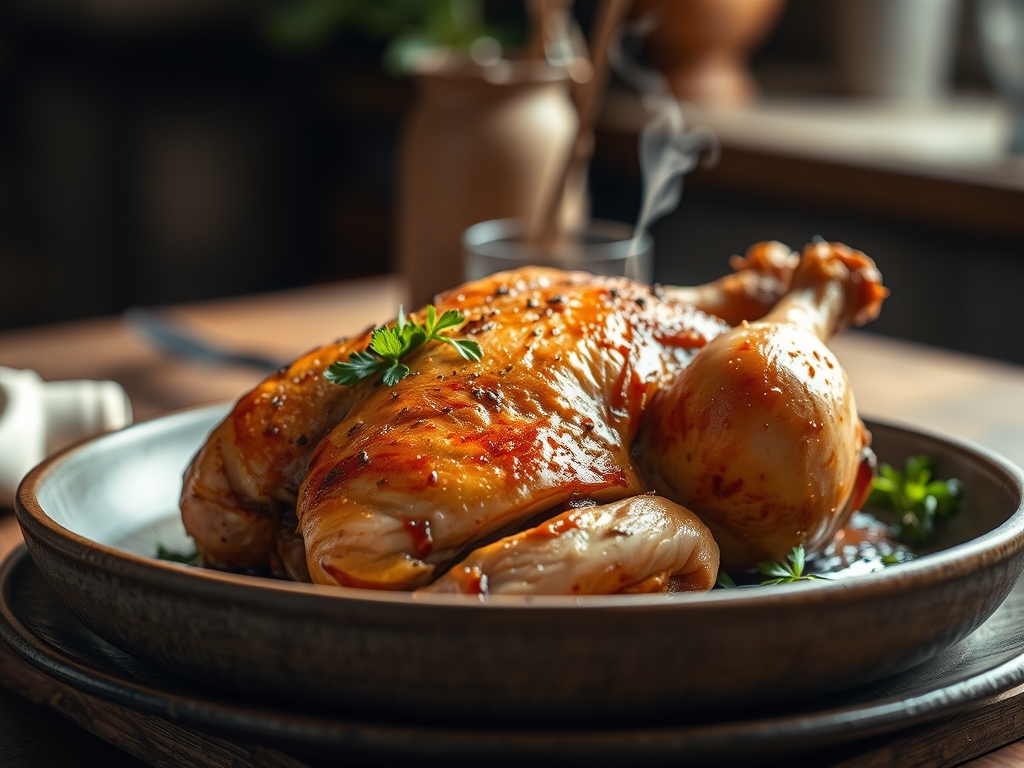
The smell of rendering schmaltz and crackling skin is the universal language of home. When you master baking whole chicken recipes, you aren't just making dinner; you are performing a feat of thermal engineering that transforms a humble bird into a masterpiece of gold and salt. It is the ultimate culinary flex that feels like a warm hug.
Most home cooks approach the oven with a mix of hope and anxiety, praying the breast stays moist while the thighs actually cook through. We are moving past the era of dry, stringy meat and rubbery skin. Today, we are diving into the molecular mechanics of the perfect roast. We will talk about protein denaturation, the magic of dry brining, and why your digital thermometer is your new best friend. By the time we are done, you will handle a four pound bird with the confidence of a Michelin starred chef. Grab your favorite apron and a glass of crisp white wine. We are about to turn your kitchen into the best bistro in town.
The Gathers:
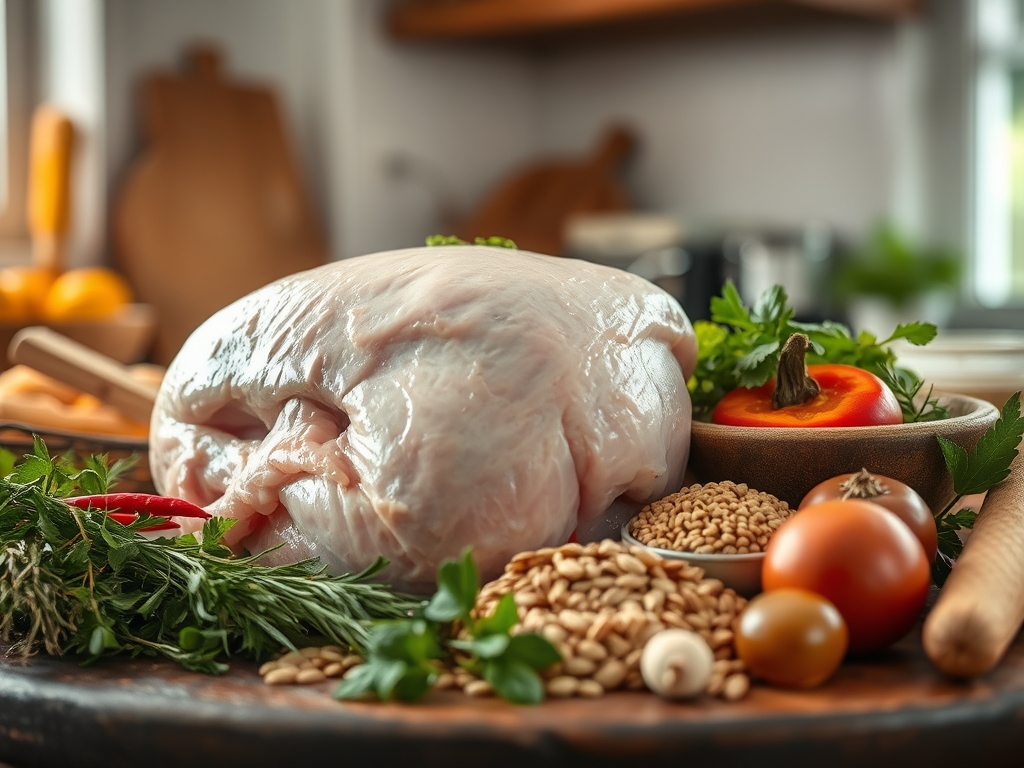
Your mise-en-place is the foundation of success. Start with a four to five pound pasture raised chicken. You want a bird with a healthy fat cap; fat is the primary vehicle for flavor and heat conduction. You will need high quality kosher salt, which has a jagged crystal structure that clings to the skin better than fine table salt.
For the aromatics, gather a head of garlic sliced crosswise, a bunch of woody herbs like thyme and rosemary, and a lemon. The citrus provides a piquant acidity that cuts through the rich lipids. You will also need unsalted butter or avocado oil. If you want a deep, viscous pan sauce later, keep some high quality chicken stock and a splash of dry vermouth nearby.
Smart Substitutions: If you are out of fresh herbs, a tablespoon of dried herbes de Provence works, but rehydrate them in your fat source first. No lemon? A teaspoon of sumac offers that same bright, acidic punch. If you want to keep it dairy free, ghee is an incredible substitute for butter because it has a higher smoke point but retains that nutty, toasted aroma.
The Clock
The "Chef's Flow" is all about timing your movements so nothing feels rushed. Your total active prep time is only about 20 minutes, but the passive time is where the magic happens.
- The Dry Brine: 12 to 24 hours (essential for skin dehydration).
- Tempering: 45 minutes (bringing the bird to room temperature).
- The Roast: 50 to 75 minutes (depending on weight and oven calibration).
- The Rest: 15 to 20 minutes (crucial for juice redistribution).
By starting your prep the night before, you ensure the salt has time to penetrate the muscle fibers. On the day of, your only job is to slide the bird into a preheated oven and wait for the olfactory signals of success.
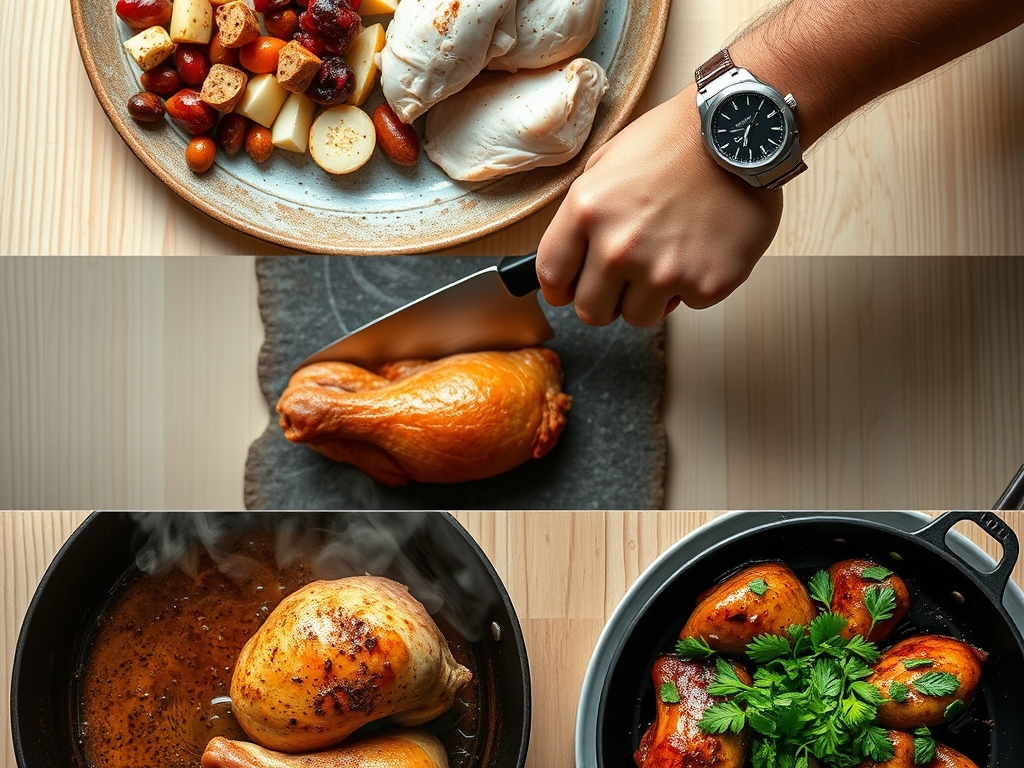
The Masterclass
1. The Power of the Dry Brine
Pat your chicken bone-dry with paper towels. Use a digital scale to measure out about one teaspoon of kosher salt per pound of meat. Liberally coat every inch, including the cavity. Leave it uncovered in the fridge overnight on a wire rack.
Pro Tip: This process uses osmosis to pull moisture out of the skin and then reabsorb the seasoned brine into the meat. Dehydrating the skin is the only way to achieve that glass-like shatter when you bite into it.
2. Tempering for Even Cooking
Take the chicken out of the fridge at least 45 minutes before roasting. A cold bird in a hot oven results in a "thermal shock" where the outside overcooks before the center reaches safety.
Pro Tip: Bringing the meat to a uniform temperature ensures thermal equilibrium. This prevents the dreaded "bloody joint" syndrome while keeping the breast meat tender and succulent.
3. Trussing with Precision
You do not need fancy knots. Simply tuck the wingtips under the breast and tie the legs together with kitchen twine. This creates a compact shape that protects the delicate breast meat from direct heat.
Pro Tip: Trussing reduces the surface area exposed to hot air, which slows down the cooking of the leaner parts. This allows the fatty thighs more time to render without the breast drying out.
4. The Fat Application
Slather the skin with softened butter or oil. Use your hands to get under the skin of the breast, being careful not to tear it. This creates a barrier that fries the skin from both sides.
Pro Tip: Fat acts as a heat surfactant. It helps the oven's convection heat distribute evenly across the uneven surface of the bird, promoting uniform Maillard reaction (browning).
5. High Heat Launch
Start your oven at 425 degrees Fahrenheit. Place the chicken in a heavy-bottomed skillet or a roasting pan. The high initial heat jumpstarts the browning process and crisps the skin immediately.
Pro Tip: This initial blast of heat triggers enzymatic browning. The sugars and amino acids on the skin react to create hundreds of different flavor compounds that define "roasted" flavor.
6. The Aromatic Infusion
Halfway through cooking, toss your garlic, lemon halves, and herbs into the pan. Use tongs to move them around so they get coated in the bubbling chicken fat.
Pro Tip: Aromatics are fat-soluble. By tossing them in the rendered schmaltz, you infuse the fat with essential oils, which then bastes the bottom of the chicken as it roasts.
7. Monitoring Internal Temps
Forget the "clear juices" myth. Use a digital thermometer to check the thickest part of the thigh. You are looking for 165 degrees Fahrenheit, but pull the bird at 160 degrees.
Pro Tip: This accounts for thermal carryover. The internal temperature will continue to rise by 5 to 7 degrees after you remove it from the oven due to the residual heat trapped in the muscle.
8. The Art of the Rest
Transfer the chicken to a wooden cutting board (use a bench scraper to clear any bits) and let it sit for at least 15 minutes. Do not tent it tightly with foil, or the steam will soften your crispy skin.
Pro Tip: Resting allows the muscle fibers, which tightened during cooking, to relax and reabsorb the liquid gold juices. If you cut it too soon, those juices will end up on the board instead of in the meat.
9. The Pan Sauce Finale
While the bird rests, place your roasting pan on the stovetop. Deglaze the browned bits (the fond) with a splash of wine or stock. Whisk in a knob of butter using a saucier or whisk until it is glossy.
Pro Tip: This creates an emulsion where the fat and water-based liquids bind together. The fond contains concentrated umami that provides the perfect savory finish to your meal.
The Deep Dive
Macro Nutrition: A standard 4-ounce serving of roasted chicken provides roughly 25g of protein and 11g of fat. It is a nutrient-dense powerhouse rich in Vitamin B12 and selenium.
Dietary Swaps: For a Keto version, stick to the butter and skip any honey glazes. For a Vegan alternative, use this same roasting method on a large head of cauliflower or a "lion's mane" mushroom cluster, basting with olive oil and miso.
The Fix-It:
- Soggy Skin: Your oven wasn't hot enough or you didn't dry the bird sufficiently. Fix it by popping it under the broiler for 2 minutes at the end.
- Dry Breast: You likely overcooked it. Fix it by slicing the meat thin and drizzling it with warm chicken stock or your pan sauce to rehydrate the fibers.
- Burnt Aromatics: If the garlic turns black, it becomes bitter. Add your aromatics 30 minutes into the roast rather than at the start.
Meal Prep: To reheat leftovers without that "leftover chicken" smell, avoid the microwave. Use a low oven (300 degrees) with a splash of water in the pan, covered with foil. This gently steams the meat back to life while preserving the texture.
The Wrap-Up
Baking whole chicken recipes is a foundational skill that pays dividends for a lifetime. Once you understand the relationship between salt, heat, and time, you can riff on flavors with total freedom. Whether you are serving a Sunday feast or prepping protein for the week, the humble roasted chicken remains the undisputed queen of the kitchen. Now, go preheat that oven and make your house smell like a dream!
The Kitchen Table
How do I get the crispiest chicken skin?
The secret is a 24-hour dry brine in the refrigerator, uncovered. This dehydrates the skin's surface, allowing the heat to crisp the proteins instantly rather than steaming them. Always pat the bird dry before it enters the oven.
What temperature should I roast a whole chicken?
Roast at 425 degrees Fahrenheit for a standard four pound bird. This high heat ensures the skin renders and browns beautifully while the internal meat stays juicy. Lower temperatures often result in rubbery skin and overcooked meat.
Do I need to baste the chicken while it roasts?
Basting is actually counterproductive for crispy skin. Every time you open the oven, you lose heat. Additionally, pouring liquid over the skin during the cooking process prevents it from becoming truly crisp and shatter-proof.
How long does a whole chicken take to cook?
Generally, a four pound chicken takes about 15 minutes per pound at 425 degrees. However, always rely on a digital thermometer. Pull the bird when the thigh reaches 160 degrees to allow for carryover cooking during the rest.
Can I roast a chicken from frozen?
It is not recommended. The exterior will overcook and dry out before the center reaches a safe temperature. For the best results, always thaw your chicken completely in the refrigerator and temper it on the counter before roasting.