
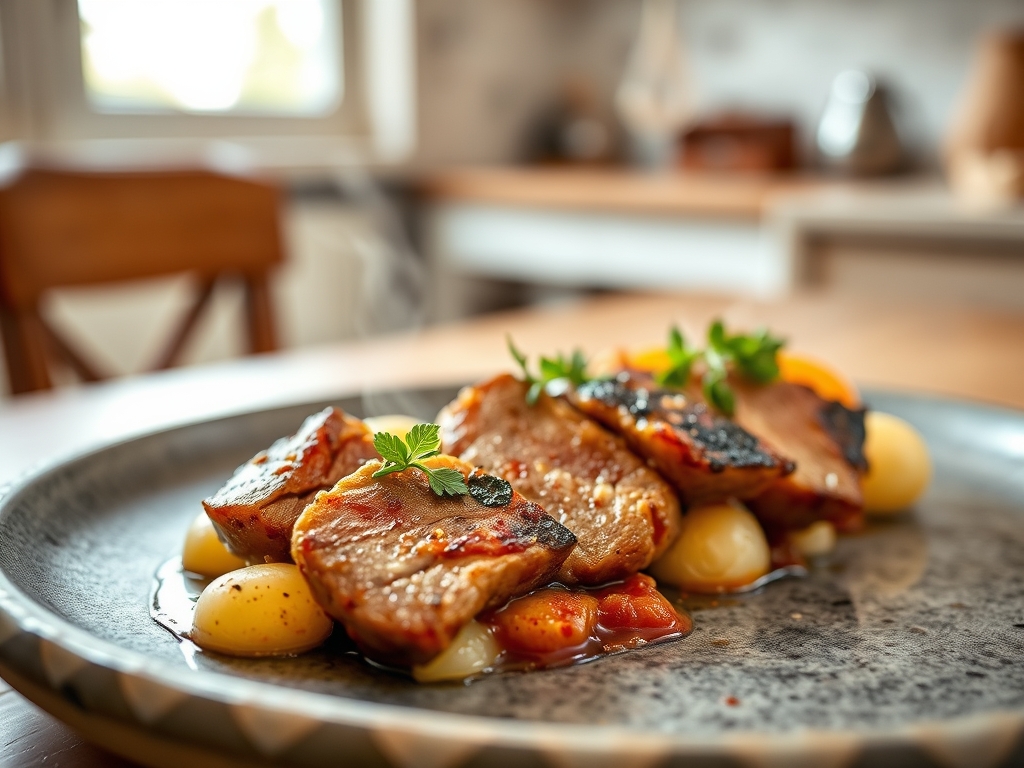
Picture this: the kitchen windows are fogged with steam, the air is heavy with the scent of rendered fat and toasted rosemary, and your family is already hovering around the stove. There is a primal comfort in pork with potato recipes that other meals simply cannot replicate. It is the holy trinity of culinary satisfaction; fat, salt, and starch; working in perfect harmony to create a meal that feels like a warm hug. When you roast a pork loin atop a bed of starchy tubers, you are not just cooking; you are conducting a symphony of heat transfer. The pork serves as a self-basting mechanism, dripping rich, savory juices onto the potatoes below. This process creates what chefs call a confit effect, where the potatoes fry gently in animal fat while steaming from the inside. We are moving beyond the basic tray bake today. We are diving into the molecular magic that turns a simple Sunday roast into a legendary family heirloom. Grab your apron and your favorite heavy-bottomed skillet; we are about to elevate your weeknight rotation with eight variations of this timeless pairing.
The Gathers:
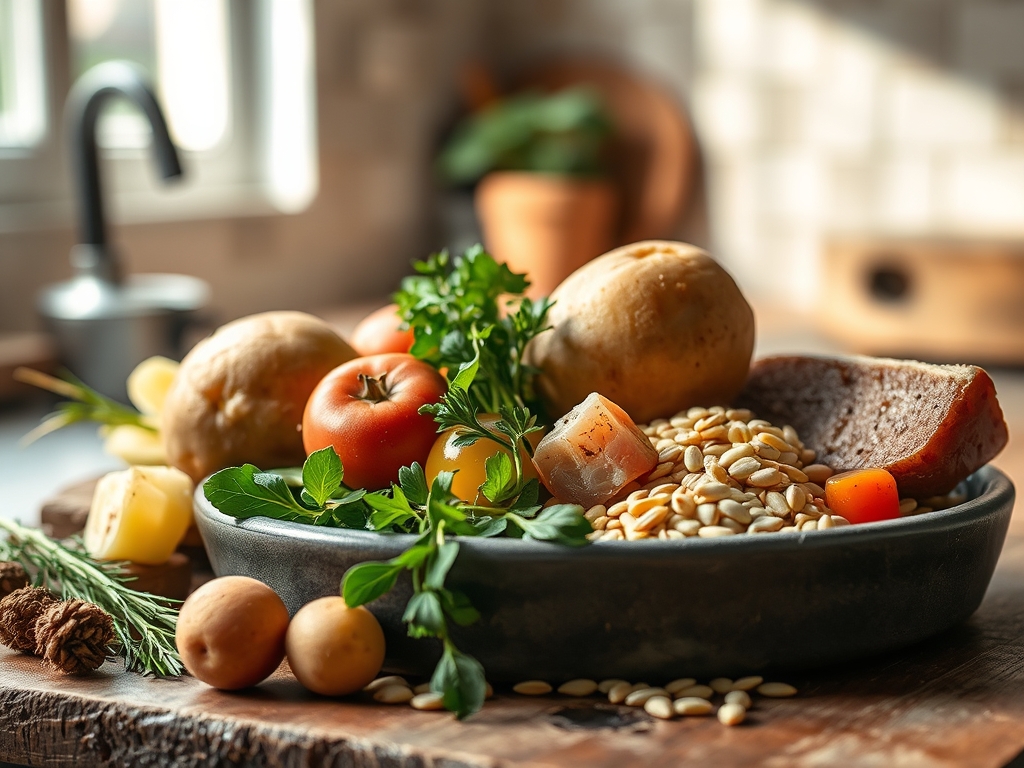
To master these pork with potato recipes, your mise-en-place must be precise. We start with the protein: look for a center-cut pork loin or a marbled shoulder butt. The shoulder contains more intramuscular fat, which is essential for long, slow braises, while the loin requires a delicate touch to avoid desiccation. For the potatoes, reach for Yukon Golds if you want a buttery, viscous interior, or Russets if you crave that classic, floury crunch. You will need a high-quality fat source; think duck fat or high-smoke-point avocado oil; to initiate the initial sear.
Fresh aromatics are non-negotiable. Gather whole sprigs of thyme, rosemary, and several heads of garlic. Use a microplane to zest a lemon over your spice rub; the citric oils will cut through the richness of the pork. For the "Smart Substitutions," if you find yourself without pork, a thick-cut veal chop offers a similar structural integrity. If you are dodging nightshades, parsnips or celery root provide a piquant, earthy alternative to the traditional potato. Always use a digital scale to measure your salt; a ratio of 1.5 percent salt to the weight of the meat ensures deep seasoning without over-salting the pan drippings.
The Clock: Timing the Perfect Roast
Precision timing is the difference between a succulent roast and a dry disappointment. The "Chef's Flow" dictates that you should allow your meat to temper at room temperature for at least forty-five minutes before it touches heat. This reduces the thermal shock and ensures even cooking. Expect a total active prep time of twenty minutes, with a roasting window of sixty to ninety minutes depending on the thickness of your cut. Remember that the potatoes require a head start if they are large, or a smaller dice if you want them to finish exactly when the pork reaches its target temperature.
The Masterclass:
1. The Sear and the Maillard Reaction
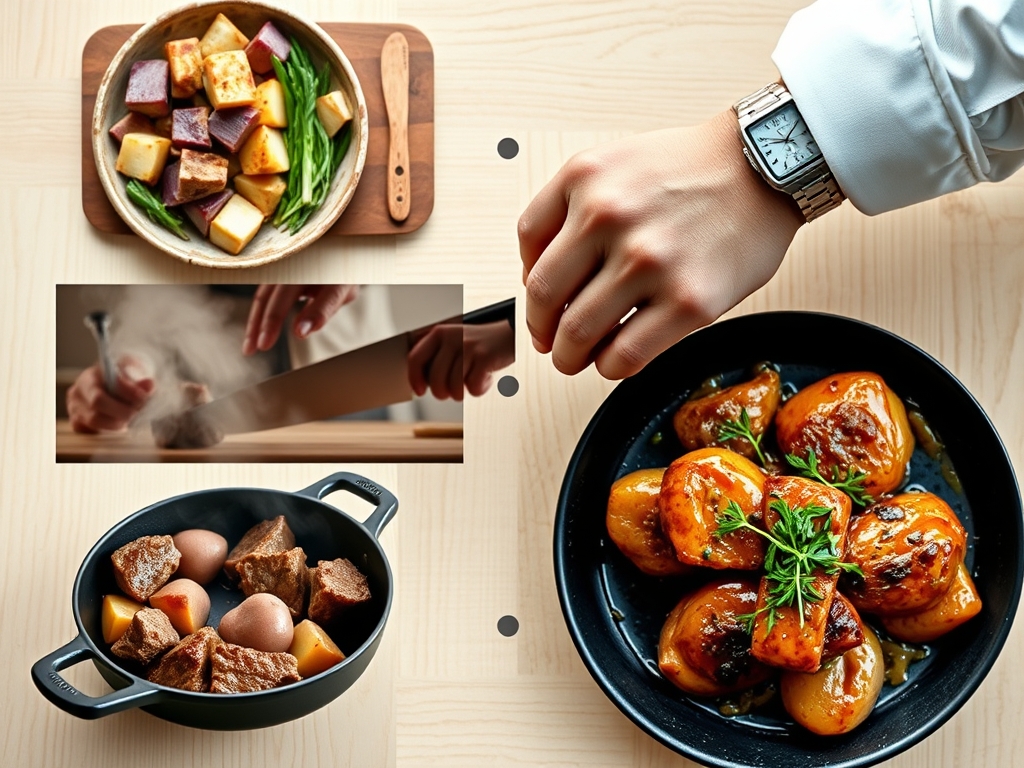
Pat the pork dry with paper towels to remove surface moisture. Heat your heavy-bottomed skillet until the oil shimmers. Place the pork in the pan and do not move it for three minutes. You are looking for a deep, mahogany crust.
Pro Tip: This is the Maillard Reaction, a chemical reaction between amino acids and reducing sugars that creates hundreds of different flavor compounds. If the meat is wet, the energy goes into evaporating water instead of browning, resulting in gray, boiled meat.
2. Deglazing the Foundation
Once the meat is seared, remove it and add a splash of dry white wine or apple cider to the hot pan. Use a bench scraper or wooden spoon to lift the browned bits, known as the fond, from the bottom.
Pro Tip: Deglazing incorporates the concentrated proteins and sugars back into your sauce. This creates a complex flavor profile that acts as a bridge between the savory pork and the earthy potatoes.
3. The Tuber Foundation
Toss your cubed potatoes in the deglazed liquid and seasoned fat. Ensure every surface is coated to encourage even browning. Arrange them in a single layer to allow for proper airflow.
Pro Tip: Use a perforated roasting rack if possible. This allows hot air to circulate under the meat while the juices drip directly onto the potatoes, facilitating a process called convection roasting.
4. Thermal Equilibrium and Roasting
Place the pork directly on top of the potatoes. Slide the pan into a 375 degree Fahrenheit oven. This temperature is high enough to crisp the skin but low enough to prevent the exterior from burning before the center is done.
Pro Tip: Use a digital probe thermometer. You want to pull the pork at 140 degrees Fahrenheit. The internal temperature will continue to rise during the rest, a phenomenon known as thermal carryover.
5. The Rest and Redistribution
Transfer the pork to a cutting board and let it sit for at least fifteen minutes. Do not tent it tightly with foil, as this can soften the crust you worked so hard to build.
Pro Tip: Resting allows the muscle fibers to relax and reabsorb the juices. If you cut it too soon, the intracellular fluid will spill out, leaving the meat dry and the potatoes soggy.
The Deep Dive: Science and Solutions
From a macro nutrition standpoint, pork with potato recipes are powerhouse meals. Pork provides high-quality thiamine and selenium, while potatoes offer more potassium than bananas. For those following a Keto lifestyle, swap the potatoes for radishes; they lose their peppery bite and mimic the texture of a potato when roasted. For a Vegan alternative, thick-cut cauliflower "steaks" basted in a smoky paprika oil can stand in for the pork.
The Fix-It: Common Pitfalls
- Soggy Potatoes: This happens when the pan is overcrowded. The potatoes steam instead of roast. Use two pans if necessary to ensure evaporative cooling does not ruin the crunch.
- Tough Pork: Usually caused by overcooking. If you hit 160 degrees Fahrenheit, the collagen has tightened too much. Fix this by slicing it paper-thin and serving with a viscous butter sauce or gravy.
- Burnt Garlic: Garlic burns faster than potatoes. Add whole, unpeeled cloves halfway through the roasting process to infuse the oil without carbonizing the cloves.
Meal Prep Science: To reheat, avoid the microwave. The high-frequency waves vibrate water molecules, making the pork rubbery. Instead, use a low oven (300 degrees Fahrenheit) with a splash of broth. This maintains the structural integrity of the starch and the moisture of the protein.
The Wrap-Up:
Mastering pork with potato recipes is a rite of passage for any home cook. It requires an understanding of heat, timing, and the beautiful chemistry of fat. Whether you are using a saucier to craft a silky pan sauce or a microplane to add a hit of freshness, the goal is balance. These eight variations; from balsamic-glazed to garlic-herb encrusted; will ensure your family never looks at a potato the same way again. Now, go forth, fire up that oven, and fill your home with the scent of a perfectly executed roast.
The Kitchen Table:
How do I get the crispiest potatoes?
Parboil your potatoes in alkaline water (add a pinch of baking soda) before roasting. This breaks down the surface starch, creating a shaggy exterior that crisps up beautifully when it hits the hot fat in your roasting pan.
What is the best cut of pork for roasting?
For a quick weeknight meal, use pork tenderloin. For a Sunday feast, choose a bone-in pork shoulder. The bone acts as a thermal conductor, helping the meat cook more evenly from the inside out while adding deep flavor.
Can I cook pork and potatoes in one pan?
Yes, but size matters. Cut your potatoes into one-inch cubes so they finish at the same time as the pork. If the pork is a large roast, add the potatoes thirty minutes into the cooking time to prevent them from over-mashing.
Why is my pork dry even if I followed the time?
Oven calibrations vary wildly. Always cook to internal temperature rather than time. Use a digital thermometer to hit 140 degrees Fahrenheit, then rest the meat to allow the juices to redistribute through the muscle fibers properly.