

Imagine the scent of citrus-infused steam escaping a heavy-bottomed skillet as the skin of a six-pound fish begins to crackle and pop. There is something primal and deeply sophisticated about presenting a whole fish at the center of the table. When you master full salmon recipes, you are not just cooking dinner; you are orchestrating a centerpiece that balances the delicate, buttery fats of the belly with the lean, muscular flakes of the tail. It is a feat of culinary engineering that feels like a celebration.
The secret to a perfect roast lies in understanding the structural integrity of the fish. Unlike individual fillets, a whole roast retains its natural juices because the skin acts as a biological parchment paper. It traps moisture while the heat transforms the connective tissues into silky collagen. We are going to dive into the chemistry of the sear and the physics of heat distribution to ensure your next dinner party is legendary. Forget the fear of overcooking. With a few professional tools and a bit of scientific intuition, you will achieve that elusive, melt-in-your-mouth texture every single time.

The Gathers:
To begin, your mise-en-place must be precise. You will need a high-quality whole salmon, scaled and gutted, weighing between four and six pounds. In terms of aromatics, gather fresh dill, thinly sliced Meyer lemons, and smashed garlic cloves. For the fat component, use high-smoke-point avocado oil or clarified butter to ensure you can reach searing temperatures without the fat breaking down into bitter compounds.
You will also need a digital scale to measure your dry brine. Use coarse kosher salt and granulated sugar in a three-to-one ratio. This creates an osmotic gradient that draws moisture out of the skin for maximum crispness while seasoning the flesh deeply. A microplane is essential for zesting your citrus to release the volatile oils without the bitter white pith. If you need a smart substitution, swap the lemon for yuzu for a more piquant, floral profile. If you are avoiding butter, a viscous, cold-pressed olive oil provides a beautiful peppery finish that complements the fatty acids of the fish.
The Clock
The "Chef's Flow" for full salmon recipes is all about managing thermal momentum. Your total active prep time is approximately 20 minutes, which includes cleaning the cavity and applying the dry brine. However, you must account for a 30-minute rest at room temperature. This allows the protein to lose its refrigerator chill, ensuring the heat penetrates the center at the same rate as the exterior.
The roasting phase takes between 35 and 50 minutes depending on the thickness of the fish. Always use a digital probe thermometer rather than relying solely on the timer. Finally, a 10-minute rest post-oven is non-negotiable. This allows the muscle fibers to relax and reabsorb the juices that were pushed to the center during cooking. Without this rest, the liquid will purge the moment you slice into it, leaving the meat dry.
The Masterclass
1. The Desiccation Ritual
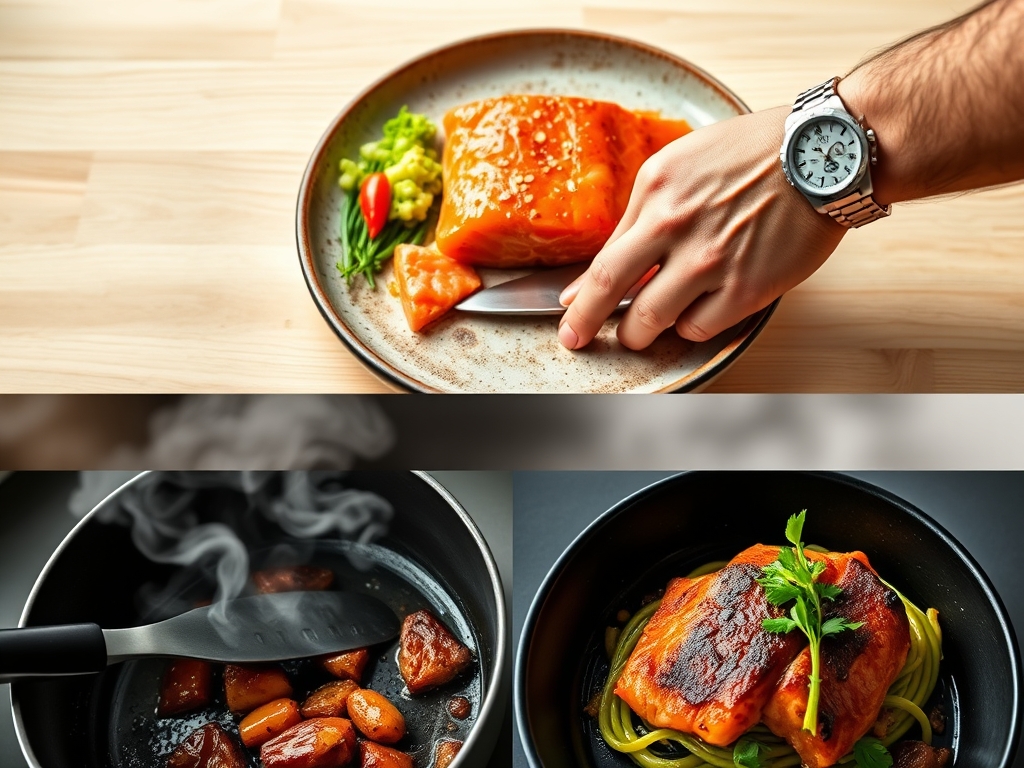
Pat the salmon dry using lint-free paper towels until the skin feels like parchment. Apply your salt and sugar rub liberally over the exterior and inside the cavity. Note the texture in the step-by-step photos above; the skin should look matte, not shiny.
Pro Tip: This process utilizes osmosis to dehydrate the surface cells. By removing surface moisture, you prevent the fish from steaming and allow the Maillard reaction to occur much faster once it hits the heat.
2. Stuffing for Infusion
Pack the cavity with your aromatics. Use tongs to slide in lemon rounds, herbs, and garlic. Do not overstuff; you want enough airflow for the internal temperature to rise steadily. Secure the belly with kitchen twine if necessary.
Pro Tip: This is an example of aromatic diffusion. As the fish heats, the essential oils in the herbs become volatile and permeate the flesh from the inside out, creating a multi-dimensional flavor profile.
3. The Initial Sear
Heat a large roasting pan or heavy-bottomed skillet over medium-high heat. Add your oil and wait for it to shimmer. Carefully lay the fish down. You should hear a vigorous sizzle immediately. Sear for three minutes without moving the fish to set the crust.
Pro Tip: This stage triggers enzymatic browning. The amino acids and sugars on the skin react to create hundreds of different flavor compounds, providing that savory, umami-rich crust.
4. The Controlled Roast
Transfer the pan to a preheated oven at 325 degrees Fahrenheit. This lower temperature prevents the albumin (that white protein foam) from squeezing out of the muscle fibers. Use a saucier to melt a little extra butter with herbs to baste the fish halfway through.
Pro Tip: Low-temperature roasting manages protein denaturation. By heating the fish slowly, you keep the delicate proteins from tightening too quickly, which preserves the succulent, flaky texture.
5. Monitoring Internal Temp
Insert your thermometer into the thickest part of the shoulder, near the head but not touching the bone. Aim for an internal temperature of 125 degrees Fahrenheit for a medium-rare finish.
Pro Tip: Account for thermal carryover. The internal temperature will continue to rise by 5 to 7 degrees after you remove it from the oven. Pulling it early ensures you don't overshoot into "dry" territory.
6. The Glaze and Deglaze
Once the fish is out, remove it to a warm platter. Use a bench scraper to clear any stuck bits from the pan, then deglaze the pan with a splash of white wine or citrus juice to create a quick pan sauce.
Pro Tip: Deglazing captures the fond, the caramelized bits of protein stuck to the pan. This liquid is a concentrated essence of the fish's flavor and makes for a sophisticated finishing touch.
7. The Final Rest
Tent the salmon loosely with foil. Do not wrap it tightly, or the steam will soften that beautiful crispy skin you worked so hard to achieve. Let it sit for ten minutes before serving.
Pro Tip: Resting allows for pressure equalization. As the exterior cools slightly, the internal juices redistribute throughout the fillet, ensuring every bite is uniformly moist.
The Deep Dive
From a macro nutrition perspective, a whole salmon is a powerhouse of Omega-3 fatty acids and high-quality protein. It is naturally Keto and Gluten-Free. For a vegan-friendly side that mirrors the richness, serve with a miso-glazed roasted cauliflower.
If you encounter the "White Foam" pitfall (excess albumin), it means your heat was too high. You can gently brush it away with a pastry brush dipped in lemon butter. If the skin sticks to the pan, you likely tried to flip it too early; the fish will naturally "release" once the proteins have fully caramelized. For meal prep, reheat leftovers in a low oven (275 degrees) with a tablespoon of water covered in foil to create a gentle steam environment that prevents the fats from turning rancid.
The Wrap-Up
Cooking a whole salmon is the ultimate culinary "flex" that is secretly easy once you respect the science of heat. By focusing on skin desiccation, temperature monitoring, and the crucial rest period, you transform a simple ingredient into a masterpiece. Grab your digital scale and your favorite aromatics; it is time to bring the theater of the professional kitchen into your home. You have got the tools, the logic, and the talent to make this the best meal of the season!
The Kitchen Table
How do I prevent the salmon from sticking to the roasting pan?
Ensure the pan is preheated and the fish skin is completely dry. Use a high-smoke-point oil and do not attempt to move the fish until the skin has naturally released from the surface through caramelization.
What is the best way to tell if the salmon is done?
The most accurate method is using a digital thermometer. Aim for an internal temperature of 125 to 130 degrees Fahrenheit. The flesh should be opaque and flake easily when pressed with a fork.
Can I cook a whole salmon from frozen?
It is not recommended for a whole roast. Thawing ensures even heat distribution. If you cook from frozen, the exterior will overcook and become tough before the center reaches a safe, palatable temperature.
Why does white stuff come out of the salmon?
That white substance is albumin, a liquid protein. It pushed to the surface when the muscle fibers contract too quickly due to high heat. Minimize this by roasting at lower temperatures.