
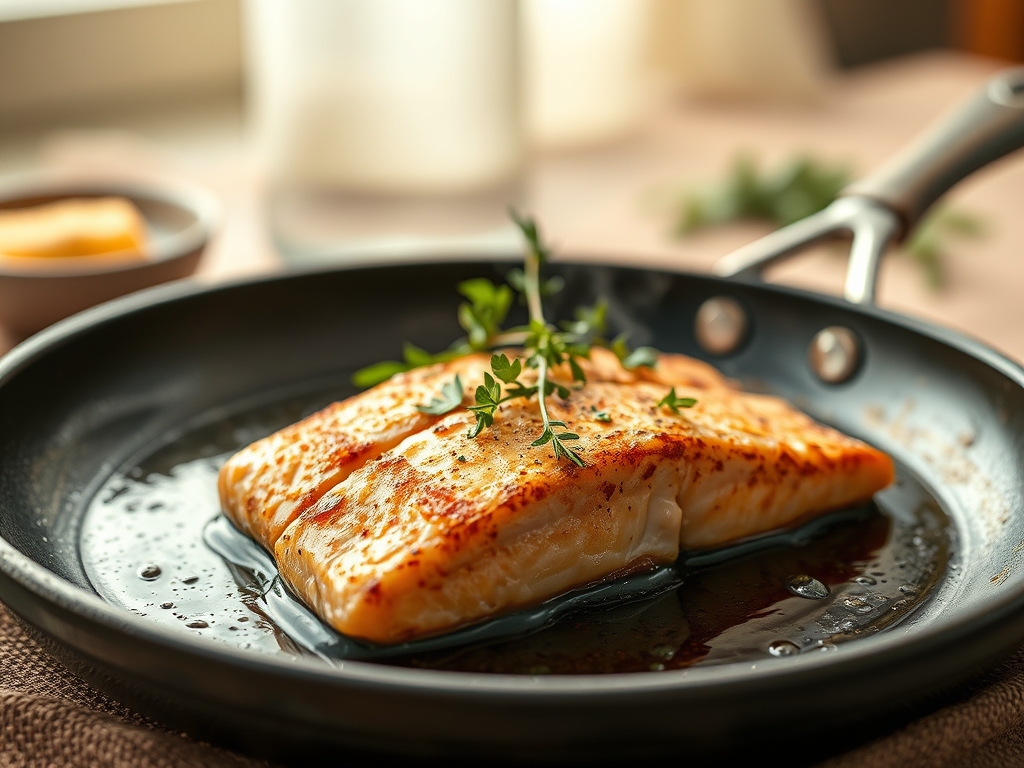
Picture the sound of a high-frequency sizzle hitting a heavy-bottomed skillet; it is the definitive anthem of a perfect dinner. We have all been there, staring at a gorgeous piece of fish and praying the skin does not weld itself to the metal. If you are hunting for easy salmon recipes frying pan mastery is the ultimate skill to bridge the gap between a soggy Tuesday meal and a restaurant-quality sear. Achieving that glass-shattering crust while maintaining a translucent, buttery center is not luck; it is a calculated dance of thermodynamics and moisture control. We are going to strip away the guesswork and replace it with culinary precision. By the time we are done, you will treat your kitchen like a laboratory and your plate like a masterpiece. Let us transform that raw fillet into a gold-crusted triumph that flakes at the mere suggestion of a fork.
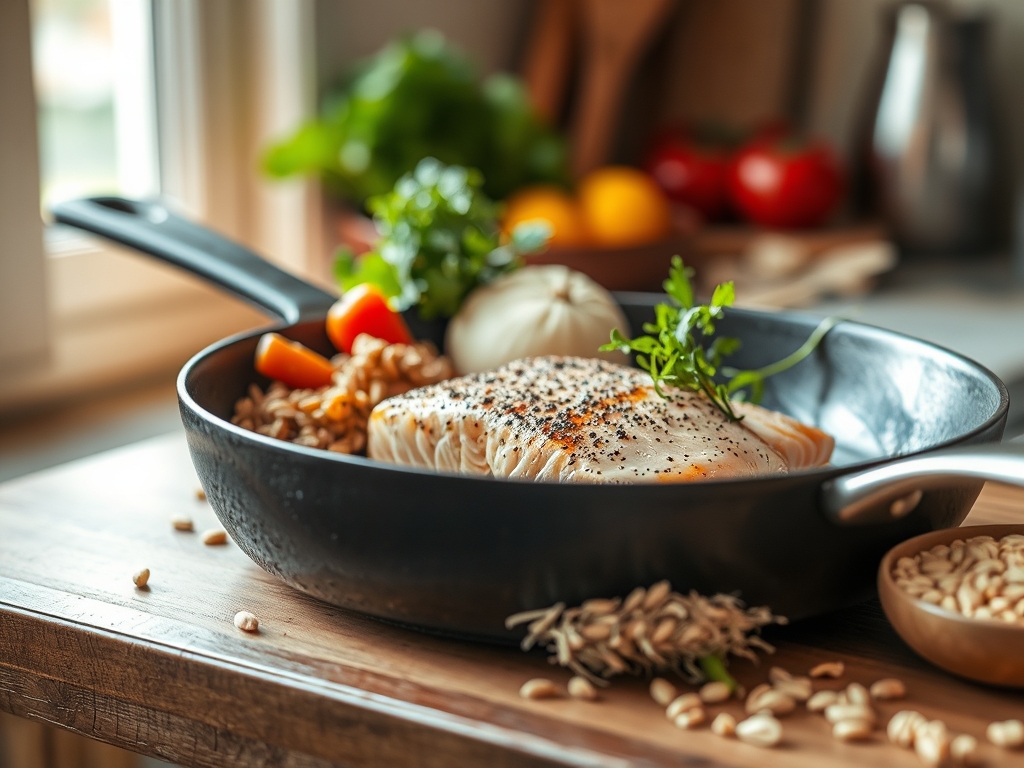
The Gathers:
To execute this properly, your mise-en-place must be flawless. Start with six-ounce center-cut fillets; these provide the most uniform thickness for consistent heat distribution. You will need a high-smoke-point lipid, such as avocado oil or clarified butter, to ensure the fat does not oxidize before the fish achieves the Maillard reaction. Gather kosher salt for its jagged crystal structure that adheres better to proteins, and freshly cracked black pepper. For the aromatic finish, have cold unsalted butter, sprigs of woody thyme, and two cloves of garlic ready for a final baste.
Smart Substitutions: If you are avoiding dairy, swap the finishing butter for a viscous cold-pressed olive oil or a spoonful of white miso paste for a piquant umami kick. If you lack a heavy-bottomed stainless steel pan, a well-seasoned cast iron skillet is your best friend for heat retention. Use a microplane to zest a lemon over the final product to cut through the fatty acids with bright, volatile oils.
The Clock: Chef's Flow
Efficiency in the kitchen is about managing the "Chef's Flow," which means aligning your prep so the heat never waits on you. Total active time is approximately 20 minutes.
- The Temper (10 minutes): Remove the fish from the refrigerator. Cold protein hitting a hot pan causes fibers to contract violently, squeezing out moisture and resulting in a tough texture.
- The Prep (5 minutes): Pat the skin bone-dry and season.
- The Sear (6 to 8 minutes): This is the high-intensity phase where the skin renders and the flesh reaches the perfect medium-rare.
- The Rest (3 minutes): Critical for capillary action to redistribute juices.

The Masterclass
1. The Desiccation Ritual
Use a paper towel to press every microscopic drop of water off the skin. Moisture is the enemy of the sear; any residual water will create a layer of steam, preventing the skin from becoming crisp.
Pro Tip: This is known as surface evaporation. By removing moisture, the energy from the pan goes directly into browning the proteins rather than boiling off water, which happens at a much lower temperature than the Maillard reaction.
2. The Seasoning Anchor
Season the fish only seconds before it hits the oil. If you salt too early, the salt will draw internal moisture to the surface through osmosis, making the skin wet again.
Pro Tip: Use a digital scale if you want to be precise; 1.5 percent of the fish's weight in salt is the golden ratio for professional seasoning.
3. The Oil Shimmer
Heat your heavy-bottomed skillet over medium-high heat until the oil is shimmering but not smoking. You want the oil to be thin and viscous, moving like water across the pan.
Pro Tip: This creates a Leidenfrost effect where a thin layer of vapor prevents the fish from sticking instantly to the metal, allowing the crust to form.
4. The Initial Press
Place the salmon skin-side down and immediately use a fish spatula or bench scraper to press down firmly for 30 seconds. Salmon skin tends to curl when it hits heat; pressing ensures total surface contact.
Pro Tip: This prevents the "arch" effect, ensuring the heat conducts evenly across the entire skin surface for a uniform crunch.
5. The Patience Phase
Leave it alone. Resist the urge to poke or prod. You will see the color of the flesh change from the bottom up, turning from translucent pink to an opaque pale color.
Pro Tip: This is conduction heating. The skin acts as a heat shield, gently cooking the delicate fats without over-coagulating the proteins.
6. The Flip and Baste
Once the opaque line reaches the halfway mark, flip the fish using tongs. Drop in your butter, garlic, and thyme. Tilt the pan and use a saucier spoon to continuously bathe the skin in the foaming butter.
Pro Tip: This is enzymatic browning and flavor infusion. The milk solids in the butter caramelize, adding a nutty profile while the herbs infuse their essential oils into the fish.
7. The Thermal Pull
Remove the salmon when the internal temperature hits 125 degrees Fahrenheit for medium-rare.
Pro Tip: Thermal carryover will continue to cook the fish after it leaves the pan, raising the internal temperature by another 5 to 7 degrees during the rest.
The Deep Dive
Macro Nutrition: A standard six-ounce fillet provides roughly 34 grams of high-quality protein and 18 grams of healthy fats, primarily Omega-3 fatty acids. It is naturally low in carbohydrates, making it a staple for metabolic health.
Dietary Swaps: For a Keto version, double down on the butter baste. For Vegan guests, this technique works surprisingly well with thick-cut "steaks" of cauliflower or king oyster mushrooms, though the cooking times will decrease. This recipe is naturally Gluten-Free.
The Fix-It:
- The Skin Stuck: Do not force it. If the skin is stuck, it usually means the proteins haven't finished "releasing" from the pan. Wait another 30 seconds.
- White Gunk (Albumin): This is just protein pushing out because the heat was too high. Lower the flame and temper your fish longer next time.
- Soggy Skin: You likely crowded the pan. Cook in batches to prevent the ambient temperature from dropping.
Meal Prep Science: To reheat, avoid the microwave at all costs; it vibrates water molecules and turns the fish into rubber. Instead, use a low oven (275 degrees) with a splash of water covered in foil to gently aerate the environment and prevent desiccation.
The Wrap-Up
Mastering easy salmon recipes frying pan style is about respecting the physics of the kitchen. When you understand how heat moves through a fillet and why moisture is the enemy of texture, you stop following recipes and start cooking with intuition. Go grab your heavy-bottomed skillet, dry that skin until it feels like parchment, and listen for the sizzle that signals a perfect sear. You have the tools, the science, and the secret; now go make something incredible.
The Kitchen Table
How do I prevent salmon from sticking to the pan?
Ensure the pan and oil are shimmering hot before adding the fish. Pat the skin completely dry and press the fillet down with a spatula for the first thirty seconds to ensure a flat, even sear that releases naturally.
Why does white stuff come out of my salmon?
That white substance is albumin, a liquid protein. It pushes to the surface when the muscle fibers contract too quickly from high heat. To minimize this, temper the fish at room temperature before cooking and use moderate heat.
What is the best oil for frying salmon?
Use oils with a high smoke point to avoid bitter flavors. Avocado oil, grapeseed oil, or clarified butter (ghee) are ideal. Avoid extra virgin olive oil for the high-heat sear as it can oxidize and smoke too early.
How can I tell if salmon is done without a thermometer?
Gently press the side of the fillet with a fork or your finger. If the flakes begin to separate easily along the white fat lines (the lamellae) and the center is slightly translucent, the salmon is perfectly cooked.