
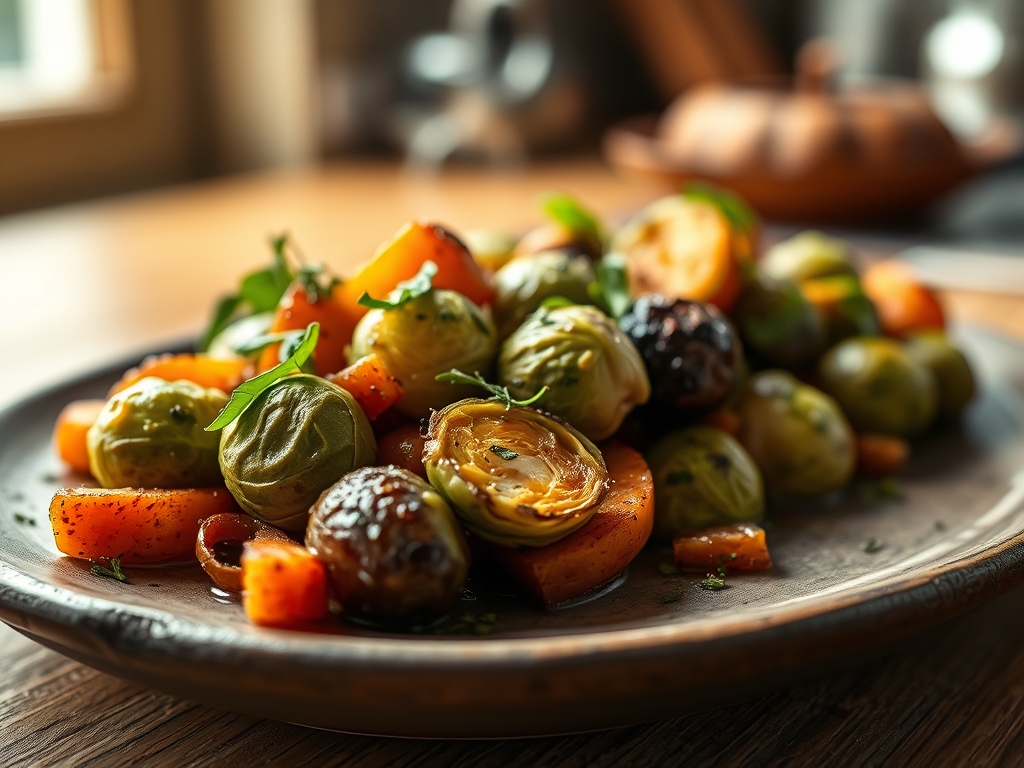
Imagine the scent of maple syrup hitting a blistering hot sheet pan; it is a fragrant, sticky cloud that signals the perfect marriage of earth and sugar. When you master brussels sprouts and sweet potato recipes, you are not just making a side dish; you are conducting a symphony of textures that range from velvet-soft tubers to shatteringly crisp brassica leaves.
There is a specific magic that happens in the oven when the sulfurous depth of a sprout meets the beta-carotene richness of a garnet yam. Most people fail because they treat these two vegetables as equals in the heat. They are not. One is a dense starch requiring cellular breakdown, while the other is a delicate leafy orb prone to turning bitter if steamed by its own moisture. To get that restaurant-quality char, we have to manipulate moisture levels and surface area. We are aiming for a dish that feels like a warm hug but bites back with a piquant vinaigrette. Grab your heaviest sheet pan; we are about to turn humble root vegetables into the undisputed stars of your dinner table.
The Gathers:
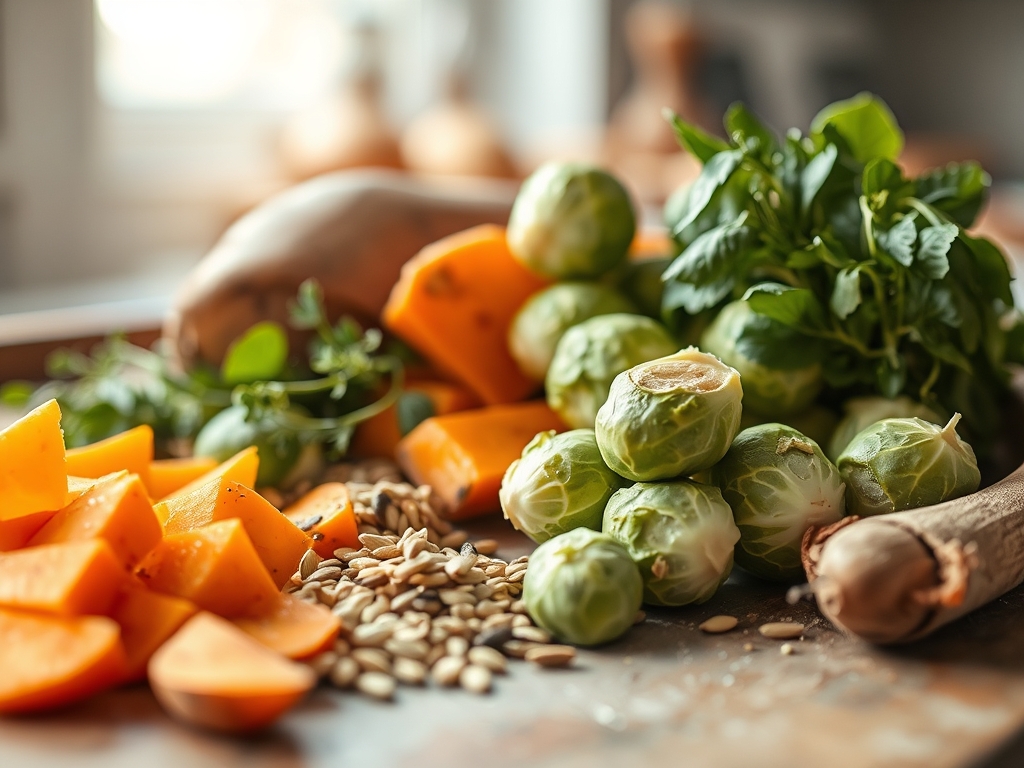
To begin, you need to curate your mise-en-place with precision. Start with one pound of tight, bright green brussels sprouts. Look for small to medium globes; larger ones often have a woody core that resists softening. You will also need two large sweet potatoes, preferably the Beauregard or Jewel variety, which offer a higher sugar content for superior caramelization.
For the fats and aromatics, reach for a high-smoke-point oil like avocado oil or refined grapeseed oil. Extra virgin olive oil is lovely for finishing, but it can break down and smoke at the high temperatures required for a true roast. You will also need kosher salt (the jagged crystals adhere better to vegetable surfaces), freshly cracked black pepper, and a hit of acid like apple cider vinegar or a squeeze of lemon to brighten the palate.
Smart Substitutions:
If you want to lean into a savory profile, swap the maple syrup for a drizzle of hot honey. If you are out of sweet potatoes, butternut squash provides a similar starch profile but with a slightly more viscous mouthfeel. For a crunch factor, toasted pecans or pumpkin seeds added in the final three minutes of roasting provide a necessary textural contrast to the soft vegetables.
The Clock:
Total time for this masterpiece is approximately 45 minutes, but the "Chef's Flow" is what determines your success. Preparation takes 15 minutes of focused knife work. You want to ensure your sweet potatoes are cubed into uniform half-inch pieces so they finish at the exact moment the sprouts reach peak crispness.
The roasting phase takes 25 to 30 minutes in a 425-degree Fahrenheit oven. This high heat is non-negotiable. We are looking for the Maillard reaction, a chemical dance between amino acids and reducing sugars that creates that savory, browned crust. If your oven runs cool, your vegetables will simply "stew" in their own juices, resulting in a soggy disappointment. Use a digital oven thermometer to verify your heat before the pan even touches the rack.
The Masterclass:
1. The Precision Cut
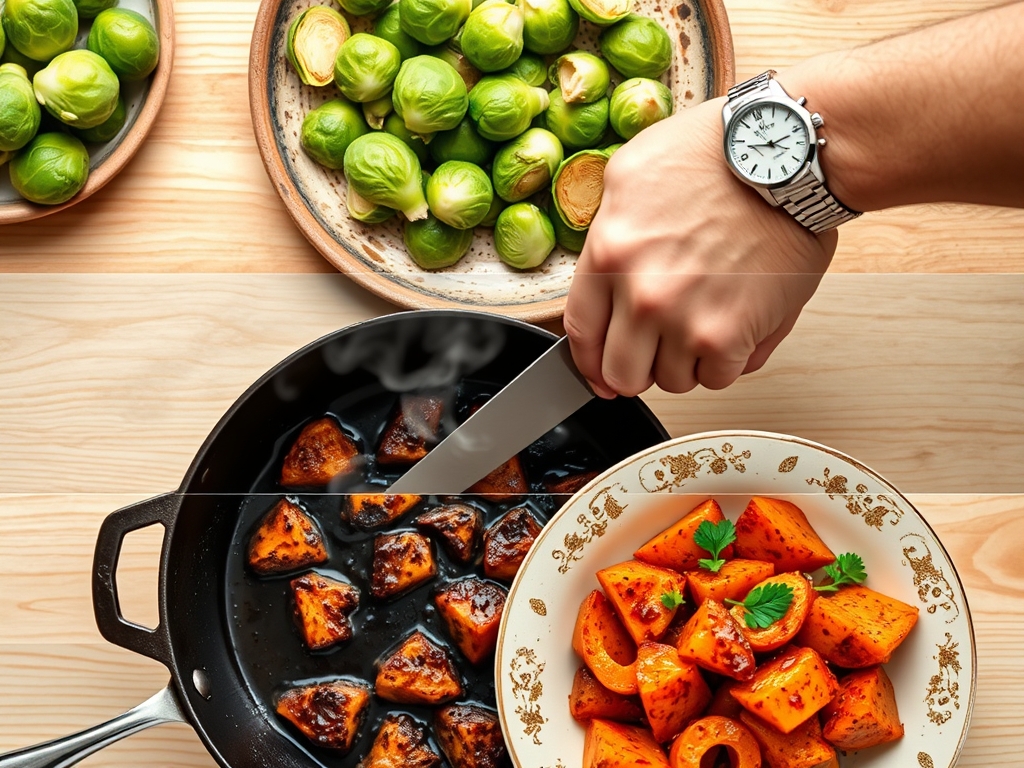
Use a sharpened chef knife to trim the stem end of the sprouts and slice them vertically through the core. This keeps the leaves attached while exposing the interior to the heat. Cube your sweet potatoes into half-inch squares using a bench scraper to move your piles efficiently.
Pro Tip: Uniformity is the soul of even cooking. If your pieces vary in size, the small ones will carbonize into ash before the large ones lose their raw crunch. This is known as managing the surface-area-to-volume ratio.
2. The Emulsion Toss
In a large stainless steel bowl, whisk your oil, salt, pepper, and a teaspoon of smoked paprika. Add the vegetables and toss vigorously with your hands or tongs until every crevice is coated.
Pro Tip: Do not salt too early. Salt draws out moisture through osmosis. If you let the salted vegetables sit on the counter for twenty minutes, they will be sitting in a puddle of water, preventing them from crisping in the oven.
3. The Pan Arrangement
Place your vegetables on a heavy-bottomed rimmed baking sheet. Ensure the sprouts are placed cut-side down. This allows the flat surface to maintain direct contact with the hot metal, leading to deep browning.
Pro Tip: Overcrowding is the enemy. If the vegetables are touching too much, they trap steam. Use two pans if necessary to allow for proper air circulation, which facilitates evaporative cooling and crisping.
4. The High-Heat Roast
Slide the pan into the center of the oven. At the 15-minute mark, use a metal spatula to flip the sweet potatoes, but try to leave the sprouts undisturbed to maximize their "crust."
Pro Tip: This is the stage of thermal carryover. Even after you pull the pan out, the internal temperature of the potatoes will continue to rise by about five degrees. Pull them when they are just fork-tender.
5. The Acidic Finish
Once the pan is out, immediately drizzle with your maple-balsamic glaze or a splash of vinegar while the vegetables are still sizzling.
Pro Tip: The heat allows the glaze to infuse into the vegetable fibers rather than just sitting on top. This creates a cohesive flavor profile where the sweetness is balanced by the sharp acidity.
The Deep Dive:
From a nutritional standpoint, this dish is a powerhouse. You are getting a massive dose of Vitamin A and C, along with high fiber content that aids digestion. For those following specific lifestyles, this recipe is naturally gluten-free. To make it Vegan, ensure your glaze uses maple or agave instead of honey. For Keto enthusiasts, double the sprouts and swap the sweet potatoes for cauliflower florets to lower the net carb count.
The Fix-It:
- Soggy Vegetables: Your oven wasn't hot enough or you overcrowded the pan. Fix it by tossing them under the broiler for 2 minutes, watching closely.
- Bitter Sprouts: This usually happens with older produce. Balance the bitterness by adding a pinch more salt and a drizzle of honey after roasting.
- Burnt Glaze: If you add sugar-based glazes too early, they will burn. Always add honey or maple syrup in the last 5 minutes or as a finishing touch.
Meal Prep Science:
To reheat while maintaining "day-one" quality, avoid the microwave. The microwave vibrates water molecules, which turns the crispy sprout leaves into wet paper. Instead, use a toaster oven or an air fryer at 350 degrees for 5 minutes. This re-activates the fats and recrisps the exterior.
The Wrap-Up:
Mastering brussels sprouts and sweet potato recipes is a rite of passage for any home cook looking to elevate their vegetable game. It is about understanding the balance between high-heat chemistry and simple, quality ingredients. When you pull that pan out and see the charred edges and the glistening orange cubes, you will know you have nailed it. This dish is vibrant, sophisticated, and deceptively easy once you respect the science of the sear. Now, get into that kitchen and make some magic!
The Kitchen Table:
How do I stop my sprouts from smelling like sulfur?
The "funky" smell comes from overcooking, which releases hydrogen sulfide gas. To prevent this, roast them quickly at high temperatures (425F+) rather than boiling or slow-roasting. This keeps the flavor nutty and sweet instead of pungent.
Can I use frozen brussels sprouts for roasting?
Frozen sprouts contain excess moisture from the freezing process, making them prone to mushiness. If you must use them, thaw completely and pat extremely dry with paper towels before roasting at a slightly higher temperature to evaporate the water quickly.
Should I peel my sweet potatoes first?
Peeling is optional but not required. The skins contain significant fiber and nutrients. If you leave them on, just ensure you scrub them thoroughly with a vegetable brush to remove any grit before cubing and roasting.
What is the best way to get a crispy texture?
The secret is direct contact. Place the flat, cut side of the brussels sprouts face-down on a preheated baking sheet. This creates a "sear" similar to a steak, resulting in a deeply caramelized, crunchy exterior.