

Picture the scene: a crackling fire, the scent of pine needles, and the centerpiece of your holiday table gleaming under the candlelight. While turkey often gets the fame, smart hosts know that salmon recipes christmas are the true secret to a stress-free, high-impact dinner. There is something inherently luxurious about a side of salmon; its vibrant coral hue provides a stunning contrast to the deep greens and reds of the season. Beyond the aesthetics, salmon offers a culinary versatility that poultry simply cannot match. It is the ultimate canvas for festive glazes, from spiced cranberry to maple-bourbon. It cooks in a fraction of the time, leaving you more minutes to mingle with a glass of bubbly. Whether you are aiming for a classic herb-crusted fillet or a bold, citrus-infused roast, mastering the art of the festive fish ensures your guests leave satisfied but not weighed down. Today, we are diving deep into the molecular magic that turns a simple fillet into a holiday masterpiece that will have everyone asking for your secret.

The Gathers:
To achieve a restaurant-quality roast, your mise-en-place must be precise. Start with a side of Atlantic or King salmon, ideally between three and four pounds. Look for flesh that is firm to the touch with no "gapping," which indicates a breakdown in the connective tissue. You will need high-quality fats to facilitate heat transfer; clarified butter or avocado oil are excellent choices due to their high smoke points. For the aromatics, gather fresh dill, flat-leaf parsley, and chives. Use a microplane to zest three lemons and two oranges, capturing the volatile oils without the bitter white pith.
The science of flavor requires a balance of salt, acid, and sugar. Use flakey sea salt to draw out moisture through osmosis, creating a concentrated "brine" on the surface that aids in the Maillard reaction. For the glazes, a high-viscosity liquid like honey or maple syrup is essential to ensure the coating clings to the protein rather than sliding into the pan.
Smart Substitutions:
If you are catering to a crowd with varying tastes, you can swap the traditional butter for a high-quality extra virgin olive oil to keep the fats heart-healthy. For those avoiding refined sugars, pomegranate molasses offers a piquant acidity and deep color that mimics the traditional glaze while adding a sophisticated Middle Eastern flair. If fresh herbs are scarce, a high-quality freeze-dried herb blend can work, though you should increase the volume by fifty percent to compensate for the loss of aromatic potency.
The Clock
Efficiency in the kitchen is all about the "Chef's Flow." For these salmon recipes christmas, expect a total active prep time of 20 minutes and a cook time of 15 to 25 minutes, depending on the thickness of the fish. The flow begins with the "Temper Phase." Remove your salmon from the refrigerator 30 minutes before cooking. This reduces the thermal shock when the fish hits the heat, ensuring the exterior does not overcook before the center reaches the target temperature. While the fish tempers, prepare your glazes and herb crusts. This overlap ensures that once the oven is preheated, you are ready to execute without pause.
The Masterclass
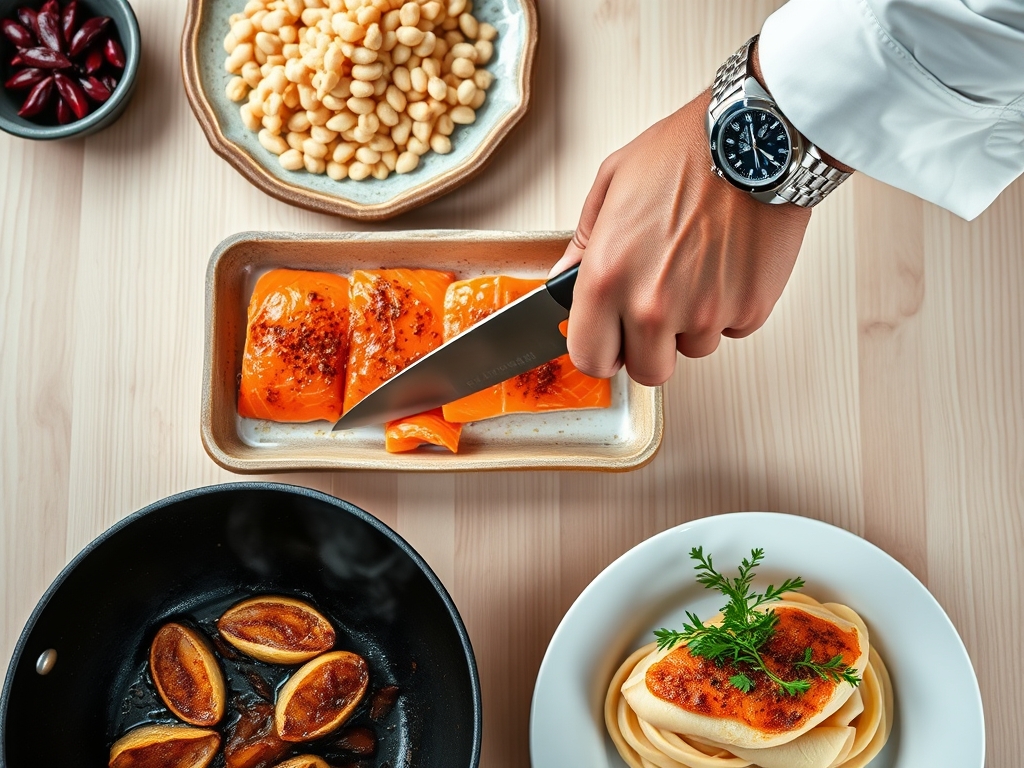
1. The Surface Prep
Use a paper towel to pat the salmon bone-dry. Any residual moisture on the skin or flesh will turn to steam in the oven, preventing the proteins from browning properly. Use a bench scraper to ensure the surface of your workspace is clean and dry before laying out the fish.
Pro Tip: This step prevents "steaming" the fish. By removing surface water, you allow the heat to immediately begin the Maillard reaction, which is the chemical reaction between amino acids and reducing sugars that gives browned food its distinctive flavor.
2. The Seasoning Layer
Generously season the salmon with salt and white pepper. White pepper is preferred here as it blends into the flesh and provides a sharp, floral heat without the visual speckles of black pepper. Use a digital scale if you want to be precise; 1.5% salt by weight is the golden ratio for protein.
Pro Tip: Salt acts as a denaturant. It begins to break down the tightly wound protein strands, allowing them to retain more moisture during the cooking process. This results in a flake that is succulent rather than chalky.
3. The Glaze Application
Using a silicone brush, apply your chosen festive glaze. Whether it is a honey-mustard base or a balsamic reduction, ensure the coating is even. If using a heavy-bottomed saucier to reduce your glaze beforehand, let it cool slightly so it reaches a viscous consistency that "grips" the fish.
Pro Tip: Sugars in the glaze will undergo caramelization at temperatures above 320 degrees Fahrenheit. This creates a complex profile of nutty and bittersweet notes that balance the natural richness of the salmon fats.
4. The Thermal Journey
Slide the salmon into a preheated 400 degree Fahrenheit oven. Use a heavy-bottomed skillet or a parchment-lined baking sheet. The heavy metal helps distribute heat evenly across the bottom of the fish, preventing "hot spots" that could lead to uneven cooking.
Pro Tip: Monitor the internal temperature using a digital probe. You are looking for 125 degrees Fahrenheit for a perfect medium-rare. Remember thermal carryover; the internal temperature will continue to rise by 5 degrees after you remove it from the oven.
5. The Rest and Finish
Once out of the oven, tent the salmon loosely with foil. Let it rest for at least five to seven minutes. During this time, the muscle fibers, which contracted during cooking, will begin to relax and reabsorb the juices.
Pro Tip: Resting allows the internal pressure to equalize. If you cut into the salmon immediately, the pressurized juices will escape, leaving the meat dry. Resting ensures every bite is infused with moisture.
The Deep Dive
Salmon is a nutritional powerhouse, packed with Omega-3 fatty acids, Vitamin B12, and high-quality protein. For those on specific diets, salmon is naturally Keto and Gluten-Free. To make it vegan-friendly for a guest, you can apply these same glazing techniques to a large "steak" of roasted cauliflower or a slab of firm tofu, though the cooking times will vary.
The Fix-It:
- The White Stuff: If you see white "beads" (albumin) on the salmon, you have cooked it too fast or too long. Fix this by lowering the oven temp next time or brining the fish beforehand to keep the proteins stable.
- Soggy Skin: If the skin isn't crisp, your pan wasn't hot enough or the skin wasn't dry. You can fix a finished piece by quickly searing the skin-side in a hot pan with a touch of oil just before serving.
- Broken Glaze: If your glaze slides off, it was too thin. Next time, aerate and reduce the glaze further on the stove until it coats the back of a spoon.
Meal Prep: To reheat leftovers without losing quality, use a low oven (275 degrees) and add a splash of water or broth to the pan, covering it tightly with foil. This creates a gentle steam environment that rehydrates the fish without overcooking the delicate fats.
The Wrap-Up
Creating the perfect holiday salmon is a blend of artful presentation and scientific precision. By focusing on surface moisture, temperature control, and the resting period, you elevate a simple piece of seafood into a festive triumph. These salmon recipes christmas are designed to make you the star of the kitchen while keeping the process joyful and efficient. So, grab your tongs, preheat that oven, and get ready to start a new holiday tradition that is as smart as it is delicious!
The Kitchen Table
How do I prevent salmon from sticking to the pan?
Always start with a clean, preheated surface. Use parchment paper for roasting or ensure your oil is shimmering in a heavy-bottomed skillet before adding the fish. This creates a steam barrier that prevents the proteins from bonding to the metal.
Can I prepare the salmon recipes christmas in advance?
You can prepare the glazes and herb crusts up to two days early. However, do not salt the fish more than 30 minutes before cooking, as prolonged exposure to salt can cure the meat and change its delicate texture.
What is the best way to tell if salmon is done?
Use a digital thermometer to hit 125 degrees Fahrenheit for medium-rare. If you do not have one, press the top of the fillet gently with a fork; if the flesh flakes easily along the natural fat lines, it is ready.
How do I get rid of the "fishy" smell in my house?
The smell comes from oxidized fats. Use the freshest fish possible and discard the skin and packaging immediately. Simmering a pot of water with cinnamon sticks and orange peels on the stove will effectively neutralize any lingering aromas.