
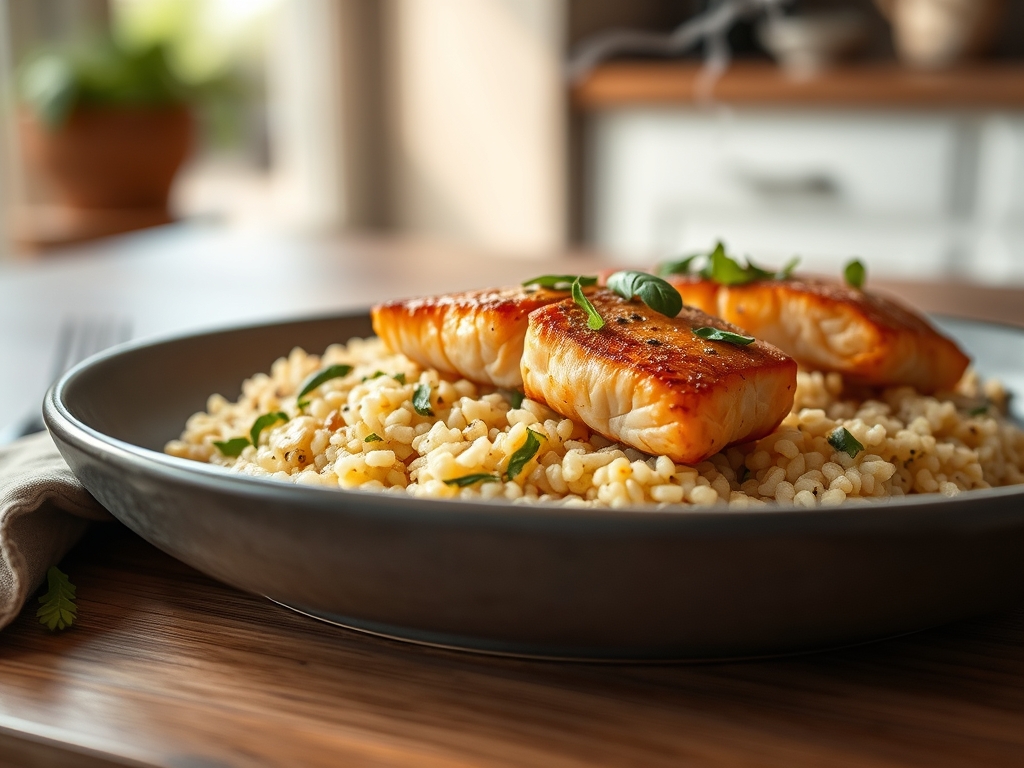
Picture a heavy-bottomed skillet resting on a blue flame; the air smells of toasted semolina and the sharp, citrusy sting of lemon zest. You are about to master the art of the sear. Finding the perfect balance in couscous salmon recipes is less about following a list and more about managing moisture and heat. It is a textural symphony where the flaky, fat-rich fish meets the tiny, cloud-like spheres of perfectly fluffed pasta. We are moving beyond basic steaming; we are aiming for a dish that feels like a high-end bistro lunch but comes together with the frantic, beautiful energy of a home kitchen.
When you look at the vibrant colors in our finished plate, you are seeing the result of precise chemical reactions. The salmon provides a rich, viscous mouthfeel thanks to its Omega-3 fatty acids, while the couscous acts as a neutral canvas, ready to absorb whatever piquant dressing we throw its way. Whether you are hosting a dinner party or just trying to survive a Tuesday, these eight pairings will elevate your culinary repertoire. Let us get your apron on and your burners lit.
The Gathers:
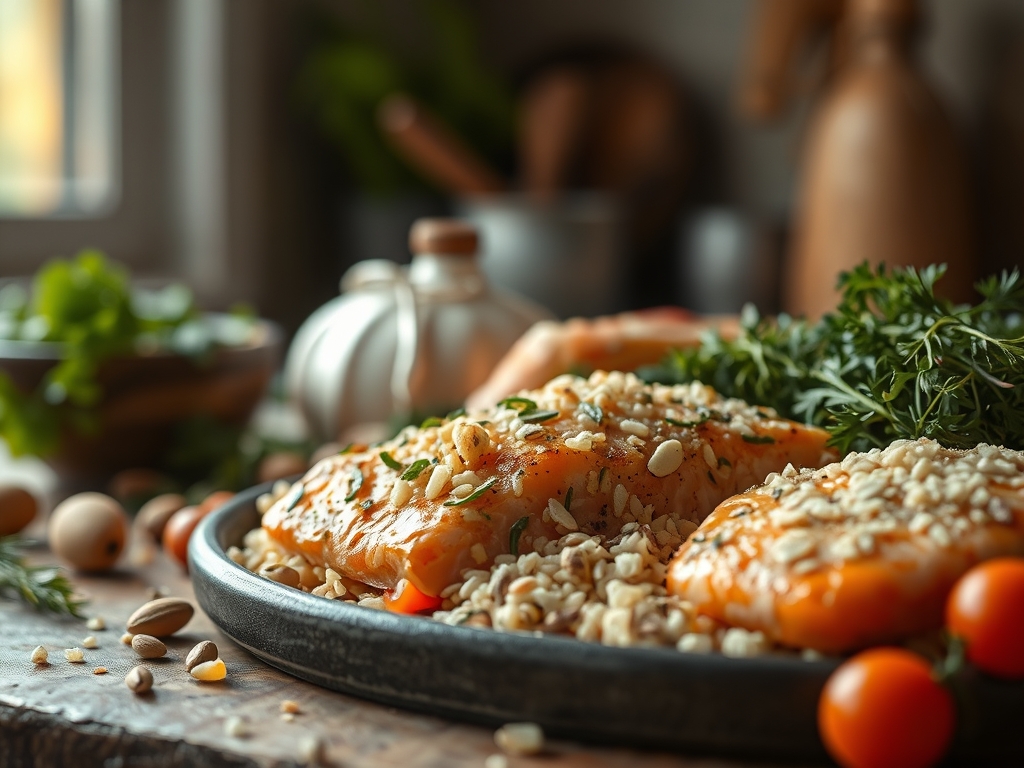
Before we strike a match, we must respect the mise-en-place. Efficiency in the kitchen is born from organization. Your workstation should feature a digital scale for precise grain-to-water ratios and a sharp chef's knife for clean vegetable cuts.
For the salmon, look for fillets with high marbling. When you press the flesh, it should spring back immediately; this indicates the cellular structure is intact and the proteins have not begun to break down. For the couscous, we are using Moroccan semolina for its speed, though Israeli (pearl) couscous is a fantastic swap if you crave a more al dente bite.
Smart Substitutions:
If you are out of traditional semolina, try quinoa for a complete protein boost or cauliflower rice for a lower glycemic index. If salmon is unavailable, steelhead trout offers a nearly identical flavor profile and fat content. For the liquid component, swap plain water for a fortified bone broth to add depth and collagen.
The Clock:
Time is a physical ingredient. You will need 15 minutes for prep and 12 minutes for active cooking. This is what I call the Chef's Flow. While the salmon undergoes albumin coagulation in the pan, the couscous is passively hydrating in a sealed bowl. By the time you finish deglazing your pan to create a pan sauce, the grains are ready to be aerated. Total time from counter to table is under 30 minutes, making this a high-efficiency meal for the modern professional.
The Masterclass:
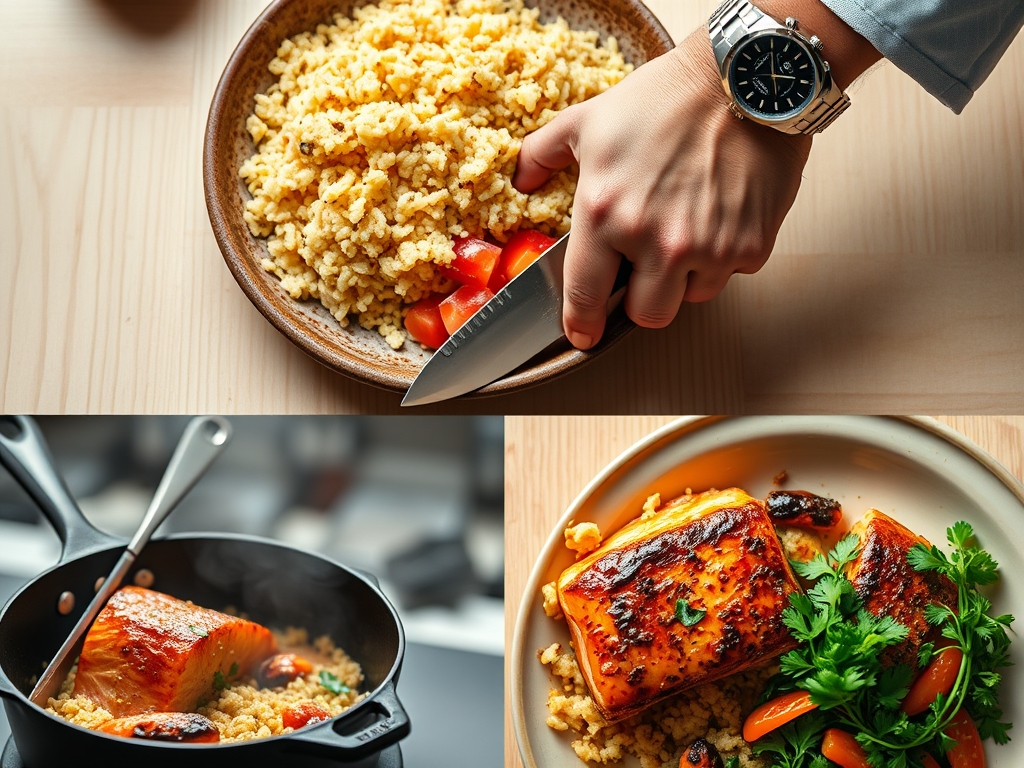
1. Temper the Protein
Remove your salmon from the refrigerator 20 minutes before cooking. Use a paper towel to pat the skin bone-dry. Moisture is the enemy of the Maillard reaction; if the surface is wet, the fish will steam rather than sear.
Pro Tip: This process is called tempering. Bringing the fish closer to room temperature ensures the heat penetrates the center evenly without overcooking the exterior layers.
2. Toast the Grains
Before adding liquid to your couscous, toss the dry grains in a saucier with a teaspoon of olive oil or butter. Heat them until they smell nutty and turn a pale golden brown.
Pro Tip: Toasting creates a protective coating of fat around each grain. This prevents the starch from gelatinizing too quickly, ensuring your couscous stays fluffy and individual rather than clumping into a sticky mass.
3. The Precision Sear
Heat your heavy-bottomed skillet until a drop of water dances and evaporates instantly. Add a high-smoke-point oil like avocado oil. Place the salmon skin-side down and press firmly with a fish spatula for 30 seconds.
Pro Tip: Pressing the fish prevents the skin from curling as the proteins contract. This ensures maximum surface contact, leading to a perfectly crisp, crackling skin through conductive heat transfer.
4. Infuse the Hydration
While the fish sears, pour boiling liquid over your toasted couscous. Cover the bowl tightly with plastic wrap or a heavy lid to trap every ounce of steam.
Pro Tip: Use a microplane to grate fresh garlic or ginger directly into the liquid. The heat will infuse the aromatics into the core of the grain as it swells, flavoring the dish from the inside out.
5. The Rest and Fluff
Once the salmon reaches an internal temperature of 125 degrees Fahrenheit (for medium-rare), remove it from the pan. Let it rest while you use a fork or bench scraper to fluff the couscous.
Pro Tip: Resting allows for thermal carryover. The internal temperature will rise about 5 degrees off the heat, while the juices redistribute through the muscle fibers, ensuring a moist bite.
The Deep Dive:
Macro Nutrition: A standard serving of our couscous salmon recipes provides approximately 35 grams of protein, 12 grams of healthy fats, and 45 grams of complex carbohydrates. It is a balanced fuel source designed for sustained energy release.
Dietary Swaps:
- Vegan: Replace salmon with a thick slab of roasted cauliflower or "tuna" made from marinated watermelon. Use vegetable stock for the grains.
- Keto: Swap couscous for hemp seeds or riced broccoli tossed in butter.
- Gluten-Free: Use certified GF millet or sorghum in place of semolina couscous.
The Fix-It:
- Soggy Couscous: If you over-hydrated, spread the grains on a sheet tray and place them in a 300-degree oven for 5 minutes to evaporate excess moisture.
- Stuck Skin: If the salmon skin sticks to the pan, do not force it. It usually releases naturally once the proteins have fully browned. If it is still stuck, add a tiny splash of white wine to deglaze the area.
- Dry Fish: If you overcooked the salmon, flake it into small pieces and fold it into the couscous with an extra dollop of Greek yogurt or a drizzle of olive oil to add moisture back into the palate.
Meal Prep: To maintain "day-one" quality, store the salmon and couscous in separate airtight containers. When reheating, add a teaspoon of water to the couscous and cover it to create a mini-steam chamber in the microwave. Reheat the salmon at 50% power to avoid "rubbery" protein strands.
The Wrap-Up:
You have now graduated from a casual cook to a flavor architect. By understanding the science of the sear and the mechanics of grain hydration, you can transform simple couscous salmon recipes into a rotating gallery of culinary hits. Remember to trust your senses; listen for the sizzle, smell the toasted semolina, and always season with a heavy hand. Your kitchen is your laboratory, and tonight, the experiment was a resounding success. Go forth and feast!
The Kitchen Table:
Can I use Israeli couscous instead of Moroccan?
Yes, but you must simmer Israeli couscous in boiling water for about 8 to 10 minutes. Unlike Moroccan couscous, it does not hydrate passively; it requires active boiling to soften its larger, pasta-like pearls.
How do I know when the salmon is done?
The most reliable method is using a digital thermometer to hit 125-130 degrees Fahrenheit. Visually, the fish should change from translucent to opaque, and the flakes should separate easily when pressed gently with a fork.
Why is my couscous always clumpy?
Clumping happens when you use too much water or fail to fluff the grains immediately after steaming. Always use a 1:1 ratio and use a fork to break up the grains and introduce air into the mixture.
Is salmon skin healthy to eat?
Absolutely. The skin contains the highest concentration of Omega-3 fatty acids. When seared properly using high heat and a heavy skillet, it becomes a crisp, flavorful cracker that adds essential texture to your meal.