
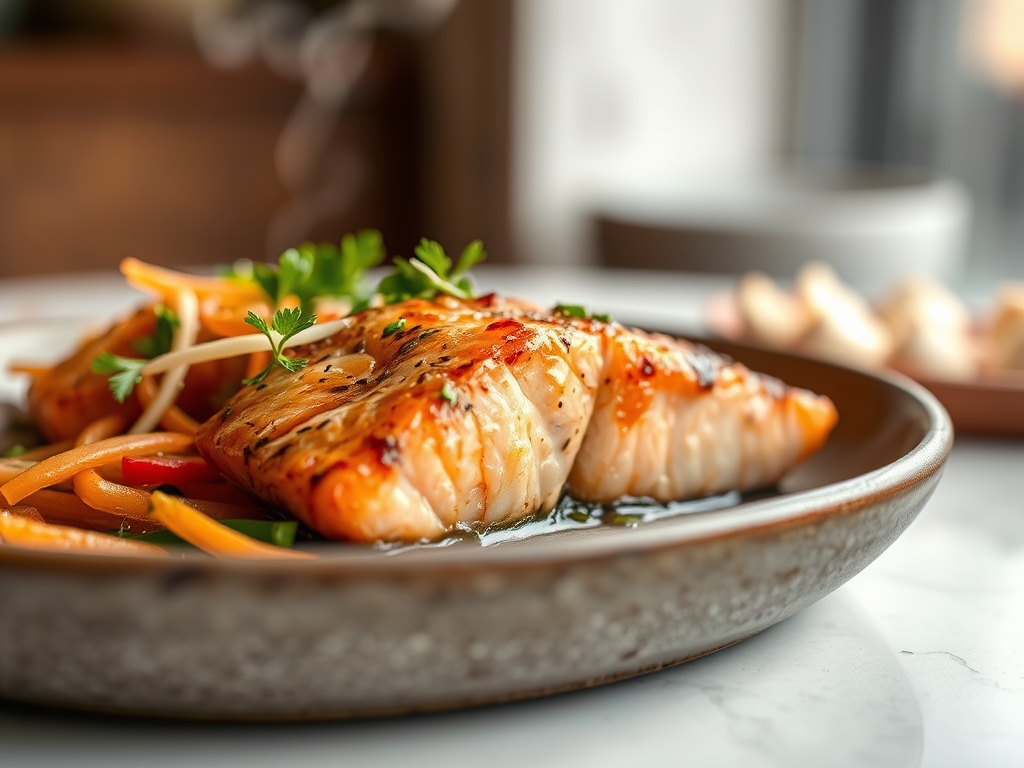
The scent hits you before the sound does; a heady, aromatic cloud of toasted sesame and piquant ginger that fills the kitchen. Then comes the rhythmic sizzle of cold protein meeting a blistering hot pan. If you have been searching for stir fried salmon recipes that actually deliver a crispy exterior without turning the fish into a dry, chalky mess, you are in the right place.
Most people treat salmon like a delicate flower, but in the world of high heat stir frying, we treat it like a steak. We are looking for that perfect intersection of a glass-like sear and a buttery, medium-rare center. It is a dance of timing and temperature that transforms a simple fillet into a restaurant-quality masterpiece in under ten minutes. Grab your favorite heavy-bottomed skillet and let us get into the molecular magic of the perfect sear.
The Gathers:
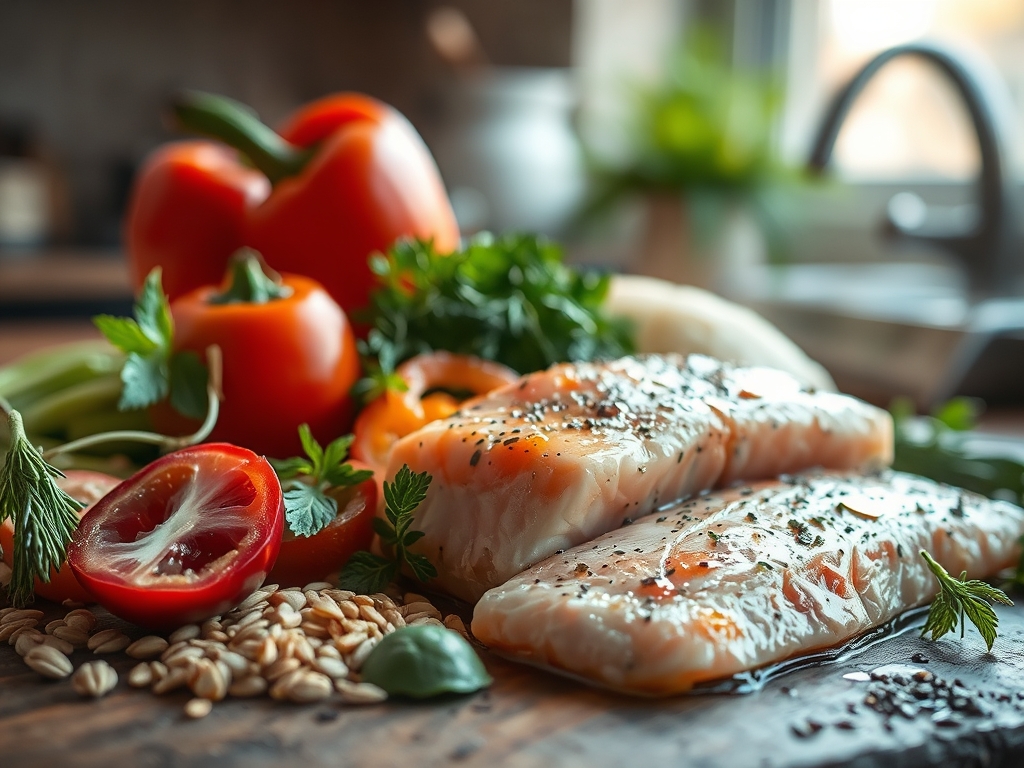
Before the flame even touches the pan, your mise-en-place must be flawless. We start with center-cut Atlantic or King salmon, cubed into uniform one-inch pieces using a sharp chef's knife or a dedicated fillet knife. Uniformity is not just for aesthetics; it ensures every piece reaches the target internal temperature simultaneously. You will need a high-smoke-point fat like avocado oil or refined coconut oil. Do not use extra virgin olive oil here; its low smoke point will oxidize and turn bitter under the intense heat required for stir fried salmon recipes.
Your aromatics are the soul of the dish. Use a microplane to grate fresh ginger and garlic into a fine paste, which allows the essential oils to infuse the oil instantly. For the crunch, gather snap peas, sliced red bell peppers, and scallions. The "Smart Substitutions" are your best friend: if you lack tamari, use liquid aminos for a gluten-free punch. If you want a deeper umami profile, a teaspoon of anchovy paste or fish sauce provides a viscous, savory backbone that salt alone cannot replicate. Use a digital scale to measure your liquids to ensure the perfect balance of sweet, salty, and acidic notes.
The Clock
Efficiency is the hallmark of a professional kitchen. The total active cook time for this dish is a mere 6 to 8 minutes, but the preparation takes about 15 minutes. This is what we call the "Chef's Flow." You spend the bulk of your energy on the "cold side" of the line; dicing, whisking, and drying the fish. Once the oil begins to shimmer, the process moves with breathless speed.
The salmon requires 2 minutes per side to achieve a golden crust. The vegetables follow for a 3-minute flash-fry to maintain their cellular integrity and vibrant color. Finally, the sauce takes 60 seconds to emulsify and glaze the ingredients. If you find yourself chopping while the pan is smoking, you have already lost the battle against overcooking.
The Masterclass
1. The Desiccation Phase
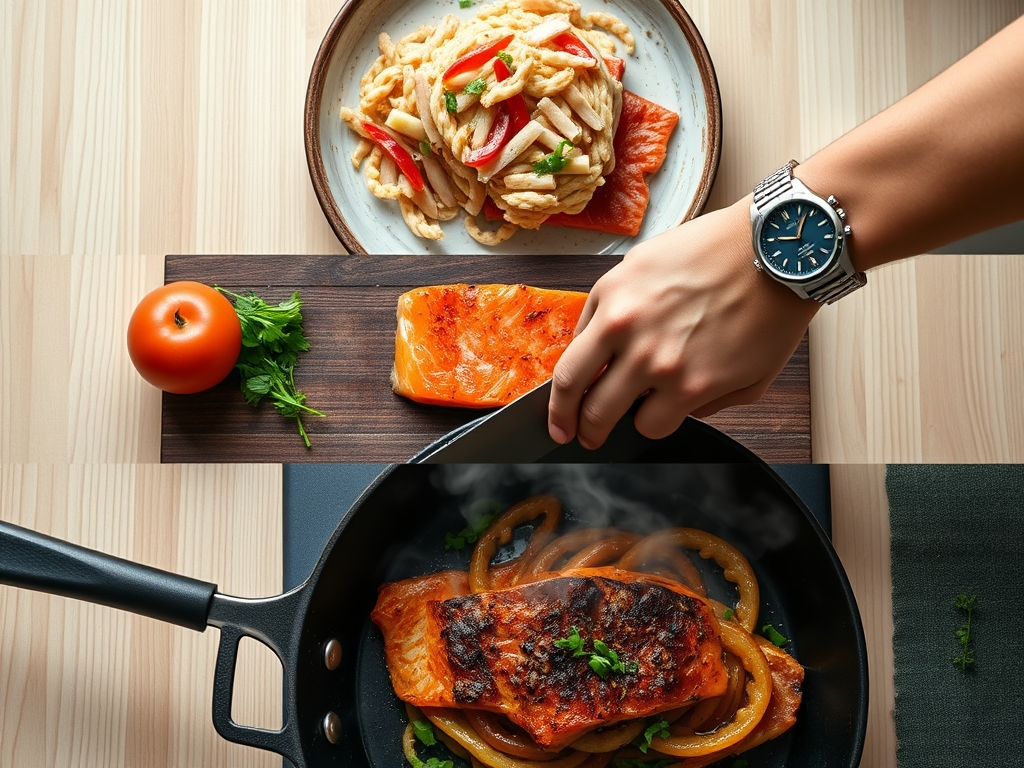
Pat the salmon cubes bone-dry with paper towels. Moisture is the enemy of the Maillard reaction. If the surface of the fish is damp, the heat of the pan will be wasted evaporating water rather than browning the proteins.
Pro Tip: This is the science of surface tension. By removing moisture, you allow the oil to make direct contact with the skin and flesh, triggering enzymatic browning almost instantly.
2. The Hard Sear
Heat your heavy-bottomed skillet until the oil is shimmering but not quite smoking. Place the salmon cubes in a single layer, leaving space between each piece to prevent steaming. Let them sit undisturbed for 120 seconds. Use a bench scraper or thin metal spatula to flip them gently.
Pro Tip: Respect thermal carryover. Remove the salmon from the pan when it is slightly underdone. The internal residual heat will finish the cooking process while you tend to the vegetables.
3. Deglazing the Fond
Remove the fish and toss in your aromatics. As the garlic and ginger soften, pour in a splash of rice vinegar or mirin. Use your spatula to scrape up the brown bits stuck to the bottom of the pan.
Pro Tip: This process is called deglazing. Those browned bits, or "fond," contain concentrated flavor compounds created during the searing phase that will now build the base of your sauce.
4. The Vegetable Flash
Add your hard vegetables first, such as carrots or broccoli, followed by the softer greens. Keep the heat at maximum. You want to blister the skins without collapsing the interior structure of the produce.
Pro Tip: High heat causes the water inside the vegetable cells to expand rapidly, creating a "snap" texture. This prevents the vegetables from becoming limp and gray.
5. Emulsifying the Glaze
Whisk your sauce (soy sauce, honey, and cornstarch) before pouring it into the center of the pan. Use a saucier or a whisk to stir rapidly as the liquid thickens into a glossy, viscous coating.
Pro Tip: The cornstarch acts as a stabilizer. As it heats, the starch granules swell and absorb liquid, creating a colloidal suspension that clings perfectly to the salmon.
6. The Final Integration
Fold the salmon back into the pan along with a handful of fresh herbs like cilantro or Thai basil. Toss gently with tongs to ensure every cube is coated in the glaze without breaking the delicate flakes of the fish.
Pro Tip: Adding fresh herbs at the very end preserves their volatile aromatic compounds, which are destroyed by prolonged exposure to high heat.
The Deep Dive
From a nutritional standpoint, stir fried salmon recipes are a powerhouse. A single serving provides roughly 35 grams of high-quality protein and a massive dose of Omega-3 fatty acids, which are essential for brain health. If you are following a Keto lifestyle, simply swap the honey for monk fruit sweetener and the cornstarch for a pinch of xanthan gum. For a vegan twist, firm tofu or tempeh can be treated with the exact same searing technique, though they lack the natural fats that render out of the salmon.
Even the best chefs hit a snag. If your salmon is sticking, your pan likely was not hot enough, or you tried to flip it too early; the fish will naturally "release" once the crust has formed. If your sauce is too salty, add a squeeze of lime juice; the acid cuts through the sodium. If the dish feels "heavy," a teaspoon of toasted sesame oil added off-heat will aerate the flavor profile. For meal prep, store the salmon and sauce separately from your rice. To reheat, use a damp paper towel over the bowl in the microwave for 45 seconds to create a steam chamber, preventing the fish from drying out.
The Wrap-Up
Mastering the art of the stir fry is about more than just following a list of ingredients; it is about understanding the physics of the pan. When you treat your salmon with the respect of a high-heat sear and keep your vegetables crisp, you elevate a simple weeknight dinner into a culinary event. This method is fast, nutrient-dense, and incredibly versatile. Now that you have the secrets, get that skillet screaming hot and start searing.
The Kitchen Table
How do I prevent salmon from falling apart in the pan?
Cut the salmon into uniform cubes and ensure the pan is blistering hot before adding them. Do not move the fish for the first two minutes; this allows a structural crust to form, which holds the delicate flakes together during the flip.
What is the best oil for stir fried salmon recipes?
Use oils with a high smoke point, such as avocado, grapeseed, or refined peanut oil. These fats can withstand temperatures upward of 400 degrees Fahrenheit without breaking down, ensuring a clean flavor and a perfect, non-greasy sear on your fish.
Can I use frozen salmon for a stir fry?
Yes, but it must be completely thawed and thoroughly dried. Frozen fish often contains excess moisture; if not dried with paper towels, the salmon will boil in its own juices rather than searing, resulting in a mushy texture and gray color.
How do I know when the salmon is perfectly cooked?
The salmon is done when it reaches an internal temperature of 125 to 130 degrees Fahrenheit for medium-rare. Visually, the flakes should just begin to separate when pressed gently with a fork, while the center remains slightly translucent and moist.